I went to dinner with an old friend recently. She told me about her father, who died six years ago. She said she still sometimes picks up her phone to call him before she remembers. I nodded. I knew that reflex. My grandmother has been gone for over a decade, and I still catch myself thinking I should tell her about something small. That gap between the brain and the heart.
That is the space Siri Hustvedt writes about in Ghost Stories. Not the big funeral. Not the dramatic goodbye. The morning after. The reflex that never goes away. She lost her husband, the writer Paul Auster, in 2024 after 43 years together. This book asks one quiet question: When someone is gone from the world but not from your body, how do you keep living in the ordinary hours?
The Protagonist: A Woman Learning to Carry the Invisible
Hustvedt does not write herself as a tragic figure. She writes herself as someone who keeps doing things. She makes coffee. She walks through rooms. She opens drawers and finds things that still smell like him. The portrait is not of grief as a dark cloud. It is grief as a physical weight that lives in her bones.
There is a moment early in the book that broke me a little. She describes waking up and reaching for him. Not a dramatic gesture, just her hand moving across the bed before her brain catches up. That reflex. The body does not know he is gone. It takes weeks, months, maybe years to teach it.
She writes about their shared life in fragments. A conversation in the kitchen. A trip to a bookstore. The way he laughed at something silly. None of it is arranged in a neat timeline. Grief does not respect time, and neither does this book. It feels like memories floating up from water. Some are sharp. Some are blurry. All of them are true.
I will not tell you the ending. But I will say this. The book does not end with closure. It ends with a woman still carrying the weight, still learning how to move with it. That felt honest to me.
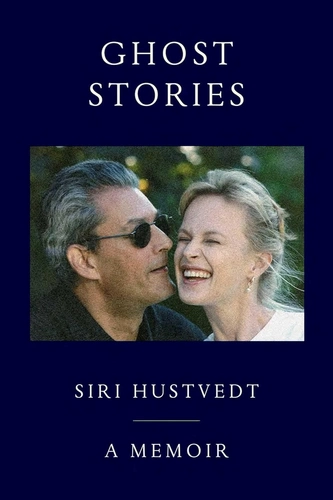
The Theme: How Grief Rewrites Time and Everyday Space
The core theme of Ghost Stories is not loss itself. It is the texture of living after loss. Hustvedt shows us how grief changes the way we experience time. A single hour can feel like a year. A whole year can feel like a single afternoon. She writes about this with a precision that feels almost clinical, except it is soaked in love.
The key imagery in the book is the house. That house where they lived together for decades. She walks through it and every object is a small ghost. A coffee mug. A book he was reading. A pair of shoes. These are not sentimental trinkets. They are evidence that a life happened here. She is surrounded by proof of his presence and his absence at the same time.
What makes this book work is Hustvedt’s eye for detail. She does not tell us she is sad. She shows us the half-empty tube of toothpaste. The single sock under the bed. The silence in the hallway where his footsteps used to be. These small things become the architecture of her grief.
This struggle is not just hers. It is a universal one. Every person who has loved and lost knows this feeling. The world does not stop. The dishes still need washing. The mail still comes. You are still here. The question is how to be here when half of your history is gone.
What This Book Offers: A Quiet Companion for the Heavy-Hearted
I think Ghost Stories is best read slowly. It is not a book you race through. It is a book you sit with, maybe over several evenings, letting each chapter land.
It is for anyone who has lost someone. But also for anyone who has ever had a relationship end. A friendship drift apart. A child leave for college. That hollow space where someone used to be is the same shape, no matter what caused it. Hustvedt shows us that shape with her own life as the canvas.
What is good about this book is its honesty. She does not pretend to have answers. She does not preach or offer advice. She simply says: this is what it felt like. This is what I did. This is what I still cannot do. That kind of vulnerability is rare and precious.
What is less strong, I will admit, is the structure. The book can feel fragmented. Sometimes I wanted more connection between the pieces. But maybe that is the point. Grief is fragmented. A tidy, linear story would have been a lie.
After finishing Ghost Stories, I sat in my kitchen for a while. I looked at the things in my own house. The photos. The books. The little objects that mean nothing to anyone else. I thought about who will miss me when I am gone. And who I will miss.
Maybe that is what this book really does. It does not make you sad. It makes you pay attention. To the people still here. To the small, ordinary moments that will one day become ghosts. Before they disappear, look at them. Hold them. That is the only thing you can do.
