I went to a brunch with old friends recently. We talked about work, relationships, bodies. A woman across the table said, “I just wish other women would support each other more.” Everyone nodded. I nodded too. But later, driving home, I kept thinking about Sophie Gilbert’s new book “Girl on Girl.” Because isn’t the problem deeper than that? We want solidarity, but we were raised on something else entirely. The question this book raises is uncomfortable: What if our desire for female community is itself a product of the very culture that divided us?
A Portrait of a Trap You Didn’t Know You Were In
Gilbert doesn’t start with theory. She starts with a memory. She was a teenager in the late 1990s, watching Britney Spears get torn apart while Christina Aguilera got torn apart for different reasons. The message was clear: there is a right way to be a woman, and every other woman is doing it wrong. The protagonist of this book is not a single person. It is a generation. It is all of us who grew up with “Mean Girls” as a cultural touchstone, with tabloids that pitted Jennifer Aniston against Angelina Jolie, with the sneaking suspicion that other women were both our competition and our judges.
Gilbert’s central argument is that pop culture didn’t just reflect female rivalry. It manufactured it. From the way pornography taught young men (and women) to see female bodies as objects for comparison, to the way “women’s magazines” told us to improve ourselves by studying other women’s failures. The book is structured like a detective story. She traces the threads from the 1990s to the present day, through the rise of the “Girlboss” who succeeds by playing a man’s game, to the “tradwife” movement that promises peace through submission. But here is the thing. Gilbert never lets the reader off the hook. She keeps asking: Where were you in this? What did you believe? I found myself wincing more than once. Because I remembered.
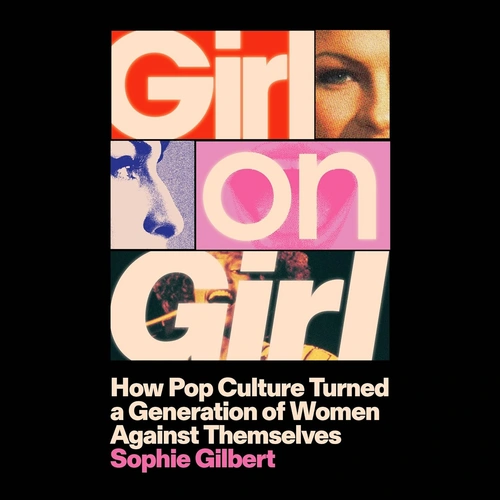
The Image That Breaks Your Heart Open
The core theme is a kind of learned self-betrayal. We internalized the rules so deeply that we became our own enforcers. The key image for me was something Gilbert describes as the “mirror of comparison.” It is not a literal mirror. It is the mental habit of seeing every other woman as a data point. Is she thinner? More successful? Happier? More loved? We measure ourselves against them, and we almost always come up short.
Gilbert’s craft is in the details. She shows how this culture works at the level of the magazine cover, the movie scene, the gossip blog. She quotes a study where girls as young as six were already ranking their peers by attractiveness. Six years old. She describes the way the “The Bachelor” franchise turned romantic competition into a spectator sport, complete with elaborate shots of women crying in limousines. The imagery is not subtle, but it is precise. It is like watching someone point at a crack in a dam, then another crack, then another, until you realize the whole structure is about to break. And the universal pattern she reveals is this: a culture that teaches women to compete with each other is a culture that benefits from women being exhausted, distracted, and alone.
Why This Book Stays in Your Bones
I finished “Girl on Girl” a week ago. I still hear its voice. Gilbert is not offering easy solutions. She is not saying “all women should just be friends.” That would be naive. What she offers is a diagnosis. And sometimes a diagnosis is the first real step.
The book’s weakness, if I am honest, is that it sometimes feels like a catalogue of damage. There are moments when the weight of examples becomes heavy. You want a way out, not just a map of the prison. But maybe that is the point. You cannot fix what you refuse to see clearly. Gilbert sees clearly. She writes about the “tradwife” movement with a kind of sadness, not anger. She understands the appeal of a fantasy where competition disappears. But she also understands that the fantasy is built on a lie.
What you get from this book is not a battle plan. It is a grammar. A language for understanding the invisible architecture of your own desires. You start to notice the way you talk about other women. The quick judgment. The comparison. The relief when you are not the one being judged. That noticing is the beginning.
“Maybe the hardest thing is not to stop judging other women,” Gilbert writes in the book’s closing pages. “It is to stop judging yourself through their eyes.”
That is the golden quote. That is the whole thing. Because the trap was never just about them. It was about the you that you became when you learned to see yourself as a competitor. And maybe, just maybe, the way out starts with putting the mirror down.
