Can you actually grieve a relationship properly if you never find out what went wrong? Andy doesn’t think so. Alderton doesn’t seem sure either.
A Man, a Sofa, and a Puzzle He Cannot Solve
Andy is thirty five. He does stand-up, badly. He has no flat, no steady income, and no idea why Jen ended four years of love with what felt, to him, like no warning at all. He is not a monster. That is the problem. He’s the kind of man who is genuinely warm with his friends’ kids and patient with his elderly roommate, and who also cannot stop refreshing his ex’s new boyfriend’s Instagram at two in the morning.
Much of the novel is his search for the missing piece. A reason. A single, concrete answer he can point to and file away.
There is a moment where he catfishes a therapist online, and honestly, I laughed and then felt a little sick, because that is exactly what heartbreak does. It makes intelligent people behave like they are running a scam on themselves. Alderton lets him be pathetic without ever letting him be a joke, which is a much harder trick than it looks.
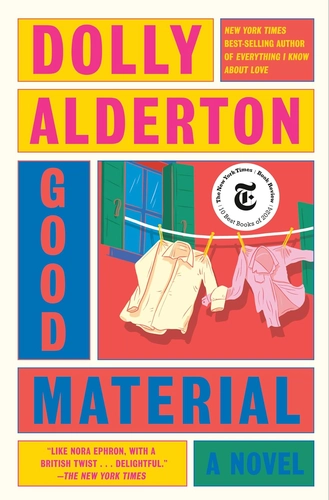
He bounces between friends’ spare rooms and a shared house that sounds like a sitcom written by someone who has actually cried in one. His phone buzzes with group chats full of people who are getting engaged, having babies, buying flats in Kent. He is standing still while the train of adulthood pulls out of the station, and he can see it. He just can’t seem to get on.
I did not expect to care about a straight man’s breakup this much.
The Chapter That Rewrites Everything
Here is the sharpest thing Alderton does. She gives Jen the last word, or close to it, and it isn’t a twist for shock value. It’s an argument. The whole novel has been asking whether Andy deserves the truth about why he was left. Jen’s section answers a different question. Whose story gets to count as the real one?
The core image I keep returning to is not dramatic. It’s a person holding two versions of the same four years, unable to make them fit, refusing to accept that both can be true at once. Andy remembers a happy relationship. Jen remembers quietly disappearing inside it. Neither is lying.
That is the universal pattern under all the jokes and the London flatshares. We all narrate our own lives as the reasonable center of events, and everyone who hurt us as a puzzle to be solved rather than a person with their own interior weather. It took me embarrassingly long to notice I do this too.
The book’s great insight is that closure is a story we tell ourselves. Andy wants a receipt. He wants to know exactly what he did wrong so he can file a complaint and move on. What he gets instead is messier and more honest.
Why This Book Left a Bruise
The prose is sharp, funny, and occasionally too pleased with its own cleverness. There are stretches in the middle where Andy’s wallowing repeats itself, and I found myself skim-reading, thinking, yes, I understand, he is sad. That sameness is probably intentional. It still tested my patience.
What it does beautifully is refuse to make either person the villain. That is rare. Most breakup stories pick a side because it’s easier to write and easier to read.
I’d hand this to anyone in their thirties who has watched their friend group split into homeowners and housemates. I’d hand it to anyone who has been dumped without a clear reason and is still, quietly, drafting the argument they never got to make. I would not hand it to someone currently in the rawest week of a fresh breakup. It won’t give you distance. It will give you company, and sometimes that’s the worst thing you need.
What I took away is not a lesson about love. It’s a small, stubborn shift in how I listen to other people’s versions of events. Andy’s story taught me that the person leaving has been grieving for months before the person being left even knows there’s something to grieve.
My one reservation is that the ending felt slightly too kind. Real life is rarely this neatly arranged. But then again, maybe that’s the point of fiction. It gives the symmetry that life withholds.
This book won’t fix anything for you. It won’t hand you a formula for getting over someone. But it will make you feel slightly less alone the next time you catch yourself rewriting an old relationship in your head, trying to find the exact moment it broke.
“You don’t let go once. You say goodbye over a lifetime. You have to be prepared to let go and let go and let go a thousand times.”

