I was standing in my kitchen, holding an avocado, when I heard the news about my own friend. Not the same kind of loss as Sloane Crosley’s, but close enough to make my hands go cold. I didn’t cry. I opened the fridge, put the avocado back, and closed the door. Then I opened it again. I don’t remember doing it, but my partner told me later. That moment came back to me when I read Grief is for People. Because Crosley understands something most grief books don’t: you do stupid, tiny, meaningless things when someone dies. You check your email. You worry about a stolen necklace. You wonder if you locked the front door. And then you realize the person you want to tell about it is the one who is gone.
What happens to the small stuff when the big stuff breaks you?
What Grief Does to Your Brain
Crosley’s friend Russell dies by suicide. He was her best friend, her editor, the person she called about everything. Around the same time, her apartment gets burglarized. She loses jewelry, including a ring her mother gave her. And here is where the book gets strange, and wonderful, and honest. She becomes obsessed with finding the ring. She tracks pawn shops. She calls detectives. She makes lists of what was taken. It sounds shallow, I know. It sounds like she is avoiding the real loss. But that is exactly the point.
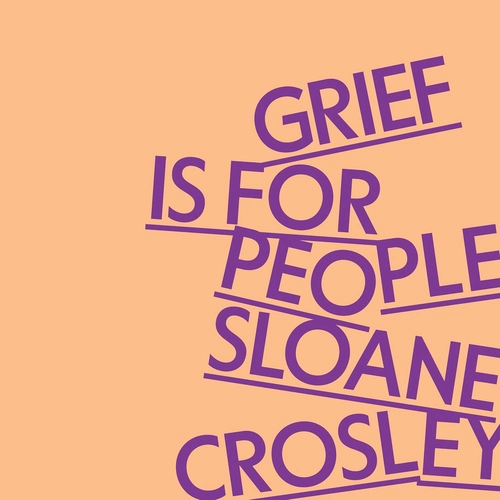
Crosley writes with this jagged, self-aware humor that makes you laugh and then feel guilty for laughing. She describes the burglar as “someone who wore my jewelry better than me.” She wonders if the police think she is a drama queen. She admits she has no idea how to grieve properly. The book is only 191 pages, but it took me three days to finish because I kept stopping. I kept recognizing myself. The way grief makes you focus on the wrong thing, the small thing, the thing you can actually fix. You cannot bring Russell back. But maybe, just maybe, you can find the ring.
Why We Hold Onto Things That Don’t Matter
The core of this book is not about loss. It is about displacement. Crosley’s apartment feels wrong. Her memories feel wrong. The world feels wrong. She uses objects as anchors, the physical things that remain when a person does not. The stolen jewelry becomes a symbol for everything she cannot recover. She writes about going to Russell’s apartment after he dies, and the way she notices the dust on his bookshelf before she notices anything else. That is grief. It is not dramatic. It is not a movie scene. It is a dust bunny.
The imagery here is precise and almost painful. She describes grief as “a room with no exits.” She talks about the way people avoid you after a death, not because they are cruel, but because they do not know what to say. She captures the exhaustion of having to explain your pain to people who want a neat story. “He was depressed,” they say, as if that explains everything. Crosley does not give neat explanations. She gives us a burglar who stole her grandmother’s silver, and a friend who stole himself.
The Messy Honesty We Actually Need
I realized something reading this book. Most grief literature is about acceptance. It is about healing, moving on, finding meaning. Crosley is not interested in any of that. She is interested in the undignified parts. The part where you Google the value of your stolen earrings while your friend’s body is still in the morgue. The part where you get angry at the wrong people. The part where you laugh at a funeral because someone said something absurd.
This book is not for everyone. If you want a neat arc, a clear resolution, a lesson about how loss makes you stronger, you will be disappointed. Crosley does not get closure. She does not find the ring. She does not have a beautiful revelation about Russell’s death. What she has is a willingness to be honest about how ugly, ridiculous, and confusing grief actually is. And that honesty, I think, is more useful than any platitude.
I recommend this book to anyone who has ever done something weird after a loss. Anyone who has argued with a customer service representative two days after a funeral. Anyone who has felt ashamed of their own grief because it did not look the way it was supposed to look. Crosley gives us permission to grieve badly. To grieve in the wrong order. To grieve while checking your email. Because maybe that is what grief is for people. It is not for the dead. It is for the living, fumbling around, holding an avocado, not knowing what to do next.
