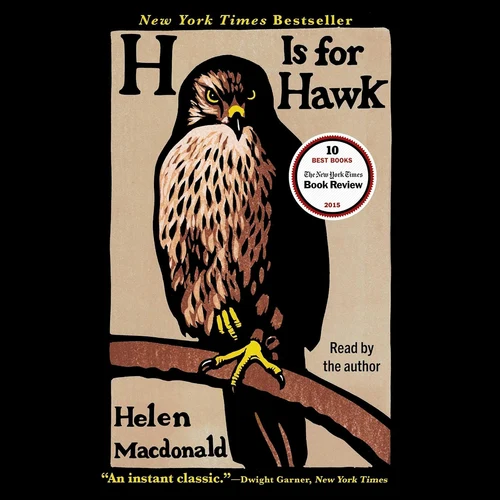
I have a confession. I picked up H Is for Hawk because I thought it would be about a bird. I was wrong. Well, partly wrong. Helen Macdonald’s memoir is about a goshawk named Mabel, yes. But the bird is not the point. The point is what happens when grief hits you so hard that normal human comfort stops working. You know the kind. The hugs. The kind words. The casseroles. Macdonald could not take any of that. So she did something strange. She bought a hawk. The question that haunted me through every page was this: When pain is too big for words, what form of companionship can actually hold us?
The Hawk and the Hollow
Macdonald’s father died suddenly. A photographer. A man who taught her to see the world. She was undone. I mean that literally. She came apart. And instead of reaching for therapy or friends or grief groups, she reached for a goshawk. Mabel was not a pet. Goshawks are not pets. They are wild killers with eyes like black glass and a stillness that feels ancient. Macdonald spent months training this bird. She sat in the cold. She held meat in her gloved hand. She learned to read the hawk’s body language. Here is what struck me. She did not project human feelings onto the hawk. She did the opposite. She became more like the hawk. Silent. Still. Focused. Her grief was too raw for language. So she chose a creature that never speaks. It sounds dramatic but I think she was trying to disappear into something simpler. Something that does not ask you how you are feeling. Something that just watches.
The Craft of Stillness
Macdonald is a poet disguised as a naturalist. Her sentences are short and sharp. She writes about Mabel’s feathers like she is describing a stained glass window. She writes about the sky like it is a living thing. But the real craft is in what she leaves out. There is no dramatic moment where the hawk saves her. No sunrise scene where she suddenly feels better. The book is honest about that. Grief does not end. It changes shape. Macdonald shows this through the hawk’s own wildness. Mabel does not love her. Mabel tolerates her. There is a kind of dignity in that. You cannot bargain with a hawk. You cannot explain your pain to it. You can only show up. Every day. With food. With patience. With the willingness to sit in the cold and say nothing. The core theme here is not healing. It is coexistence. You live alongside your grief the way Macdonald lives alongside Mabel. Not in harmony. In a kind of wary truce.
What Stays When Words Fail
I finished this book feeling unsettled. That is rare for me. Most memoirs about loss give you a neat arc. Suffering, struggle, breakthrough. Macdonald refuses that. She ends the book still carrying her father’s absence. But she carries it differently. Here is what I think the book is really about. It is about the idea that some forms of love do not require understanding. You do not need to fix someone. You do not need to say the right thing. Sometimes you just need to be present. In silence. In the dark. Macdonald learned this from a hawk. That is strange. But it is also beautiful. The core insight? There is a kind of companionship that asks nothing from you except your presence. It does not need your words. It does not need your gratitude. It just needs you to stay.
