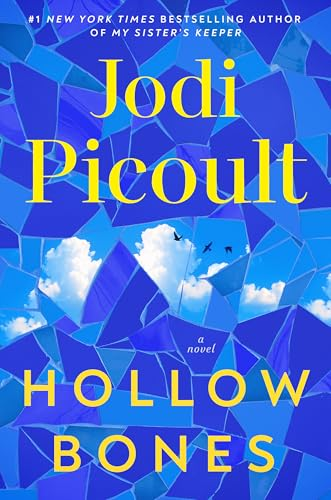
I have a folder on my phone called “just in case.” It has the pediatrician’s number, the poison control line, a list of medications my family takes. I built it after a bad week last winter, and I have never opened it since. That folder is what Jodi Picoult’s Hollow Bones is about. We spend our lives rehearsing for catastrophes we can name, and barely survive the ones we can’t.
Can you actually plan for the one thing that will break you?
Molly Fitzgerald Is the Plan, and the Plan Is Not Enough
Molly Fitzgerald is two months old on September 11, 2001, when her mother goes to an appointment at the World Trade Center and does not come home. Her father and stepmother raise her well. It doesn’t matter. She grows up with a low, constant hum of dread, the kind that never fully turns off.
Now twenty-five, she runs the Rhode Island Department for Emergency Preparedness. Her job is writing the rehearsals for storms, epidemics, plane crashes. I loved how Picoult opens the novel inside a simulated crash, firefighters moving through fake smoke, and the horror of it is that Molly is calm. She is calm because she has practiced. Her marriage to Jesse, a police polygraph expert with his own history of crisis, is the one room in her life without an exit plan. Then something happens, and I am not going to tell you what, only that it makes her question every wall she has ever built.
What got me was how specific her compulsion is. She isn’t a nervous woman in the abstract. She has a job. She has spreadsheets. She has a husband who lies for a living and a mother-shaped hole she has organized her entire career around. That is a real thing people do, and I hadn’t seen it written this plainly before.
And then the novel reaches back in time, to Eloise, the mother, and that is where the floor drops.
The Robin With the Hollow Bones
Here is the central case, and it matters. Eloise has bipolar disorder, gives birth, and descends into postpartum psychosis so severe that she comes to believe she may have already harmed her daughter. She leaves, convinced her absence is the safest gift she can give. Picoult researched this with obvious care, drawing on real cases, and the author’s note explains that the story began with a letter from a woman who had lived it. Eloise is not a monster in this book. She is a woman failed by a medical system that had no protocol for her.
The title comes from robins. Their bones are hollow. It sounds like fragility. It is actually what lets them fly. Picoult returns to that image again and again, and I will admit it worked on me, partly because the book refuses to make it tidy. Hollow bones also mean a bird is breakable. Both things are true.
Philippe Petit walking between the Twin Towers in 1974 threads through the novel as a counterweight. He crossed a void with no net. He planned obsessively. He still had to step out. That’s the whole argument of this book in one image, and Picoult knows it, and I’m glad she didn’t over-explain it.
The strongest cage is never the one with bars. It’s the one you built yourself, out of love, and then locked from the inside.
Who Should Read This, and Who Should Walk Away
What is good here is substantial. Picoult’s research is not decorative. The 9/11 material, arriving near the twenty-fifth anniversary, treats collective grief as a private wound that happens to be public, and the postpartum material treats a stigmatized illness as a medical emergency rather than a moral failing. The dual timeline earns its structure.
What bothered me: the ending feels engineered. A couple of reveals click into place a little too neatly, and the novel carries so many themes that some of them, notably sexual abuse and the callbacks to My Sister’s Keeper, get less air than they deserve. If you have not read My Sister’s Keeper, be warned. This book spoils it.
Read Hollow Bones if you want morally complex family fiction that takes women’s health seriously and doesn’t flinch. Skip it if graphic material about harm to children is a hard line for you, or if you want a book that resolves cleanly. It won’t.
What I took away is smaller than a lesson. I closed the book and thought about my own preparedness rituals, my own little drills, and I know exactly which disaster none of them covers. I still have that folder on my phone. I still have not opened it.
This novel won’t teach you how to be ready. But in the hours when you’re pretending to be, it will sit beside you and admit that it isn’t either.

