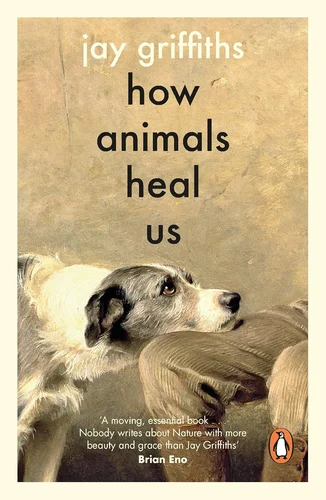
I sat in my kitchen the other day, drinking coffee. My dog was lying by the door, not looking at me, just breathing. A friend had asked me, “Does she know when you’re sad?” I said yes. But I couldn’t explain how. Then I opened Jay Griffiths’ new book, How Animals Heal Us, and she gave me the words I didn’t have. The book asks a simple but uncomfortable question: what if our entire medical system, with its pills and protocols, has missed something essential about healing? What if the quiet presence of an animal is not a supplement to care, but the heart of it?
A Vivid Portrait of Quiet Medicine
Griffiths doesn’t give you a hero on a journey. She gives you a tapestry. She weaves together stories from ancient Greece, where dolphins rescued sailors, to modern hospitals where dogs sniff out cancer. The protagonist here is not a single person. It is the relationship itself. The bond between a human and an animal. She shows us a woman who, after trauma, could not speak. Then a horse walked up to her and stood still. The woman cried for the first time in months. The book does not reveal whether she fully recovers. That is not the point. The point is that something shifted. A door opened. Griffiths calls this
“not a treatment for a symptom, but a reminder that you are alive.”
I found myself holding my breath while reading those stories. They felt more real than any clinical case study.
The Craft of Unspoken Connection
The core theme, I think, is presence. Not doing, but being. Griffiths argues that animals heal us because they do not try. They do not analyze our pain or offer solutions. They simply stay. The key imagery she uses is the blink. A slow blink from a cat. A dog’s gaze that holds no judgment. These tiny gestures become the architecture of healing. She writes about a psychiatrist who noticed that patients with dementia, who could not remember their own names, would smile when a therapy dog entered the room. The smile was not a cure. But it was a crack of light. Griffiths’ craft here is quiet and precise. She does not shout her argument. She places it beside you, like a warm animal. You realize, slowly, that her book is itself a kind of healing. It asks you to pay attention to the spaces between words.
What Remains: The Gift of Being Seen
I will be honest. I finished How Animals Heal Us and felt a strange grief. I thought about all the moments I had ignored my own dog’s presence, distracted by my phone or my worries. The book is not perfect. Some sections feel too academic, too dense with research. But that is a small flaw. What remains is the core insight: animals heal us not because they fix us, but because they witness us. They see us as we are, without wanting us to be different. In a world that demands constant improvement, that feels like a revolution. Maybe that is what love really is. Not the absence of pain. But the presence of someone who stays in it with you.
