I was standing in line at a pharmacy last month, and the man ahead of me kept shifting his weight from heel to heel while he talked into his phone. Smiling the whole time. I caught myself cataloguing him, the way you do after you have read one too many books about body language, and I felt a small, unpleasant jolt of recognition.
That is the exact reflex Miles Carter trains in How to Read Someone’s Mind, a slim practical guide to decoding the signals people leak without meaning to. But here is the question the book circles around without ever quite asking out loud: once you learn to see everything, can you ever stop seeing? Is that a gift, or is it a sentence?
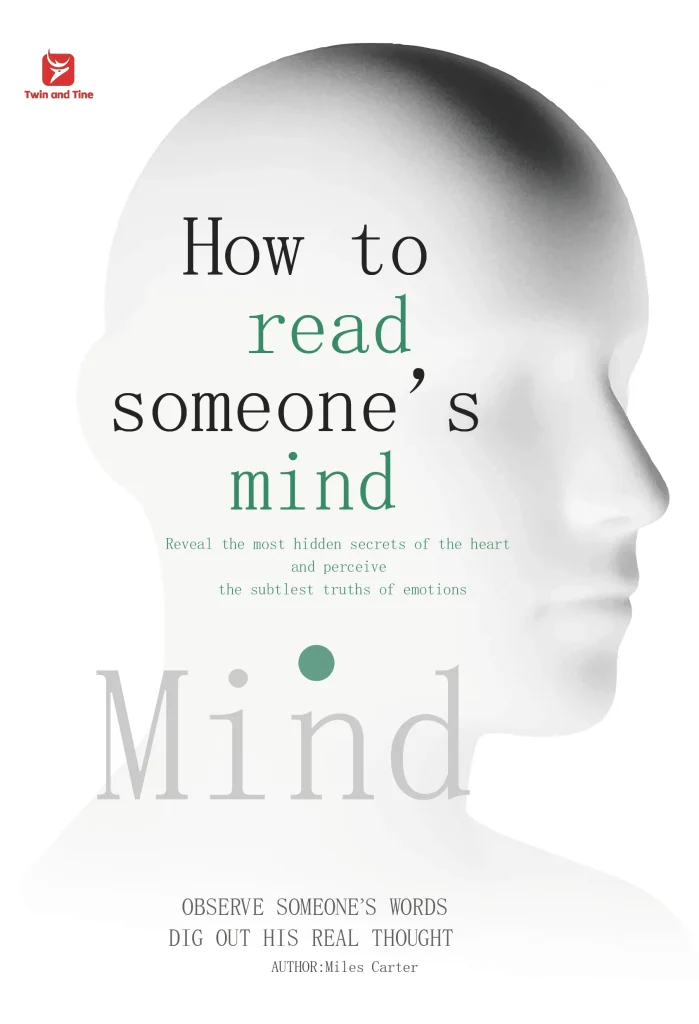
What the Book Actually Teaches
Carter’s central claim is straightforward. Reading people is not telepathy. It is pattern recognition, built from repeated observation of faces, posture, vocal tone, and small habits.
He walks through the usual terrain with steady hands. Eyebrows, eye contact, how someone sits, what their hands do when they think nobody is looking. There is a chapter on drinking habits, one on clothing choices, and a long section on emotional tells, anger, jealousy, anxiety, the stuff that leaks out before a person has time to arrange their face.
The personality taxonomy is where the book gets more interesting. Carter sketches types: the gossip, the over-cautious one, the dominant personality, the emotionally immature. Each comes with observable signals, so you can spot them in the wild rather than in a lab.
I’ll be honest, some of it reads like a field guide to your worst coworker. That is not a complaint. The book is at its best when it stays concrete.
The Quiet Flaw in the Machine
Here is where I started to pull back. About halfway through, I realized the book has almost nothing to say about the reader’s own signals. It trains you to watch. It says very little about being watched, or about what your constant watching broadcasts to everyone else.
Carter treats observation as a neutral skill, like learning to read a map. But it isn’t neutral. The moment you start decoding everyone’s micro-expressions, you also start performing. You notice your own hands, your own posture, your own face. You become a person who is, in a small way, always on stage.
That shift is subtle and the book never names it. I found myself wishing for one chapter on the cost. The cost to intimacy, mostly. Because there is a difference between understanding someone and surveilling them, and the line is thinner than Carter admits.
Why the Signals Matter Anyway
Still, the book earns its place. Carter’s most useful concept is what he calls repeated behavior, the idea that a single gesture means almost nothing but a pattern means almost everything. One forced smile is noise. A year of forced smiles is a confession.
This is genuinely useful and it is where the writing sharpens. He shows how the way someone treats a waiter, handles a delay, or responds when they have nothing to gain tells you more than any dinner-table performance ever will. I underlined that section twice.
The imagery stays restrained, mostly faces and hands, small physical details doing quiet work. A tightened jaw. A foot that points toward the door. It is not flashy writing, and it does not need to be.
So who is this book for? Honestly, anyone who has ever walked away from a conversation thinking, something was off and I cannot say what. It gives you vocabulary for that feeling. It is less useful for people who already read everyone in the room, because they will find the book confirming what they already do, and maybe that is the problem.
The weakness is real, though. Carter is a better observer than he is a moralist. He never asks whether you should use all of this, only whether you can. And the answer, for better or worse, is yes.

The Long Aftermath of Paying Attention
A book like this does not really end when you close it. It installs a habit. For a few weeks after finishing, I noticed everything and trusted nothing, which is a lonely way to move through a room.
Then something shifted. I began to see the watching itself as a kind of signal. When I caught myself scanning a friend’s face for hidden meaning, I understood what I was really doing. I was protecting myself. The skill Carter teaches is, at bottom, a defense mechanism dressed up as a superpower.
That is the book’s accidental insight, the one hiding behind all the practical advice. Reading people well does not make you closer to them. It makes you more careful. And careful, past a certain point, becomes its own kind of distance.
Maybe that is what real understanding costs. You trade some ease for some accuracy. You see more, and you are seen less. Whether that is worth it depends on what you were hoping to find in the first place.
“You can learn to read everyone in the room and still miss the only person who matters, which is the one doing the reading.”
FAQ
What is How to Read Someone’s Mind about?
It’s a practical guide to reading body language, facial expressions, vocal tone, and behavioral patterns. Miles Carter argues that reading people is not mind magic. It’s pattern recognition, and it can be learned through repeated observation.
Who should read How to Read Someone’s Mind?
Anyone who has walked away from a conversation feeling that something was off but couldn’t name it. It’s also useful for people in social, professional, or personal situations where understanding unspoken signals matters. It’s less useful for people who already read everyone in the room, because it may just confirm what they already do.
Does the book teach manipulation?
No. Carter stays on the observation side. He shows you what signals mean and how to recognize patterns. What you do with that information is left to you, which is both the book’s strength and its quiet flaw.
What is the most useful concept in the book?
Repeated behavior. A single gesture means almost nothing, but a pattern means almost everything. One forced smile is noise. A year of forced smiles is a confession. That idea alone is worth the read.
What are the book’s weaknesses?
It has almost nothing to say about the reader’s own signals. It trains you to watch but doesn’t address what your constant watching broadcasts to others. It also never asks whether you should use these skills, only whether you can.
What is the main takeaway from How to Read Someone’s Mind?
Reading people well doesn’t make you closer to them. It makes you more careful. And careful, past a certain point, becomes its own kind of distance. The skill is real. The cost is real too.

