I sat in a coffee shop last week, watching two people talk at the corner table. One was smiling. The other was leaning back, arms crossed, nodding at odd moments. I caught myself thinking, “Something is off here.” I couldn’t name it. I just felt it. That feeling is where Miles Carter’s book begins.
Carter’s central argument is straightforward and, honestly, a little sobering: you cannot read minds. You can only read patterns. The book is not about psychic intuition or secret tricks. It is about noticing what people repeat, what they avoid, and what their bodies do when their words say something else.
The question the book keeps circling is this: if people tell us who they are through behavior, why do we keep missing it until it’s too late?
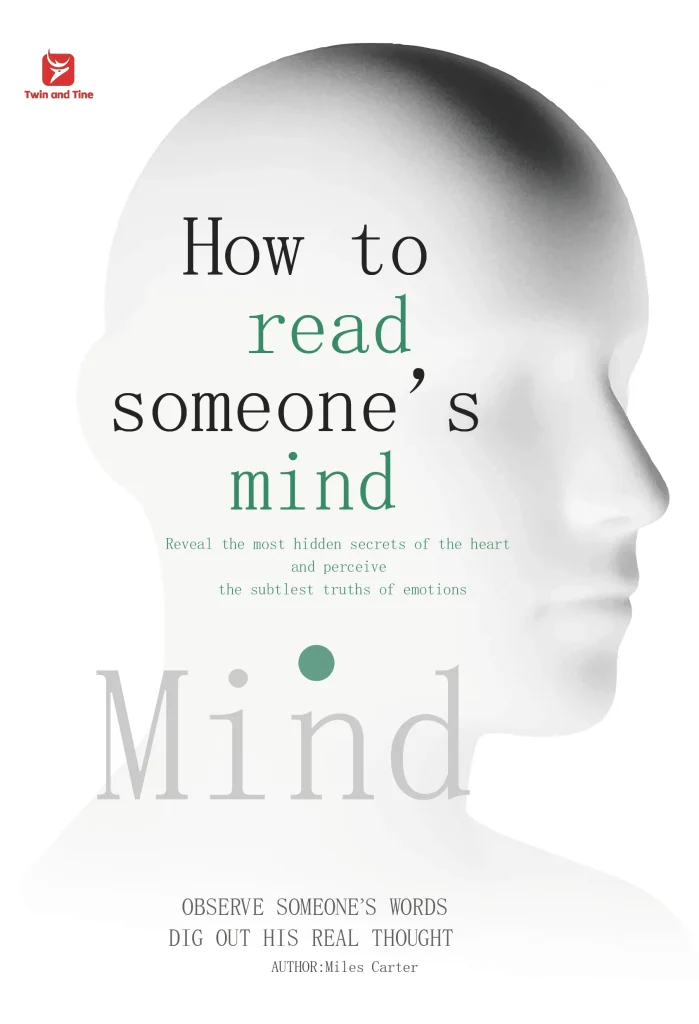
What the Book Actually Teaches
Carter opens with a chapter on nonverbal cues, and it’s the strongest section. He covers facial expressions, posture, tone, and the small physical tells that show up when someone is anxious, angry, or hiding discomfort.
| Signal | What It Might Mean |
|---|---|
| Forced smile | Politeness masking discomfort |
| Sudden breathing shift | Anxiety or suppressed emotion |
| Eyes looking away at a specific topic | Avoidance or unease |
| Arms crossed while nodding | Agreement that isn’t real |
| Foot pointing toward the door | Wanting to leave |
What I appreciated is that Carter doesn’t treat these as magic answers. He treats them as clues. One signal means nothing. A pattern of signals, repeated across time and situations, means something.
From there, the book moves into emotions. Jealousy, insecurity, anxiety, anger. Carter explains how each one tends to leak out physically, even when someone is trying to hide it. Then he shifts to personality styles.
The personality types he covers:
- The overly cautious person
- The dominant one
- The gossip
- The emotionally immature
- The inconsistent
This middle section is where the book gets practical. Carter gives readers a framework for recognizing recurring behavior, which is arguably his most useful concept: trust is built on consistency, and so is suspicion. One bad day doesn’t define a person. A pattern of bad days does.
The Craft and Its Limits
Carter writes with a teacher’s patience. Short chapters. Plain language. He is not trying to impress anyone. He is trying to be understood. That restraint is rare in this genre, which tends to oversell its promises.
The book is best when it stays grounded in observation. It struggles when it drifts toward generalization. Some personality categories feel too neat. Real people are messier than “the gossip” or “the dominant type.” I found myself wanting more nuance, more examples of how these patterns overlap or contradict each other.
If you have read books on body language or emotional intelligence, some of this will feel familiar. Carter is not breaking new ground. He is organizing old ground well.
Who This Book Is For
This book suits anyone who has walked away from a conversation feeling confused, or who has trusted someone too quickly and paid for it. It is for people navigating friendships, workplace politics, dating, or family dynamics.
It is for you if:
- You often feel confused after conversations
- You have trusted someone too quickly and regretted it
- You want to understand people better without manipulating them
- You prefer observation over assumption
It is not for you if:
- You want a shortcut to manipulation
- You expect x-ray vision into people’s souls
- You already read everyone in the room and wish you could stop

What You Take Away
The most useful idea in this book is also the simplest. Stop listening only to what people say. Watch what they do when they think no one is watching. Watch how they treat people who can’t help them. Watch what they repeat.
Three practical habits from the book:
- Watch consistency, not moments. One bad day isn’t a pattern. A year of bad days is.
- Watch how they treat people who can’t help them. That’s who they really are.
- Watch what they repeat. Patterns don’t lie.
Carter’s argument lands because it is modest. He is not promising you x-ray vision. He is promising you better attention. And in a world where everyone is talking, better attention might be the rarest skill we have.
Maybe that is what trust really is. Not a feeling you get in the first five minutes. Something you build by watching, slowly, over time.

