How do some people make conversation feel effortless while others struggle to know what to say? A good conversation is not simply about having interesting things to talk about. The way we listen, respond, show interest, and make other people feel can matter just as much.
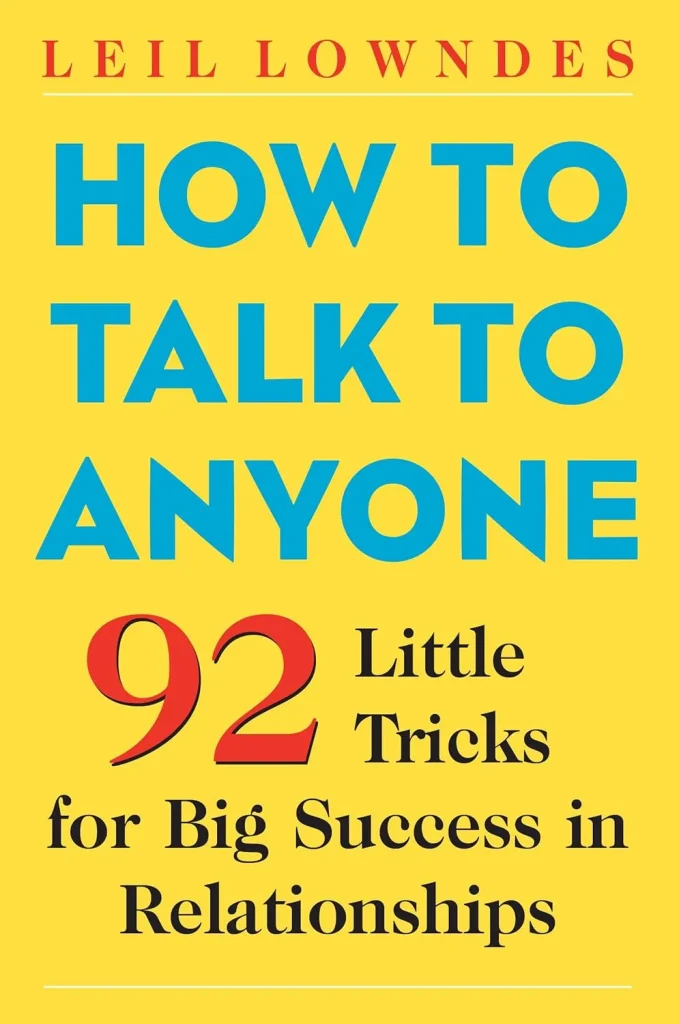
How to Talk to Anyone by Leil Lowndes focuses on the small social behaviors that can make everyday interactions more comfortable and effective. Rather than treating communication as a mysterious talent that some people are simply born with, the book presents practical techniques that readers can experiment with in conversations, social situations, and relationships.
For anyone who wants to become more confident around other people, understand social signals, or communicate more naturally, the book offers plenty of approachable ideas.
About the Book
Leil Lowndes’ How to Talk to Anyone is centered on everyday interpersonal communication. The book explores how people introduce themselves, start conversations, maintain interest, create rapport, and build positive impressions.
Instead of focusing primarily on formal public speaking, it looks at the small moments that happen constantly: meeting someone new, joining a conversation, making small talk, remembering details about people, and handling social situations with greater ease.
The book’s practical approach is one reason it has remained popular with readers interested in communication and social confidence.
Communication Starts Before You Say Anything
One of the most useful ideas is that communication is not limited to words.
Facial expressions, posture, eye contact, timing, and attention can all influence how a conversation feels. Someone may say the right words but still come across as distracted or uninterested because their behavior sends a different message.
This is especially important because people often form impressions quickly. Before we know much about someone, we are already responding to the signals they give us.
Learning to become more aware of these signals can make communication more intentional.
The Goal Is Not to Be the Most Interesting Person
People who feel nervous in conversations often worry about finding the perfect thing to say. They may prepare topics in advance, replay what they said afterward, or become overly focused on whether they are making a good impression.
The book offers another approach: focus more on the other person.
Showing genuine interest, asking relevant questions, remembering details, and giving someone room to talk can make a conversation much easier. You do not have to constantly entertain someone to create a good interaction.
In many situations, making another person feel heard is more valuable than trying to appear impressive.
Small Social Signals Can Change the Conversation
A recurring theme throughout the book is the importance of small behaviors.
How you greet someone, whether you appear open or closed off, how you respond when another person speaks, and whether you remember something they mentioned before can all influence a relationship over time.
These details may seem insignificant individually. Together, however, they can shape whether someone feels comfortable around you.
This is useful for readers who want to improve their communication without completely changing their personality. Becoming a better communicator does not necessarily mean becoming louder, more outgoing, or more talkative.
Sometimes it simply means becoming more attentive.
Why People Remember How You Made Them Feel
Another important lesson is that successful communication is not only about exchanging information.
People often remember the emotional experience of an interaction. They may not remember every sentence, but they remember whether they felt respected, ignored, judged, welcomed, or understood.
That is why communication skills can influence relationships far beyond individual conversations.
A thoughtful response can build trust. A dismissive reaction can create distance. Repeated interruptions can make someone feel unimportant. Simple signs of attention can strengthen a connection.
The book encourages readers to think about communication from the other person’s perspective rather than viewing every interaction only through their own intentions.
Listening Is a Communication Skill
Many people think better communication means learning how to speak more clearly. But listening is equally important.
When people are genuinely listening, they notice more than just the words being spoken. They pay attention to tone, emotion, context, and details that may become useful later.
This can make conversations more natural because responses become connected to what the other person actually said rather than to what we were already planning to say.
For people who overthink social interactions, this can also be helpful. Instead of constantly evaluating yourself during a conversation, you can shift some attention outward and become more present with the person in front of you.
Moving Beyond Awkward Small Talk
Small talk can feel meaningless when you approach it as a performance.
The book suggests that everyday conversation becomes easier when it is treated as an opportunity to discover something about another person. A simple question can lead to a shared interest, an experience, an opinion, or a more meaningful discussion.
This matters because strong relationships rarely begin with deep conversations immediately. They often develop through many small interactions that gradually create familiarity and trust.
Knowing how to start those interactions can therefore make a surprising difference.
What Makes How to Talk to Anyone Worth Reading?
The biggest strength of the book is its practical focus.
Readers are not simply told to “be confident” or “communicate better.” The book breaks social interaction into smaller behaviors that can be observed and practiced.
That makes its ideas particularly accessible for people who feel that social skills do not come naturally to them.
It also highlights an important point: communication problems are not always caused by saying the wrong thing. Sometimes they come from failing to notice how our behavior affects the other person.
That broader perspective makes the book useful for both personal and professional relationships.
When Communication Problems Come From Overthinking
There is also an interesting connection between communication and emotional self-management.
Someone who worries constantly about saying the wrong thing may become so focused on avoiding mistakes that conversation becomes unnatural. They may analyze every pause, expression, or response and assume that something has gone wrong.
Better communication is not about removing every awkward moment. People will misunderstand each other sometimes. Conversations will occasionally feel awkward. Not every interaction will lead to a connection.
The goal is to become comfortable enough with communication that these moments do not automatically turn into self-doubt.
Who Should Read How to Talk to Anyone?
This book is a good fit for readers who want practical help with everyday communication and relationships.
It may be especially useful for people who:
- Feel awkward starting conversations
- Struggle with small talk
- Want to become better listeners
- Overthink what to say around other people
- Want to feel more confident in social situations
- Have difficulty creating rapport with new people
- Want stronger communication skills at work or in personal relationships
It can also be useful for naturally quiet people who do not want to become highly extroverted but simply want their conversations to feel easier and more comfortable.
Final Thoughts
How to Talk to Anyone is ultimately about the small behaviors that shape everyday human connection. Its ideas may seem simple, but communication is often built from exactly these small moments: paying attention, showing interest, listening carefully, and responding in ways that make another person feel respected.
The book is not about turning yourself into a completely different person. Instead, it provides practical ways to become more aware of how you communicate and how others experience those interactions.
For readers interested in communication, social confidence, and understanding what makes relationships work, it offers a useful reminder: better conversations often begin not with having more to say, but with paying better attention to the person you’re talking to.