I found myself thinking about a friend of mine recently. She is a biologist, the kind who talks about cells with a kind of reverence. She once told me that a single human cell, isolated in a petri dish, will stop dividing if it has no contact with others. It will simply… give up. I didn’t fully understand that until I read Primo Levi’s If This Is a Man.
What is the central question of this book?
Levi was an Italian chemist, deported to Auschwitz in 1944. His book isn’t a scream. It isn’t a history lesson. It is a laboratory report. He watches, he measures, he classifies. But what he is observing is not a chemical reaction. He is observing the slow, methodical process of a person being turned into something else. The question that haunts every page is this: If you strip away every single thing that makes a life worth living—dignity, choice, hope, love, a name—what is left? And is that thing still human?
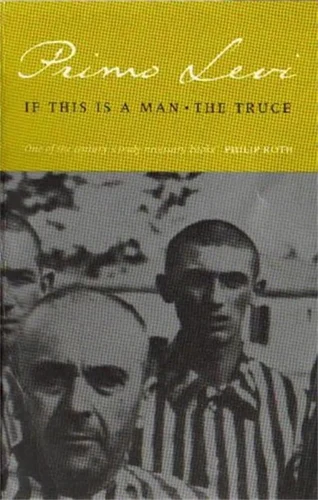
How the protagonist embodies the question: Survival as a clinical problem
Levi himself is the protagonist, and he is an unusual one. He is not a hero. He is not a saint. He is a man with a sharp, analytical mind who refuses the comfort of moral outrage. He describes the camp as a “gigantic biological and social experiment.” That is chilling in its precision. He breaks down the process of dehumanization into stages. First, you lose your clothes, your hair, your name. You become a number. Then, you lose your ability to feel for others. Hunger becomes the only real thing. He calls these men the “drowned”—those who give up, who become shells. And then there are the “saved,” the ones who find a way to survive. But here is the brutal twist. Levi does not pretend survival is noble. The saved are often those who are willing to bend, to lie, to steal a piece of bread. They are not better people. They are more adaptable. The core conflict is not between prisoner and guard. It is between the man you were and the creature the camp wants you to become. I will not tell you if Levi himself became that creature. That tension is the heart of the book.
Key imagery and subtle light: The craft of a chemist
Levi’s background gives the book its unique texture. He uses the language of science not as a shield, but as a scalpel. One image has stayed with me for years. He describes a selection process where men are sent to the gas chambers. The SS officer stands at the front, making a tiny gesture with his thumb. Left means life. Right means death. Levi writes that the officer’s face held “no expression of hatred, no expression of cruelty.” That is the horror. It is not a scream. It is a bureaucratic gesture. The most devastating imagery is the most ordinary: a bowl of soup, a pair of shoes, a scrap of cloth. These are not symbols. They are the entire world. And yet, Levi finds tiny, fragile moments of light. He describes learning a piece of a Dante poem from another prisoner. For a few minutes, he is not a number. He is a man remembering what beauty is. This character’s struggle reveals a universal pattern. We all live with the question of how much of ourselves we would sacrifice to keep breathing. The book’s subtle light is not hope. It is the act of remembering, of telling the story.
Complete the argument: What this book gives us
Levi completed the manuscript in 1947. It was initially rejected by publishers. People were not ready. They wanted stories of heroism, not this cold, clear-eyed analysis of how a person is unmade. The book’s true power is its refusal to offer easy comfort. It does not say “the human spirit triumphs.” It says something harder. It says that the human spirit can be broken, systematically, and that survival is not always victory. The book is for anyone who has ever wondered about the line between a person and a thing. Its weakness, if you can call it that, is its emotional restraint. Some readers will find it too cold, too clinical. But that is the point. The core insight is this: The real atrocity of the camps was not only the physical death. It was the stripping away of the inner life, the part of you that says “I exist, and I matter.” Levi shows us that being alive is not the same as being a person. Being a person requires a community, a name, a reason to wake up. To lose those things is a kind of death too. And maybe, the book whispers, the most important act of resistance is simply to refuse to forget that.
