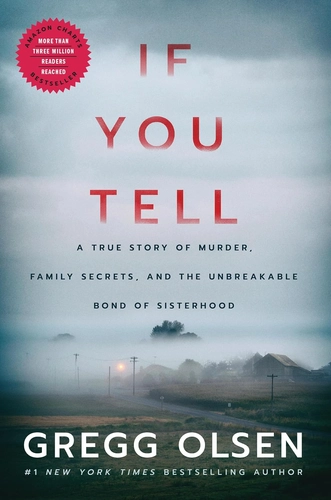
Shelly Knotek is charming to neighbors, generous in small ways, and utterly ruthless behind her own front door. Gregg Olsen’s If You Tell follows her three daughters, Nikki, Sami, and Tori, raised in a rural Washington farmhouse by a mother who treated cruelty as a daily chore.
How does a person become a prison guard and prisoner at the same time, and which one is harder to walk away from?
A Mother Who Ran the House Like a Warden
The abuse Shelly inflicts on her daughters is relentless: food withheld, sleep destroyed, humiliation turned into routine. It’s hard to read. I skimmed a few passages and then went back because I felt I owed the sisters that much attention.
Nikki, the oldest, carries a fierce protective instinct that makes her the natural leader. Sami finds ways to absorb punishment so her sisters take less. Tori, the youngest, grows up thinking this is simply what a home is.
What makes the book hard to put down is the slow realization that Shelly doesn’t just hurt her children. She draws other adults into the house, people who arrive needing help and end up trapped in her orbit. The door isn’t locked, exactly. It’s guarded by fear and confusion.
The Weather Report of a Mother’s Mood
Olsen’s real subject is the architecture of control. He shows how Shelly isolates her victims, how she rewards small acts of loyalty, and how she punishes any hint of resistance. The pattern repeats with her children, her husband, and the adults who move in. It’s not violence alone that keeps people silent. It’s the belief that no one outside will believe them.
There’s a detail I keep returning to: the way the sisters learned to read their mother’s mood the way sailors read weather. That’s the book’s quietest and most devastating insight. Children raised in chaos become experts in prediction, and that expertise never fully leaves them.
Olsen sometimes spends too long on background, and a few chapters read like a timeline rather than a story. The book also raises a question it never quite answers: why did neighbors and relatives look away for so long? He gestures at it, but the community’s silence deserves more scrutiny.
What the Sisters Got Back
This is not a book for anyone currently healing from family abuse. The details are graphic and unrelenting, and the trigger warnings are real. It’s also not for readers who want a tidy courtroom drama. The legal resolution is brief compared to the years of suffering that precede it.
For true-crime readers who care about survivors more than spectacle, this one earns its place. Olsen gives the sisters their voices back, and that’s the real achievement. I finished the book angry at the systems that failed them, and oddly grateful for my own boring, unremarkable childhood. Some books teach you something. This one makes you look at your own kitchen table differently.

