Can two people who share blood, history, and a dead father actually reach each other, or does grief just make the distance more visible? Sally Rooney wrote her entire book around that question. She does not answer it cleanly. She answers it the way siblings answer each other, sideways and late.
Peter is a Dublin lawyer in his thirties. Ivan is twenty-two and plays chess for a living, or for something close to it. Their father has just died of cancer. Peter is sleeping with two women and taking pills to manage the nights. Ivan meets Margaret, a woman fourteen years older, at a chess exhibition, and something in him unlocks. The plot, honestly, is thin on purpose. This is a book about interior weather.
The Sentences That Break Apart
What struck me first was Peter’s chapters. Rooney writes him in fragments, unpunctuated runs of thought that slide into dialogue without warning. I hated it for about forty pages. Then I realized I was reading a man dissociating in real time, and I stopped resisting. His sentences break apart because he is breaking apart. That is not a gimmick. That is craft doing the work of characterization.
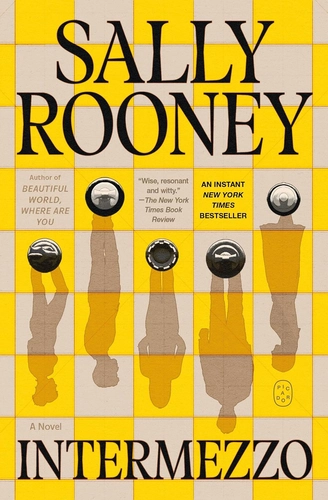
Ivan is the opposite. His sections are structured, anxious, over-explained, the inner voice of someone who has spent his whole life trying to solve people like chess positions. He is not the charming one. He knows it. When Margaret laughs at something he says, he cannot locate the mechanism. Rooney lets that confusion sit there. She does not rescue him with a clever line.
The conflict between the brothers is mostly silence. Missed calls. A funeral they navigate separately. Rooney keeps them apart for so long that when they finally share a scene, you feel the room tighten.
This is not a book about healing. It is a book about learning to tolerate the wound. That distinction matters, because Rooney refuses the reunion arc that would make readers feel better. She gives her characters small, partial recognitions. Nothing more.
The Move Between Moves
The novel’s central image is the intermezzo itself. A chess term for the unexpected move between moves. The retaliation you did not see coming. Rooney builds her whole structure around this idea. Every chapter interrupts the one before it. Peter’s voice cutting into Ivan’s. Margaret’s quiet self-reflection interrupting the men’s noise.
Grief in this novel is not a stage. It is a climate. Peter cannot cry, so he takes sleeping pills and lies to a woman who loves him. Ivan can cry, and does, but cannot explain what he feels to the person causing it. The brothers orbit the same absence and describe it in completely different languages.
Rooney also does something quietly political. Peter’s friends welcome his twenty-three-year-old girlfriend without a blink. Margaret’s colleagues would destroy her for dating a twenty-two-year-old man. The same age gap, two different verdicts, based entirely on who is being judged. It is a sharp observation about how society polices women’s desires while winking at men’s.
I kept thinking about my own brother. We have not fought in years. We also have not talked about anything that matters in about the same amount of time. Reading Peter and Ivan, I recognized the specific exhaustion of loving someone you no longer know how to reach.
The Paragraph Where Clarity Arrives
There is a moment with Margaret near the end that I will not describe. It involves her looking at her own life, and for one paragraph Rooney lets her see it clearly. That paragraph is the best writing in the book. It is also the most devastating, because clarity in this novel never lasts.
Intermezzo is Rooney’s most ambitious novel and her most emotionally demanding. It is also her least immediately lovable. The fragmented style will lose some readers. The lack of quotation marks, already a Rooney signature, becomes genuinely challenging in Peter’s sections. I had to reread sentences more than once. That is either the point or a flaw, and I am still deciding which.
It is not a book for someone who wants plot momentum. It is not for readers who need likable protagonists. Peter is, for long stretches, a self-pitying man who treats the women in his life as mirrors. Ivan is tender but passive. The novel knows this. It asks you to stay anyway.
It is for readers who loved the quiet devastation of Conversations with Friends and wanted Rooney to push further into formal risk. It is for anyone who has sat across from a sibling at a family event and felt the whole room vibrate with everything unsaid.
What I gained from it was not comfort. It was a more precise vocabulary for a specific kind of loneliness, the kind that exists inside families. Rooney does not fix her characters. She lets them keep going, damaged and trying. That is enough.
If you are grieving someone, this novel might meet you where you are. It might also press on the bruise. I cannot tell you which. I can tell you that a month later, I still think about Peter in his kitchen, awake at three in the morning, deciding whether to text a person he loves. I think about Ivan, who cannot stop analyzing a game that no longer has rules. I think about Margaret, who wanted one honest thing and got it, briefly.
This book will not teach you how to grieve. It will make you feel less strange for doing it badly.

