Recently, I found that every time someone asks me “what are you reading recently”, I can’t answer. It’s not that I haven’t read it, but I don’t want to label that book. This kind of evasive mentality is a bit similar to the basement in Invisible Man.
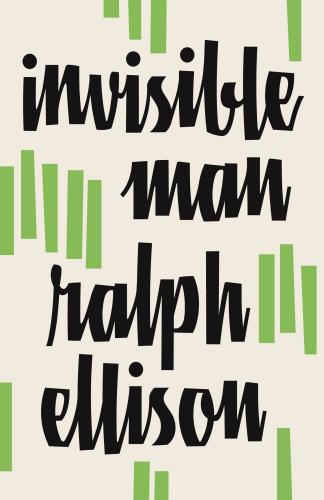
Ralph Ellison’s narrator lived in the basement, stole electricity, and installed 1,369 light bulbs. He doesn’t go out, not because he can’t, but because he is too lazy to be asked “who are you”, “which side do you stand on”, and “what do you mean”. He is tired of hearing these questions. From the South to the North, from the university to Harlem, everyone who met him was asking, but in a different way. The principal asked, in his own way, “Are you willing to be what we expect?” The owner of the paint factory asked, “Are you willing to obey the rules of the world?” And the brotherhood asked, “Are you willing to leave your fate to us to explain?”
He answered every time and nodded every time. Then I found that the nod was not understood, but co-opted.
There is no complicated plot in the novel. A nameless black youth was expelled, went to the factory, was injured, joined the organization, was betrayed, and finally hid in the basement. It sounds like a series of bad luck, but Ellison doesn’t write it as a tragedy. The narrator’s tone always has a strange calmness and even a little humor. He said that after he woke up from the explosion and found that the doctors treated him as an experimental subject, he just felt “here we go again”. This kind of fatigue makes me more uncomfortable than anger. At least anger takes strength; when you’re tired, you can’t even be bothered to curse.
I read the part about him eating sweet potatoes twice. He bought an orange sweet potato on the street of Harlem—the food of the poor, often used to mock black people. But he ate it as he walked, thinking to himself,“I am transforming what others have thrown to me into my own。” This idea appeared very subtly, without any dramatic background music, but it suddenly came up while he was eating on the road. I think this is what a real epiphany looks like. It’s not dramatic; it’s just walking and thinking about it.
Another passage that gave me pause was when he was sent to give a speech by the brotherhood. The people below the stage applauded and shouted, their eyes lit up. Standing on the stage, he suddenly realized that this scene was exactly the same as what he saw in the Southern church when he was a child, except that God had been replaced by the laws of history. He didn’t turn his back on the spot, but finished his speech, went back to his room, and lay in bed thinking it over slowly. This sense of lag is so real. People are not changed in an instant, but slowly changed by repeatedly recalling things after the fact.
I feel more and more that this book is not about identity. The word “identity” is too clean, as if to say that as long as you find the correct answer, you can settle down. The narrator never settled down from beginning to end. What he learned is not identity, but recognition. He recognized what everyone who wanted to define him wanted. The principal wanted a model student, the factory wanted an obedient worker, the brotherhood wanted a good tool. He recognized it all, and then dug a hole and hid in it. He didn’t resist or surrender; he just didn’t want to cooperate anymore.
Some people think the ending is too negative. What does it mean to hide in the basement? The problem hasn’t been solved. But I feel more and more that Ellison is right. Not all problems have solutions, and not all difficulties must be faced head-on. Those who gave him answers each swore and said, “This is the only way out.” And what was the result? The way out became another chain. He didn’t trust the grand promises. This distrust is not cynicism, but the conclusion he came to after paying enough of a price.
Now I kind of understand why I don’t want to tell others what books I’m reading. It’s not because the book isn’t good, but because once I say it, the other person will use the title to understand me. Just like the narrator has no name, it is safe without a name. It’s not that I refuse to communicate, but that I want to keep a little undefined space.
The 1,369 light bulbs in the basement are not used to illuminate others, but to let himself know that the light is still on. I think that’s enough.
