I was watering my houseplants the other day. A stupid, ordinary thing. But I stopped. I looked at the Monstera. It was just sitting there. Or was it? I had this sudden, unsettling question: was it waiting for me? Did it feel the water hit its roots? I put the watering can down. I felt a little embarrassed. But the question stayed.
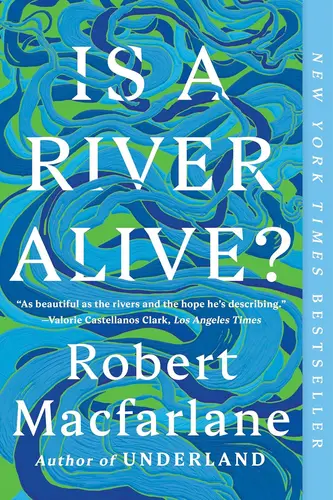
That is exactly what Robert Macfarlane does in his new book, Is a River Alive?. He takes something we treat as a resource, a thing, a backdrop. And he asks the most basic, most radical question: what if it is alive? Not metaphorically alive. Actually alive. With a will, a memory, a voice. He follows three rivers across the world to test this idea. He talks to scientists, activists, and Indigenous elders. He walks alongside the water, listens to it, reads its stories. And quietly, patiently, he makes you wonder: what would change if we took this seriously? Everything, maybe. But what does that actually look like?
What This Book Actually Shows You
Let me be clear. This is not a polemic. Macfarlane does not shout at you. He does not hand you a list of things to feel guilty about. Instead, he takes you on a journey. You go to the Rio Cedro in Ecuador, a river that a local community has sued for legal personhood. You stand with them on the bank. You hear the water moving over stones. You see a lawyer holding a document that says, in effect: this river has a right to exist.
Then you go to Chennai, India, where three rivers meet. Or rather, where they used to meet. They are now choked with trash, sewage, concrete. But a group of women have started cleaning them. They do it every morning. They sing while they work. Macfarlane watches them. He does not romanticize them. He just notes that they treat the river like a sick relative. Not like a problem to be solved. Like someone who needs care.
And then there is the third river, in North America. I will not spoil it. But it involves a beaver. A single beaver. And what that beaver does to a landscape. It is the most quietly radical part of the book. Because it shows you that a river does not need a human court to be alive. It just is.
Macfarlane has a gift for the small, telling detail. He notices the way light falls on water at different hours. He catches the exact word a local elder uses for “river” in their language. In Quechua, for example, a river is not a thing. It is a process. A verb. You cannot own a verb. You can only participate in it. That one insight, that grammatical difference, carries more weight than any policy argument I have read. It made me realize how much our language limits our imagination. We call a river “it.” What if we called it “you”?
The Craft Beneath the Surface
The core theme here is animacy. The quality of being alive. Macfarlane argues that Western thought has been systematically stripping animacy from the world for centuries. We decided that only humans and maybe some animals are truly alive. Everything else is matter. Dead stuff. Resources. This is not just a philosophical mistake. It is a practical disaster. If the river is dead, you can dam it. You can poison it. You can drain it. You can do anything to it, because it is not a someone. It is a something.
The imagery that stays with me is water. Obviously. But not the grand, dramatic kind. The small kind. A trickle through a crack in concrete. A puddle after rain. A glass of tap water on a kitchen table. Macfarlane keeps bringing you back to the mundane. Because that is where the real question lives. Not in the Amazon. In your kitchen. Is that water in your glass alive? And if it is, what does that mean for how you drink it? This is not a comfortable question. But he does not push you for an answer. He just leaves it there, like a stone in your shoe.
What This Book Leaves You With
I will be honest. I finished the book and did not know what to do. I felt changed, but I could not point to exactly how. It is not that I am now going to join a river rights movement. I probably will not. But I did stop pouring leftover cooking oil down the drain. I started thinking about where my water comes from. I looked at my houseplants differently. I talked to them. I know how that sounds.
The book has some limitations. It is dense in places. Macfarlane loves language, and sometimes he lets it run a little wild. There are sentences you have to read twice. Also, the legal and philosophical arguments can get technical. A reader looking for a simple, emotional plea for nature might struggle. This is not a “save the whales” book. It is a book that asks you to rewire your entire way of seeing.
But for a certain kind of reader, the one who has felt that something is wrong with how we treat the world but cannot name it, this book is a gift. It gives you a language for that feeling. It gives you stories instead of arguments. And it leaves you with one idea that I cannot shake. Macfarlane writes, near the end: “We are all made of river. We forget this at our peril.”
I think about that sentence every time I turn on the tap.
