I started this book angry. Not at Mike Pitts, the author, but at myself. How many times had I repeated the story of Easter Island? The one where the Rapa Nui people cut down their last tree, brought ecological ruin upon themselves, and collapsed into cannibalism. It felt like a parable we all needed. A warning for the Anthropocene. But what if that warning is built on a lie?
That is the question Mike Pitts asks in “Island at the Edge of the World.” And it is the question I could not stop turning over in my mind. What if our most beloved cautionary tales are just stories we told ourselves to feel superior?
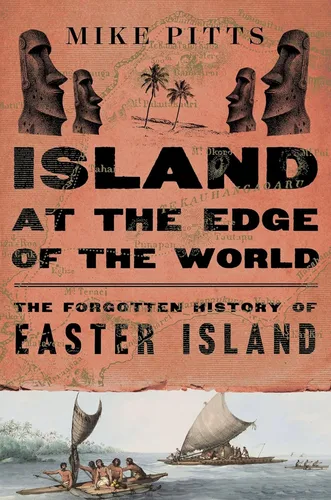
The Moai and the Mythmakers
The book opens with the moai. Those massive stone heads. I had seen pictures my whole life and thought I understood them. Pitts shows me I understood nothing. The moai were not the desperate creations of a dying civilization. They were the center of a sophisticated, thriving society for centuries.
Pitts follows the archaeologists, the explorers, the colonizers. The real story is not about the Rapa Nui destroying themselves. It is about Europeans arriving and destroying them. Disease, slave raids, forced relocation. By the 1870s, the population had been reduced to just over one hundred people. The island was taken over by a sheep farm. The Rapa Nui were confined to a single settlement.
The narrative of “ecocide” was invented later. It was a convenient story that blamed the victims. It let the European colonizers off the hook. I found this deeply uncomfortable to read. Not because it was hard to understand. Because it forced me to see how easily I had accepted a story that made me feel righteous. The collapse was not ecological. It was colonial.
The Craft of Unmaking a Myth
Pitts is an archaeologist and a journalist. His writing is careful. He does not shout. He just lays out the evidence piece by piece. The book moves between excavation reports and historical documents. You watch him sift through the dirt of narratives.
The core theme is simple and devastating. Narratives are never neutral. The story of Rapa Nui as a “cautionary tale” served a purpose. It justified exploitation. It erased the violence of the colonizers. The key imagery here is the moai themselves. They were not toppled by the Rapa Nui in a frenzy of civil war, as the myth says. They were pushed over by Christian missionaries and later by colonial administrators who wanted to “civilize” the island.
I realized something while reading. The moai were not symbols of a failed society. They were symbols of a successful one that was deliberately destroyed. The pattern is universal. We tell stories about the “primitive” people who failed. It makes us feel smart. It makes our own violence invisible. Pitts shows that the real lesson from Easter Island is not about trees. It is about power. Who gets to write the history. Who gets to be the hero of their own story.
What Remains When the Myth Falls
So what do we do with this book? I think about the question Pitts leaves us with. If the story of ecological collapse is wrong, what does that mean for our present? Climate change is real. But the narrative of “inevitable collapse” is dangerous. The Rapa Nui did not collapse because they were stupid. They collapsed because they were invaded.
This book is for anyone who has ever repeated a story without asking who told it first. It is for people who want to understand how history becomes a weapon. The weakness of the book is that Pitts sometimes gets lost in archaeological detail. The strength is that he never loses sight of the human cost.
I finished the book and sat in silence for a while. The moai are still standing on the island. Some have been re-erected by the Rapa Nui people. They are reclaiming their history. The question I am left with is not about the past. It is about the present. What stories about ourselves are we telling right now that will look like lies to the people who come after us?
