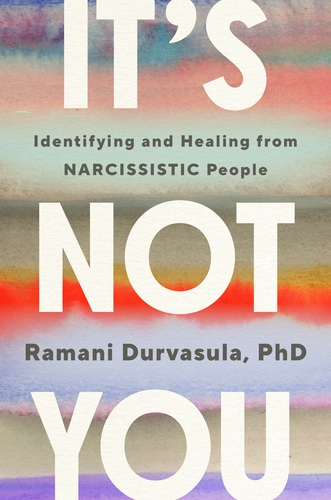
I picked up It’s Not You with a certain reluctance. I had spent years watching a close friend circle through the same toxic relationship, each cycle leaving her more convinced that the problem was her. I wanted to help, but I didn’t know how. So I turned to Dr. Ramani Durvasula’s book, half-expecting another collection of buzzwords—gaslighting, trauma bonds—that sound important but don’t stick.
The book sat on my nightstand for a week before I opened it.
What I found was not what I expected. Durvasula, a psychologist with over two decades of clinical experience, doesn’t just describe narcissistic behavior. She takes you by the hand and walks you through the wreckage, pointing out what happened, why it happened, and most importantly, why it was never your fault. The title is a promise, not a platitude. But the deeper question the book forces you to confront is this: if it’s not you, then what do you do with all the shame you’ve been carrying?
Hope Is the Real Enemy
Durvasula’s central argument is deceptively simple. She writes that “identifying a narcissistic person is far less important than understanding what qualifies as unacceptable behavior and what it does to you.” This reframing matters because most survivors get stuck trying to prove that their abuser is a narcissist, as if a diagnosis would finally make their pain legitimate.
The book’s true antagonist is something more subtle. It’s the hope that the narcissist will change, the belief that if you just explain yourself better, love harder, or become more patient, they will finally see you. Durvasula dismantles this hope with clinical precision. She shows how narcissistic people are wired to seek supply, not connection, and that their behavior is not a response to anything you did or failed to do. A tiger does not change its stripes, she reminds us, and a narcissist does not stop manipulating and invalidating you because you finally found the right words.
This is where the book gets uncomfortable. Durvasula does not offer a roadmap to winning the narcissist’s approval or earning their love. She offers something harder to accept: the futility of forgiveness. She argues that acceptance is the more honest and healing path. You accept that they will not change, not for you and not for the next person. You accept that their cruelty is not a commentary on your worth. You accept that the relationship you thought you had was, in many ways, a carefully constructed illusion.
Naming the Invisible Wounds
The most striking sections of It’s Not You are the ones that describe the everyday erosion of self that happens in these relationships. Durvasula writes about “thousands of cumulative indignities” rather than a single dramatic blow. She talks about how narcissistic people control the “emotional thermostat” of the relationship, creating cycles of warmth and withdrawal that leave you perpetually off-balance.
I found myself reading passages aloud to my friend. “He is not going to change,” I said, echoing the book’s refrain. “Not for you and not for anyone.” It felt brutal, but it also felt freeing. Durvasula’s gift is her ability to validate the survivor’s experience without sugarcoating the reality. She doesn’t tell you to feel better. She tells you to see clearly, and from that clarity, to make your choices.
The book also covers ground that many similar titles avoid. It acknowledges that leaving is not always possible or wise. Some survivors are financially dependent, some share children with the narcissist, some are culturally or legally bound to stay. Durvasula offers strategies for creating “emotional boundaries” even within the relationship, ways to protect your sense of self without engaging in a battle you cannot win. This pragmatic approach makes the book useful for a far wider audience than the typical self-help guide.
What the Book Asks of You
Durvasula is not a stylist. Her prose is functional, sometimes repetitive, and the book could have been a hundred pages shorter. There is also a sense of fatalism that might sit uneasily with some readers. She is clear that narcissistic people rarely benefit from therapy and that change is unlikely. For someone who is in a relationship with a narcissist and hoping for a different outcome, this message can feel like a door slamming shut.
The book also assumes that the reader has access to resources like therapy, which not everyone does. Durvasula mentions this limitation but does not offer much in the way of alternatives. And I have to admit, reading this book made me more cynical about human nature. I began to see narcissistic patterns in people I had previously given the benefit of the doubt. That was exhausting, and I suspect it would be even more so for someone who is already reeling from an abusive relationship.
If you are a survivor of emotional abuse, particularly if you have been told that you are too sensitive, too demanding, or too much, this book will be a balm. It will validate experiences you may have spent years minimizing. It will give you language for what happened to you. It will not, however, do the work of healing for you. Durvasula is clear that recovery is an active process, one that takes time and often requires professional support. If you are in the early stages of leaving an abusive relationship and are still raw, you might want to wait. This book does not pull punches, and it will raise the demons of past trauma. Read it when you have some emotional support in place.
If you are the friend or family member of a survivor, this book is invaluable. It will help you understand what they have been through and, crucially, what they need from you: validation, not advice; presence, not solutions.
I can’t say this book changed my life, because I was not the one who needed to change. But it gave me the tools to sit with my friend in her pain without trying to fix it. And that, I think, is a kind of healing in itself. The book’s final message is not one of cheap uplift. It is a gentle boundary. This book will not make the narcissist in your life disappear. But it will make you feel slightly less alone in moments when you are convinced you are losing your mind. That is no small thing.

