The first time I read the opening lines of Just Kids, I was sitting on my kitchen floor at 2 AM, unable to sleep. “It was the summer Coltrane died.” That sentence hooked me. I didn’t know Patti Smith’s music. I barely knew Robert Mapplethorpe’s photography. But I knew what it felt like to be young and restless and hungry for something you couldn’t name. So I kept reading.
This book won the National Book Award. It deserves every bit of that recognition. But honestly? I almost didn’t pick it up. I was tired of musician memoirs. They tend to be either self-aggrandizing or embarrassingly confessional. Smith’s book is neither. It’s something else entirely: a love letter disguised as a memoir, a promise kept to a dead friend, and a meditation on what it means to devote your life to art when you have nothing but each other.
The question that haunted me as I read: can two people who love each other truly help each other become who they are, or does real creation require solitude?
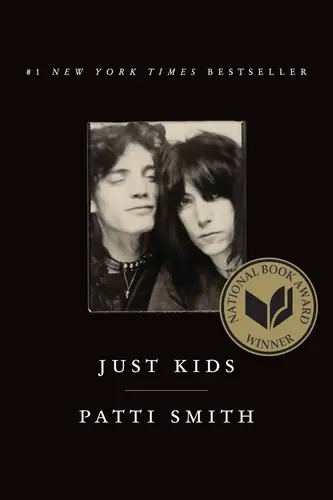
Two Kids Who Had Nothing but Each Other
Patti Smith was a girl from New Jersey who ran away to New York with almost no money. Robert Mapplethorpe was a boy from Long Island who was drawn to her like a moth to a flame. They met by chance. They moved in together within weeks. They shared a bed, a single room, and a dream of becoming artists.
Here’s what struck me most: they weren’t lovers in the conventional sense. Their relationship shifted and blurred. Sometimes they were romantic. Sometimes they were just roommates. Sometimes they were rivals. But they were always, always each other’s witness. When Robert brought home a boy, Patti didn’t leave. When Patti started dating other men, Robert didn’t abandon her. They made a pact early on: they would take care of each other, no matter what.
The core conflict of their story is simple and devastating: they grew in different directions. Robert dove into the dark, sexual underbelly of New York. Patti chased poetry and rock and roll. But they never stopped being each other’s anchor. I won’t tell you how it ends, but know this: their bond survived everything except death itself.
This is not a story about fame. It’s a story about two people who believed in each other when no one else would. That belief became the foundation of everything they built.
The Hotel Chelsea and the Hunger That Made Them
The core theme of Just Kids is simple: art is a kind of religion, and devotion to it requires sacrifice. Smith doesn’t romanticize poverty. She describes eating anchovy sandwiches for days because that’s all they could afford. She talks about sleeping on doorsteps. She writes about the cold, the hunger, the humiliation of being nobody in a city that worships somebody.
The key imagery that stuck with me was the Hotel Chelsea. Smith describes it as “a doll’s house in the Twilight Zone, with a hundred rooms, each a small universe.” That hotel becomes a character in itself. It’s where they met Janis Joplin, Jimi Hendrix, and William Burroughs. It’s where they watched the city burn during the riots. It’s where they learned that being an artist means living in a space where nothing is certain except the work itself.
Smith’s writing is deceptively simple. She doesn’t use fancy metaphors. She doesn’t try to impress you with vocabulary. She just tells you what happened, in the order it happened, with the honesty of someone who has nothing left to prove. The result is something rare: a memoir that feels like a conversation with a wise friend.
But here’s what made me uncomfortable. Smith is almost too generous with Robert. She glosses over his darker moments. She doesn’t dwell on his cruelty, his addiction, his obsession with sex and pain. Some readers will find this frustrating. They’ll want more dirt. I get that. But I think that’s missing the point. This is not a biography. It’s a love story. And love stories, by definition, are selective.
The Promise That Outlasted Everything
Here’s what I took away from this book: the strongest cage was never iron bars. It was warm, golden affection. Robert and Patti held each other captive in the best possible way. They made each other braver, weirder, more themselves.
The book has its flaws. The middle section gets a bit name-droppy. There are moments when Smith lingers too long on minor figures. And if you’re looking for a tell-all about the sex and drugs of 1970s New York, you’ll be disappointed. She’s too respectful for that.
Anyone who has ever loved something more than themselves will find something here. Anyone who has ever felt like an outsider. Anyone who has ever made a promise they couldn’t break, even when it would have been easier to walk away. If you want gossip, skip it. If you hate poetic writing, skip it. If you think art is a hobby, not a calling, skip it.
“Only a fool would regret being had by art; or a saint.” I closed the book feeling slightly less alone in my own quiet devotion to the things I make. It made me want to call an old friend. It made me want to write something true.
This book won’t make you famous. It won’t make you money. But it might make you feel slightly less crazy in those moments when you wonder why you keep doing this thing you can’t stop doing.
