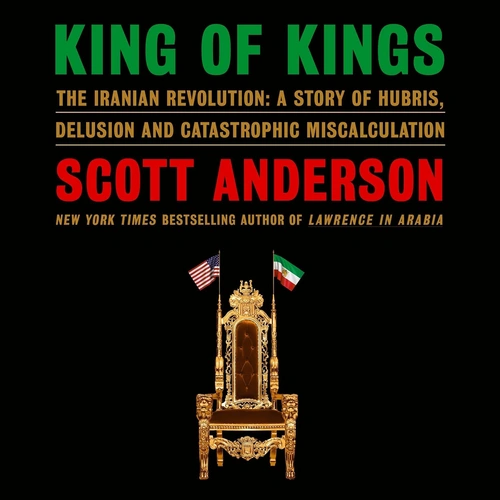
I was sitting in my kitchen last week, scrolling through news about the latest tensions in the Middle East. Another drone strike. Another round of sanctions. Another official saying we had it under control. I felt that familiar exhaustion. And then I picked up Scott Anderson’s King of Kings. Honestly, I wasn’t sure I had the energy for six hundred pages of geopolitical tragedy. But something in the opening chapter grabbed me. It wasn’t the history I thought I knew. It was the question that haunts every page: How does a superpower, with all its intelligence and resources, get everything so wrong?
What the book is really about
Anderson doesn’t give us another dry chronology of the Iranian Revolution. He gives us a story of hubris. The central figure isn’t the Shah or Khomeini or any single American president. It’s the American conviction that we could manage Iran, shape it, control it. The book traces how U.S. officials from the 1953 coup to the 1979 hostage crisis kept making the same mistake. They thought they understood the country. They thought they could predict its people. They thought they had the reins. What they had, it turns out, was a series of illusions.
The Shah himself is a tragic figure here. Not sympathetic exactly. More like a man trapped in his own performance. He wanted to be a modern king, a Western ally, a strongman. But he couldn’t see that his people were drifting away from him. Anderson shows how the Shah’s secret police, his lavish celebrations, his dependence on American support all built a palace of glass. One crack, and it shattered.
Why this book matters now
What struck me most was a small detail. Anderson describes a CIA report from 1977 that predicted Iran was stable for at least a decade. Two years later, the revolution was in full swing. That single miscalculation, born of overconfidence, cost thousands of lives and reshaped global politics. I found myself thinking about how often we do this in our own lives. We convince ourselves we have the map. We forget the territory is always shifting.
The prose is quiet, almost clinical at times. Anderson doesn’t shout. He lets the facts speak. But there’s a deep sadness underneath. A sense that history could have been different if someone, somewhere, had just admitted they didn’t know.
The uncomfortable truth
I’ll be honest. I finished the book feeling unsettled. Not because Anderson offers easy answers. He doesn’t. But because the pattern he reveals feels so familiar. The arrogance of power. The refusal to listen to local voices. The belief that force can solve what understanding cannot.
The core insight: the worst mistakes aren’t made by the ignorant. They’re made by the confident. King of Kings is a warning, not just about Iran, but about the danger of certainty itself. In a world that demands we have strong opinions, Anderson reminds us that humility might be the rarest and most necessary virtue.
