I went to a reading last month. The author was nervous, fumbling with pages. I thought about Salman Rushdie, standing on that stage in Chautauqua, New York, in August 2022. A man rushed the platform. A knife. Twenty-seven seconds of pure violence. Rushdie lost an eye, the use of one hand. He nearly died.
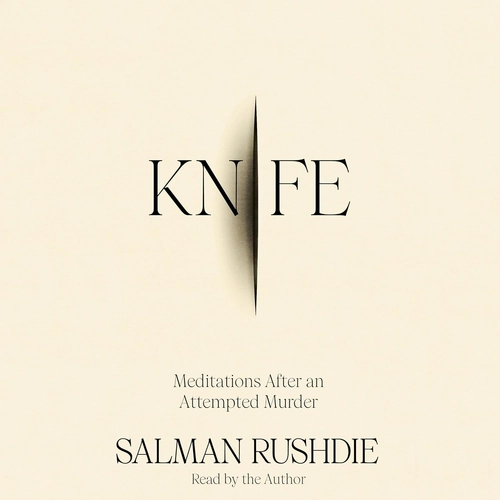
I picked up “Knife: Meditations After an Attempted Murder” expecting a revenge story. A settling of scores. An angry man’s final word. What I found instead surprised me. Rushdie does not write about the attacker with venom. He writes about him with something closer to curiosity. The book asks a strange question: When the worst thing that could happen actually happens, what do you do with the rest of your life?
The Body That Remembers
The first half of this book is physical. Rushdie describes the attack in a way that makes you flinch. The sensation of steel entering his right eye. The blood pooling. The paramedic who held his hand and told him he was okay, even when he clearly was not.
What strikes me is how unheroic he is. He does not fight back. He does not deliver a witty last line. He just bleeds. Later, in the hospital, his wife Eliza wakes him every hour to check if he has a brain hemorrhage. She asks him questions. Who is the president. What year is it. He gets them wrong sometimes. The man who spent decades crafting elegant sentences cannot remember his own name.
This is not the Rushdie we know from the fatwa years. That Rushdie was defiant, almost arrogant. This Rushdie is fragile. He admits to crying. He admits to nightmares. He admits that the attacker, a stranger named Hadi Matar, took something from him that he will never get back. Not just his eye. Not just his hand. His sense of being safe in his own skin.
The core conflict here is simple: How do you live when your body has become a site of trauma? He does not offer easy answers. He just shows us the struggle.
The Pen That Heals
If the first half is about the body, the second half is about the mind. Rushdie writes about the attacker with a kind of clinical distance. He calls him “The A.” Not Hadi. Not the terrorist. Just The A. He imagines a conversation with him. It is not a debate. It is an interrogation. Why did you do it. What did you think you would accomplish.
This is where the book’s deeper theme emerges. Violence tries to silence a story. Writing is how you reclaim the voice. Rushdie does not forgive The A. He does not need to. What he does is more radical: he refuses to let The A define the narrative.
The imagery in this book is sharp, almost painful. A hospital bed becomes a writing desk. A missing eye becomes a metaphor for what violence takes from us all. He describes the wound in his hand as a “hole through which meaning leaked out.” It is a devastating image. But he also describes how writing fills that hole. Sentence by sentence. Page by page.
I think about what it means to write after trauma. Most of us would retreat. We would curl up and wait for the pain to pass. Rushdie does the opposite. He writes his way back into the world. He says, “The only way to deal with a nightmare is to wake up and describe it.”
The Voice That Endures
The book has flaws. It is repetitive in places. Rushdie circles the same questions. Why me. Why then. Why this. He does not always find satisfying answers. Some readers might find the second half too abstract, too meditative. I wanted more anger, honestly. More fury. But that is not who Rushdie is anymore.
What I found instead was something quieter and more profound. This is a book about aging. About what it means to survive not just an attack, but the slow erosion of time. Rushdie is seventy-six. He has lived through a fatwa, through decades of hiding, and now through a knife. He is tired. But he is still writing.
I finished the book and sat in silence for a while. I thought about my own fears. The small ones. The big ones. The ones I cannot name. Rushdie does not tell us to be brave. He does not tell us that everything will be okay. He tells us something more honest. He tells us that the knife will come for all of us, in one form or another. What matters is what we do after.
He writes, “The story I tell myself about myself is the only story that matters.” It sounds dramatic, I know. But I read that line three times. I think he is right. The attacker tried to end Rushdie’s story. He failed. Because the story does not live in the body. It lives in the words.
Maybe that is the real meditation. Not on the knife. On the hand that holds the pen.
