I bought this book on a Sunday night, sitting on my bedroom floor with the lights dim. I wasn’t looking for a quick fix. I was looking for something that wouldn’t ask me to pretend I was fine.
The cover was soft. The pages were thick. And the moment I opened it, I realized this wasn’t a book you read. It was a book you did.
Miles Carter’s Let It Unfold is a 15-week guided journal designed for people who grew up with emotional wounds they never quite knew how to name. Injustice. Abandonment. Neglect. The kind of childhood that leaves you functioning on the outside and falling apart on the inside. I didn’t expect a book to understand that. But this one did.
The Structure That Saved Me From Overthinking
The book is organized around a weekly rhythm, Monday through Friday, with each day carrying a different focus.
Mondays are about self-acceptance. Tuesdays bring mindfulness. Wednesdays push you toward growth and action. Thursdays ask you to explore your inner shadows, the parts you’d rather not look at. And Fridays are for gratitude, a soft landing at the end of each week.
The structure sounds simple, but it’s actually genius. It gives you just enough guidance without overwhelming you. Each exercise is short, maybe five or ten minutes. Nothing that requires a massive emotional investment before you’ve had your coffee. But over time, those small moments add up.
I found myself actually doing the exercises, which is more than I can say for most self-help books I’ve bought. Most of them end up on my shelf with a bookmark on page 12. This one stayed open on my nightstand.
What I Didn’t Expect to Find
I thought this book would be about fixing what’s broken. It’s not. It’s about unfolding what’s already there.
Carter’s approach is gentle but not soft. He doesn’t coddle you. He doesn’t tell you everything is fine when it’s not. What he does is create a space where you can sit with your own pain without feeling like you need to get over it immediately.
The exercises on Thursdays, the shadow work ones, were the hardest for me. One prompt asked me to write about a moment in my childhood when I felt truly unseen. I stared at the page for a long time. Then I wrote something I’d never told anyone. It wasn’t dramatic. It was just true. And putting it on paper made it feel less heavy.
That’s the quiet power of this book. It doesn’t demand dramatic breakthroughs. It just asks you to show up, day after day, and let the healing happen at its own pace.
The Illustrations and the Space to Breathe
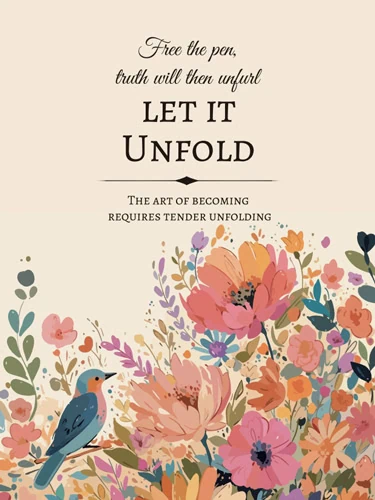
The book is beautifully illustrated. Not in a flashy way, but in a way that makes you want to slow down. The drawings are soft, gentle, almost like the visual equivalent of a deep breath.
There’s also a lot of blank space. I didn’t understand why at first. But as I worked through the weeks, I realized the space was intentional. It’s an invitation to sit with your thoughts, to let them settle, to write as much or as little as you need. Some days I wrote pages. Some days I wrote one sentence. Both felt right.
Who This Book Is For
If you grew up feeling like you weren’t enough, this book is for you. If you carry anger or sadness from things that happened when you were small, this book is for you. If you’ve tried therapy or other self-help books and still feel stuck, this book might offer something different.
It’s also for anyone who doesn’t know where to start. Carter doesn’t assume you have all the answers. He walks you through it slowly, week by week, without judgment.
The book isn’t a replacement for therapy. It’s a companion to it. A gentle guide that reminds you healing doesn’t have to be dramatic. It can be quiet. It can be slow. It can be a few minutes a day of showing up for yourself.
The Part That Stayed With Me
I finished the 15 weeks. I won’t pretend I feel completely healed. But I do feel different. Lighter, maybe. More aware of what I carry and why.
Near the end of the book, Carter writes something that I keep coming back to. He says that healing isn’t about becoming a new person. It’s about becoming the person you were always meant to be, before the hurt got in the way.
I don’t know if I’m there yet. But I’m closer than I was. And that’s enough.
If you’re tired of carrying things alone, if you want something that meets you where you are and doesn’t demand more than you can give, pick up Let It Unfold. It won’t fix everything. But it might help you start. And sometimes, starting is the hardest part.