I sat on my kitchen floor last Tuesday with this book open to Week Four, and I cried. Not the dramatic kind. The quiet kind, where you realize something heavy has been sitting on your chest for years, and a simple writing prompt just lifted it, just for a moment.
I bought this workbook for a friend. I opened it out of curiosity. I finished the first exercise because I had nothing else to do. Then I finished the second one, and I didn’t stop until my coffee went cold.
Miles Carter’s Let It Unfold is a 15-week guided journal for healing from childhood emotional wounds. Injustice. Abandonment. Neglect. The kind of pain that doesn’t announce itself, but stays in the background of everything you do.
I didn’t expect it to work on me. I was just supposed to review it for a friend. But somewhere between Monday’s self-acceptance prompt and Thursday’s shadow work, I stopped being the reviewer and started being the student.
The Rhythm That Caught Me Off Guard
The book follows a weekly structure, Monday through Friday, with each day carrying a different theme.
Mondays are for self-acceptance. Tuesdays bring mindfulness. Wednesdays push you toward growth. Thursdays ask you to explore your inner shadows, the parts you’d rather not look at. Fridays are for gratitude, a soft landing before the weekend.
I thought this would feel forced. Like a gym schedule for feelings. But there was something about the repetition that made it work. By Week Three, I was looking forward to Mondays. Not because they were easy, but because I had started to trust the rhythm. Recovery, I learned, isn’t a lightning strike. It’s a routine.
The Prompt That Broke Me Open
Week Four asked me to write a letter to my younger self. I stared at the page for a long time. I didn’t want to do it. It felt silly. It felt like something you do in a movie montage.
Then I started writing. And I didn’t stop.
I wrote about a moment I had never told anyone. A small injustice, really. The kind that seems minor in the retelling but left a scar in the living. I wrote the words I needed to hear back then but never got. And when I finished, I sat there with my coffee gone cold and my face wet, and I realized something. That letter wasn’t for my younger self. It was for the person I am now, the one who still carries that weight without knowing why.
That’s the quiet power of this book. It doesn’t demand dramatic breakthroughs. It just asks you to show up, day after day, and let the healing happen at its own pace.
The Space to Breathe
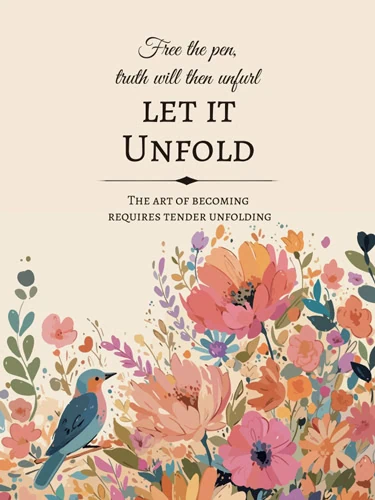
The book is beautifully illustrated. Not in a flashy way. The drawings are soft and gentle, almost like the visual equivalent of a deep breath.
There’s also a lot of blank space. I didn’t understand why at first. But as I worked through the weeks, I realized the space was intentional. It’s an invitation to sit with your thoughts, to let them settle, to write as much or as little as you need.
Some days I wrote pages. Some days I wrote one sentence. Both felt right. The book never made me feel like I was doing it wrong.
What It Asks of You
Let me be honest about the limitations.
If you are in acute crisis, if you are drowning right now, this workbook isn’t a life raft. It’s more like a swimming lesson. It requires some baseline stability to begin. The exercises assume you can sit with discomfort without being overwhelmed, and for some trauma survivors, that’s still too far away.
I also found some of the Friday gratitude prompts a little too cheerful. On hard weeks, gratitude felt forced, like smiling for a photo you didn’t want to take. But I learned to be honest in those moments too. I wrote “I’m not grateful today” more than once. And that, I think, was the most honest thing I wrote all week.
Who Needs This Book
If you grew up feeling like you weren’t enough, this book is for you. If you carry anger or sadness from things that happened when you were small, this book is for you. If you’ve tried therapy or other self-help books and still feel stuck, this might offer something different.
It’s for anyone who has ever said “I’m fine” when they weren’t. For anyone who has felt inexplicably anxious in safe rooms. For anyone who has caught themselves apologizing for existing.
It’s also for anyone who doesn’t know where to start. Carter doesn’t assume you have all the answers. He walks you through it slowly, week by week, without judgment.
The Lesson I’m Still Carrying
I finished the 15 weeks. I won’t pretend I feel completely healed. But I feel different. Lighter, maybe. More aware of what I carry and why.
Near the end of the book, Carter writes something that I keep coming back to. He says that healing isn’t about becoming a new person. It’s about becoming the person you were always meant to be, before the hurt got in the way.
I don’t know if I’m there yet. But I’m closer than I was. And that’s enough.
The core lesson, I think, is this. Every wound you carry was once a way of surviving. Now it’s time to learn a new way. Not all at once. Not perfectly. Just one week at a time, one prompt at a time, one honest sentence at a time.
If you’re tired of carrying things alone, if you want something that meets you where you are and doesn’t demand more than you can give, pick up Let It Unfold. It won’t fix everything. But it might help you start. And sometimes, starting is the hardest part