I sat in a parked car outside a grocery store last month, phone in hand, drafting an apology to someone who had not asked for one and did not deserve it. I had done nothing wrong. I was still apologizing.
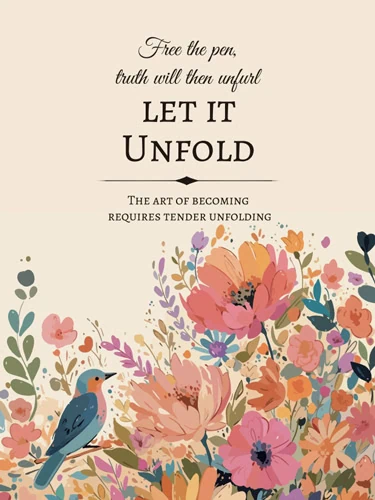
That’s the exact moment I understood what Miles Carter’s Let It Unfold is really asking. Not why we are tired. Why we keep choosing the tiredness.
What This Journal Actually Is
Carter’s book is a 15-week guided journal. I opened it with my arms crossed. I have read enough journals that promise healing and deliver blank lines and a font that looks like handwriting.
This one does something different. It gives each week a rhythm.
| Day | Focus |
|---|---|
| Monday | Self-acceptance |
| Tuesday | Mindfulness |
| Wednesday | Growth and action |
| Thursday | Difficult emotions and old patterns |
| Friday | Gratitude and reflection |
Then you start again. The structure sounds simple. It isn’t. It’s a scaffold, and the whole book rests on the belief that you cannot rebuild a person in a weekend, only in small repeated motions.
The Word That Carries the Whole Argument
Carter’s central concept is what he calls putting yourself first, too. That word “too” carries the entire argument.
He is not telling you to abandon your family or stop loving people. He is telling you that the guilt you feel for resting is not a moral compass. It is a habit.
He returns to this again and again. By week six, I had stopped arguing with him.
Who This Book Is For
The book suits people who have spent years being the reliable one. The one who remembers birthdays, absorbs bad news, and never needs anything.
If that sounds like you, this journal will feel less like a book and more like someone finally asking you a question you have been avoiding.
This book is for you if:
- You are the reliable one in every relationship
- You feel guilty when you rest
- You apologize for things that aren’t your fault
- You have forgotten what you actually need
This book is not for you if:
- You want a quick fix in one sitting
- You are in acute crisis and need immediate support
- You want a book that tells you exactly what to do
Where It Stumbles
The prompts assume a quiet room and twenty unhurried minutes. Many readers will not have either. Some weeks repeat emotional territory the previous week already covered.
Carter never pretends the journal replaces therapy, which I appreciated. But a reader in real crisis might want more signposts than he offers.
The Image That Stayed With Me
What stayed with me was the imagery of unfolding itself. Not breaking. Not rebuilding. Unfolding, the way a letter that has been folded too long in a drawer slowly opens when you finally hold it in warm hands.
The creases remain. The paper does not forget. It just stops hiding what is written on it.
The Small Exercise That Exposed Everything
There is a small moment in the Thursday sections, easy to skip, where Carter asks you to name a feeling without explaining it. No story, no justification. Just the word.
I found this almost impossible. I wanted to defend myself to a blank page. That tiny exercise exposed more than any long prompt in the book. I think it is the quiet heart of everything Carter is doing.
The Pattern Underneath
The universal pattern here is not about childhood, though childhood lives in it. It is about how we learn to earn love by being useful, and then mistake exhaustion for virtue.
Carter’s insight is that reassurance from others never fills this particular hole. You can collect a thousand “you’re fine” and still not believe one of them. The believing has to come from somewhere else. His journal is a 15-week attempt to build that somewhere.
Why This Feels Almost Subversive Right Now
Reading this in an era of constant performance, where everyone is optimizing and posting and proving, feels almost subversive. Carter is asking you to do less, slower, and to trust your own feelings before anyone else’s verdict.
That idea would have sounded soft to me five years ago. It sounds like survival now.

What This Book Is and Isn’t
This is not a book for someone looking for answers in one sitting. It is for the person who is willing to show up on fifteen Mondays and be slightly kinder to themselves than they were the week before.
If you are that person, or if you are trying to become that person, I would recommend it. Not as a cure. As a companion.
The Last Thing
Maybe that is what change really is. Not a single decision that rearranges everything. Just a folded letter, opened slowly, read again, and finally understood.

