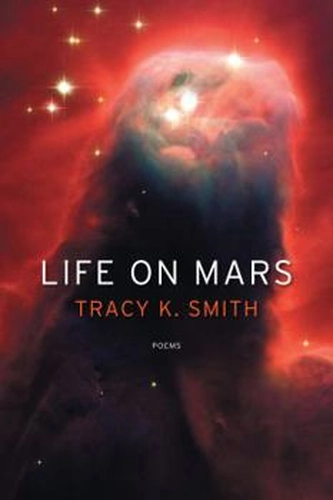
If someone told you there’s a poetry collection that touches on the universe, sci-fi movies, American society, a father’s death, and human loneliness, you’d probably wonder how all that fits together. I felt the same way when I first picked up Life on Mars. I expected poems about space—planets, galaxies, the far future. After all, the title itself feels distant and mysterious. But as I read on, I realized Tracy K. Smith isn’t really interested in Mars. She’s interested in Earth. Not how vast the universe is, but why we still feel so alone in that vastness.
The collection came out after the poet lost her father, who once worked for NASA on space programs. For her, the universe is far more than an abstract concept; it becomes a way of talking about grief and loss. Underneath all the galaxies and black holes is a much more intimate question: how do we cope with irreversible distance after losing loved ones?
One line strikes me deeply:
“The universe is indifferent.”
It means the cosmos remains untouched by human joy and sorrow. Instead of despair, the line brought me a strange sense of calm. Much of our anxiety stems from chasing fixed meaning and definite answers. Seen against billions of years, our daily worries begin to feel smaller. They never lose value, yet merely form part of life’s whole journey.
Reading the poems reminds me of a late walk home. The streets were nearly empty. I looked up and gazed at the starry sky, no different from usual. Busy with phones, work and trivial worries, we rarely pause to truly observe the heavens. Humans are contradictory creatures. We launch probes to explore remote space, yet often overlook the night sky right above us. Similarly, this book urges us to gaze far away, then draws our attention back to ourselves.
Its core theme is not space, but loss. The father’s death flows silently through all poems. Many verses touch on astronomy, movies and social issues, yet subtle sorrow lingers in the end. The grief is mild and never melodramatic, much like the feeling of staring at stars at night. We accept permanent departure, yet still feel the the traces people leave behind.
Filled with metaphors and swift associations, the poems can feel elusive at times. Readers expecting straightforward narratives may feel confused. Still, such ambiguity makes reading rewarding. Lines hard to grasp at first often resurface in thoughts days later.
What stays with me is a shifted perspective, rather than single poems. Human life swings between two scales: the unimaginably vast universe, and personal tangible existence. We ponder the birth of galaxies and mourn departed family; we debate civilization’s distant future and grieve over old words.
The poet beautifully weaves these unrelated aspects together. The universe does not make grief disappear. If anything, it makes human connection feel even more fragile and rare. In such an immense world, meeting and remembering one another is already a something rare and worth holding onto.
