I chatted with a friend recently about her six-year-old son. He loves playing hide and seek, but he does it wrong. He hides behind the thinnest curtain, his little feet sticking out, and then he shouts “I’m ready!” so loud the neighbors probably hear. He wants to be found. He craves the thrill of being hunted, but only because he trusts the hunter.
I kept thinking about that kid while reading Lights Out. This book asks a question that made me uncomfortable: what if the things we fantasize about in the dark are actually our most honest selves trying to speak?
Two Broken People in the Shadows
Aly Cappellucci is a trauma nurse. She spends her shifts holding bleeding bodies together, watching people die, keeping her composure while chaos swirls around her. Then she comes home, scrolls through social media, and watches videos of a masked man. She doesn’t just watch them. She comments on them. She fantasizes about him breaking into her house. She wants to be hunted.
Josh Hammond is that masked man. His father was a serial killer. There was a documentary. He looks like his dad. So he hides behind a mask online, posts thirst traps, and never lets anyone close. Until Aly’s drunken text reaches his roommate instead of her ex. He recognizes her. He knows her. And he decides to give her exactly what she asked for.
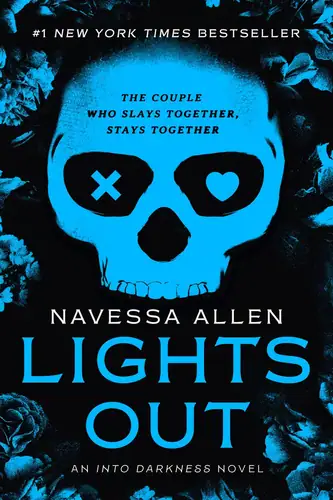
The setup sounds ridiculous when I type it out. I know. But here’s the thing that caught me off guard: I believed it. Aly isn’t some innocent damsel waiting to be rescued. She’s sharp and funny and deeply tired. She works a job that drains her empathy dry, and her fantasies aren’t about being victimized. They’re about being seen by someone who can match her darkness. And Josh isn’t a predator pretending to be sweet. He’s genuinely soft in ways that surprised me. He warms up her car on cold mornings. He buys her favorite snacks. He befriends her cat and calls him their son.
The book flips between their perspectives. And somewhere around Chapter 10, I realized I had stopped judging them. I was rooting for them. But what does that say about me?
How Consent Works in the Dark
The core theme here isn’t really about stalking or mask kinks or any of the tropes that made this book go viral on TikTok. It’s about consent. Not the legal kind, but the emotional kind. The kind where two people have to ask: what do we actually want from each other?
Allen does something clever with the imagery of masks. Every character in this book wears one. Aly wears hers at work, the composed nurse who never breaks. Josh wears his online, the dangerous man who never shows his face. Even the supporting characters have their disguises. The ex-boyfriend. The roommate. The family secrets that slowly emerge.
What I found most striking is how Allen handles the darker moments. There’s a scene where Josh shows up at Aly’s apartment wearing his mask for the first time. She’s waiting for him. She knows he’s coming. But her body still reacts with fear. Her heart races. Her hands shake. And he notices. He stops. He asks if she’s okay. He gives her an out. That moment, that pause, is where the book earns its emotional weight. It wasn’t about the fantasy. It was about the trust required to play it out.
The writing has this quick, banter-heavy rhythm that feels like watching a Netflix show. The dialogue snaps. The sex scenes are explicit but never gratuitous. And the humor, honestly, surprised me. I laughed out loud when Josh refers to himself as “Batman” unironically. I laughed again when Aly threatens to fight her cousin and Josh offers to hold her earrings.
But underneath all that sharpness, there’s a real tenderness. Both characters have trauma they’re working through. Josh’s father. Aly’s mother. The weight of their pasts doesn’t disappear when they find each other. It just becomes something they carry together.
The Fear I Didn’t Want to Examine
I’ll be honest with you. I almost didn’t finish this book.
Not because it was bad. Because it was too close to something I didn’t want to examine. I had a colleague once who made me feel unsafe. He was a hacker. He knew things about me that he shouldn’t have known. He sent me links that led nowhere good. Every notification on my phone made my stomach drop. I stopped replying. I stopped making eye contact. I made myself small.
Reading Lights Out, I kept waiting for the moment where the fantasy would turn real. Where Josh would cross the line and become the thing I feared. But that moment never came. Because the book isn’t about actual stalking. It’s about the fantasy of being wanted so completely that someone would break the rules for you. It’s about wanting to be seen, truly seen, by someone who isn’t afraid of your darkness.
That realization was uncomfortable. It forced me to ask: what was I really afraid of that colleague? His attention, or the part of me that might have wanted it?
The book has some flaws. The mafia subplot that appears in the second half feels like it belongs in a different story. Some of the humor verges on cringy. And the ending wraps up a little too neatly. But those imperfections didn’t matter to me by the final page. What mattered was the feeling I was left with.
Core insight: maybe the scariest fantasy isn’t the one where someone chases you. It’s the one where you stop running and realize you wanted to be caught all along.
