I went to a friend’s dinner party recently. Ten successful people, each a specialist in their field. By dessert, no one could agree on the playlist. I thought of Lorne Michaels. How does someone keep a room of comedians, writers, and egos from imploding for fifty years? That question stuck with me as I opened Susan Morrison’s new biography, “Lorne: The Man Who Invented Saturday Night Live.”
The book doesn’t try to answer that directly, thank goodness. Morrison, a New Yorker writer, spent years interviewing Michaels and nearly everyone around him. She avoids the typical biography trap, you know, the one where the author pretends to have unlocked the secret formula of a genius. Instead, she gives us something messier and more true.
What the Book Actually Asks
The core question here isn’t “how did Lorne Michaels create SNL?” It’s something deeper. It asks: what does it mean to lead when you cannot actually control the people you lead? Comedians, especially the ones who made SNL famous, are not followers. They are rebels, addicts, narcissists, and occasionally geniuses. Michaels’ job was never to command them. It was to build a container where their chaos could become comedy.
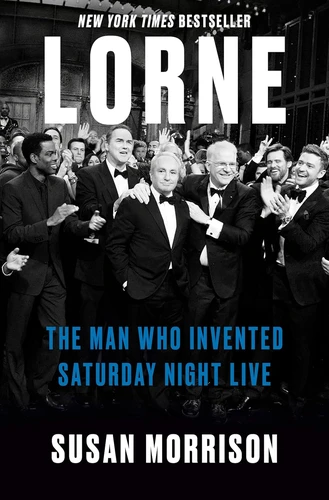
Morrison shows this through small, specific moments. She describes how Michaels would sit through chaotic writing sessions, saying almost nothing. He let fights happen. He let writers burn out. He let performers fail on live television. This is not negligence, she argues. It is a philosophy.
The Specific Ideas That Matter
Michaels has a concept he calls “the show.” For him, the show is a living thing. It has its own needs. A writer who throws a tantrum is not a problem to be managed. That tantrum might be the show trying to tell him something. His job is to listen to the show, not to the egos.
I found this idea surprisingly moving. In a world that worships productivity and efficiency, Michaels’ approach is almost anti-managerial. He protects the show by protecting the space around it. He hires people who are smarter than him in their areas. He lets them argue. He trusts that if the container is strong enough, the chaos will organize itself into something brilliant.
The book also reveals a more uncomfortable side. Michaels is not a warm person. He is distant, sometimes cold. He has cut people off without explanation. Morrison does not romanticize this. She simply shows it. The same distance that lets him make ruthless decisions also lets him stay calm when a cast member is screaming at him.
Where the Book Falls Short
I’ll be honest. The biography is long. It gets deep into SNL seasons and backstage politics that only superfans will care about. Morrison also leans heavily on anecdotes from famous people. Sometimes the book feels like a collection of great stories rather than a coherent argument. But maybe that is the point. A man like Lorne Michaels resists being summarized.
What You Take Away
For anyone who works in a creative field, or frankly any field where people are the product, this book is a quiet gift. It teaches you that leadership is not about having the right answers. It is about having the right questions. It is about knowing when to speak and when to disappear.
I finished the book thinking about that dinner party. Maybe the problem was not the playlist. Maybe the problem was me trying to force a decision. Michaels would have let the chaos play out. He would have trusted that the room, left to itself, would find its own rhythm. Maybe that is what leadership really is. Not the absence of mess, but the presence of someone who stays in it with you.
I recommend this book to anyone who has ever tried to herd cats. Which is, I suspect, almost everyone.
