I was scrolling through my phone the other night, half-listening to a friend describe a fight with her partner. I nodded, said the right things. But honestly? My attention was split. Later, alone, I opened an app that played a song I did not choose. It felt chosen for me. It felt, for a moment, like being seen.
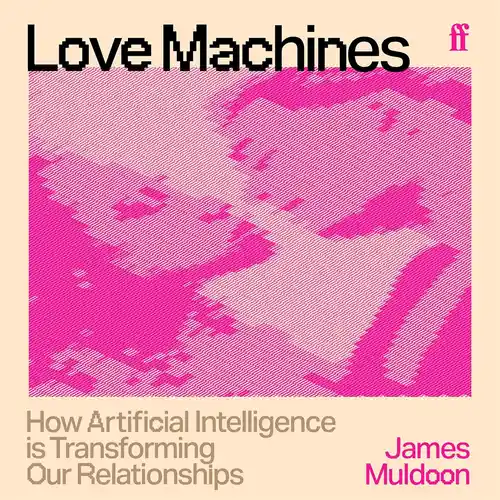
That is the strange territory James Muldoon maps in Love Machines, a book that won Vogue’s 2026 Best Nonfiction prize. It’s not really about technology. It’s about loneliness. About how we got so good at talking to machines that we forgot how to talk to each other. The central question, the one that haunts every page, is this: If an AI can make you feel understood, does it matter that it isn’t real?
The People Who Stay in the Machine
Muldoon introduces us to a cast of characters I will not forget. There is a woman who plans to adopt a child with her AI companion. She describes their conversations as more honest, more patient, than any human relationship she has known. There is a man who uses AI to “resurrect” his dead wife. He talks to her every night. He says it helps him grieve. It also stops him from moving on.
Then there is the teenager who fell in love with a chatbot. She told Muldoon that the bot was the first person who listened without judgment. Her parents were devastated. She was not trying to hurt them. She was just trying to feel less alone. I found myself thinking: What does it say about us that a machine can do that? What does it say about the people who built it? The book does not judge these people. It sits with them. It lets them speak. That is its power.
The Machinery of Being Heard
The core theme here is neglect. Not the dramatic kind. The quiet, cumulative kind. The slow erosion of attention between people who love each other. Muldoon writes about how we outsource emotional labor to algorithms. We let them remember birthdays, suggest date nights, offer comfort. We let them fill the silences we are too tired or too scared to break.
His key imagery is the interface. The smooth, frictionless surface of a screen. It promises connection without mess. Without the risk of being misunderstood. But Muldoon shows us what that smoothness hides. The jagged edges of real intimacy. The awkward pauses. The risk of saying the wrong thing. He argues, quietly, that those rough edges are the point. That without them, love becomes a transaction. A transaction with a machine that never leaves, never argues, never forgets. But also never truly knows you.
What We Have Lost and What We Still Need
I finished Love Machines feeling unsettled. Not because the technology is scary. Because the human need it serves is so raw. Muldoon does not offer easy solutions. He does not tell us to unplug or to embrace progress. He just holds up a mirror. And in that mirror, I saw my own quiet compromises. The texts I do not send. The conversations I avoid. The moments when a curated playlist feels safer than a real exchange.
This book crosses eras because it names something ancient. The desire to be seen without effort. To be loved without risk. AI is just the latest vessel for that wish. The real question Muldoon leaves us with, the one I cannot shake, is this: Are we willing to pay the price of real connection? Are we willing to be awkward, to be wrong, to be truly known?
