I was sitting in my kitchen, half-listening to the news about another mass shooting. The reporter kept saying the word “unstable.” The same word they used for my uncle when he was a teenager. I shut off the TV and picked up Antonia Hylton’s book. I needed to understand something. That word. That label. Who decides?
Madness: Race and Insanity in a Jim Crow Asylum asks a question that stays with you: What happens when a society decides an entire group of people is mentally unfit? Hylton traces the history of Crownsville Hospital in Maryland. It was built for Black patients during Jim Crow. It was supposed to be a place of healing. It became something else. A dumping ground. A prison. A laboratory.
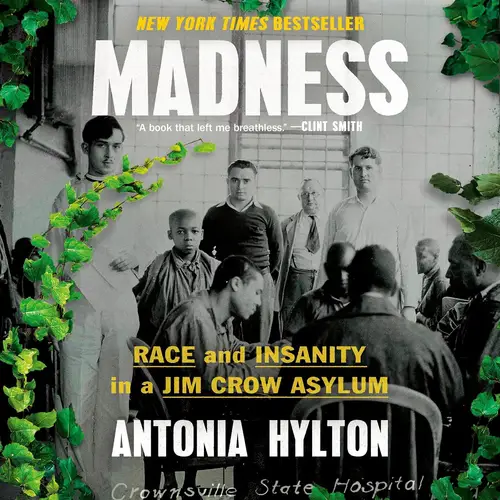
The Hospital as a Body
The protagonist here is not a person. It is a place. Crownsville Hospital breathes. It suffers. It makes mistakes. Hylton shows us its birth in the 1910s. A grand idea. A place for Black souls to rest. But the state of Maryland only funded it half as much as its white counterpart. The patients came in droves. Some were truly ill. Some were just poor. Some were rebellious. A woman who talked back to her white boss. A man who refused to work the cotton fields. They all got the same label: insane.
The plot unfolds like a slow wound. Hylton moves through decades. She interviews former patients. She reads old medical records. She finds a pattern. The diagnosis of insanity was a weapon. It was used to control. To silence. To dispose of. I kept thinking about my uncle. He was a Black kid in the 1970s. He talked to himself. He could not focus. The doctors called him schizophrenic. He was just sad. He was just scared. Crownsville had thousands of him.
The suspense is not in the ending. We know how this story goes. The suspense is in the details. The small moments. A mother begging to see her son. A doctor writing a note in 1943: “Patient shows no signs of psychosis. He is just Negro.” I felt a knot in my chest. I could not stop reading.
The Line Between Sick and Dangerous
The core theme is the medicalization of racism. Hylton does not just show us bad doctors. She shows us a system that needed a category for people it could not understand. The key imagery repeats: locked doors. White coats. Charts that say nothing.
She describes a scene from the 1950s. A patient named George is brought in. He is a veteran. He fought in World War Two. He came home and could not find work. He started drinking. He got loud in a bar. The police took him to Crownsville. The intake doctor wrote: “Delusional. Believes he deserves equal pay.” Hylton does not yell at you. She places this image in front of you. You see it. You feel it.
The craft here is quiet. Hylton is a journalist. She does not push her emotions. She lets the records speak. She lets the patients speak. There is a photograph in the book. I looked at it for a long time. A young woman in a white hospital gown. She stares at the camera. Her face is tired. Her mouth is closed. The caption says she was admitted for “hysteria.” The real story: her husband beat her. She ran away. She was found walking on the highway. They called it madness.
This struggle is not just historical. It is universal. Every family has a story like this. Someone who did not fit. Someone who was too loud. Too quiet. Too angry. Too sad. The line between sick and dangerous is drawn by power.
What We Still Carry
Hylton completes her argument in the last chapters. She connects Crownsville to today. She shows how the same patterns appear in modern psychiatry. Black patients are still overdiagnosed with schizophrenia. They are still undertreated for depression. They are still locked up instead of healed.
I finished the book on a Sunday morning. I called my mother. I asked her about my uncle again. She said the doctors never asked him what he needed. They just told him to take pills. He stopped taking them. He died young. I think about Crownsville. I think about all those people who were not sick. They were just tired. They were just Black. They were just alive in a country that did not want them.
The core insight is this: Madness is not a medical fact. It is a social judgment. Every time we call someone crazy, we are making a choice. We are choosing who belongs and who does not. Hylton’s book is not just about a hospital. It is about us. It is about the stories we tell to protect ourselves from the truth.
