What keeps a person moving forward when life becomes incredibly difficult? The question is at the heart of Man’s Search for Meaning by Viktor E. Frankl, a book that combines personal experience with psychological insight to explore one of the most fundamental human needs: finding meaning.
Frankl does not present happiness as something that can always be pursued directly. Instead, he suggests that people can find strength by discovering a reason to continue, even when circumstances are painful or uncertain.
The result is a deeply reflective book about resilience, hope, suffering, and the choices people can still make when many other aspects of life feel outside their control.
About Man’s Search for Meaning
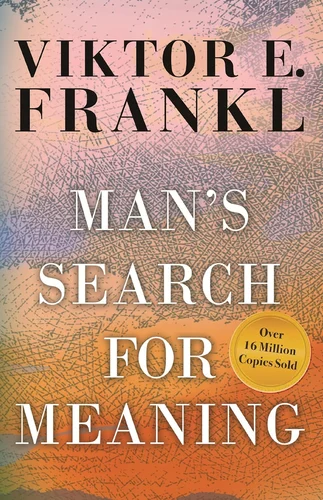
Written by Austrian psychiatrist Viktor E. Frankl, Man’s Search for Meaning draws partly from his experiences as a prisoner in Nazi concentration camps during World War II. Frankl describes the psychological challenges of surviving extreme suffering while also introducing ideas that became central to his approach to psychotherapy, known as logotherapy.
The book is divided broadly between Frankl’s observations of life in the camps and his reflections on the search for meaning. These two parts work together to explore how people respond psychologically to extreme circumstances and what can give life a sense of purpose.
It is not an easy book to read because of the historical experiences it describes. Yet its focus ultimately extends beyond suffering. Frankl is interested in what allows people to retain a sense of humanity, hope, and purpose even under circumstances they cannot control.
Key Ideas From The Book
Meaning Can Give Life Direction
The central idea of the book is that people need a sense of meaning. When life has a purpose, even difficult experiences can become easier to endure because there is something beyond the immediate struggle.
Frankl does not suggest that everyone must discover one universal purpose. Meaning can come from different sources, including relationships, work, creativity, responsibility, or the way someone chooses to respond to a difficult situation.
This makes the idea surprisingly personal. Instead of asking only what will make life comfortable, readers are encouraged to consider what makes their own life worth living.
We Cannot Always Control Circumstances
One of the book’s most powerful lessons concerns the difference between circumstances and responses.
People cannot control everything that happens to them. Unexpected loss, disappointment, uncertainty, and hardship are part of life.
However, Frankl emphasizes the importance of the attitude a person takes toward circumstances. Even when external freedom is severely limited, the ability to choose one’s response can remain meaningful.
This is a challenging idea, but it can also be empowering. It shifts attention away from trying to control everything and toward recognizing where personal choice is still possible.
Hope Is Connected to the Future
Frankl’s observations also highlight the importance of having something to live toward.
A future goal, a person someone loves, unfinished work, or a responsibility can provide a reason to keep moving forward. Hope does not necessarily mean believing that everything will become easy. It can simply mean having something that makes tomorrow worth reaching.
For readers dealing with periods of uncertainty, this idea can encourage them to think about what they want to protect, create, or experience in the future.
What Makes Man’s Search for Meaning Worth Reading?
The book’s greatest strength is its depth. Frankl does not discuss meaning as an abstract philosophical concept alone. He connects it to real experiences of fear, loss, uncertainty, and survival.
That makes the book particularly powerful for readers who are questioning what gives their own lives direction. It encourages reflection without reducing difficult experiences to simple motivational lessons.
Another strength is the relationship between psychology and philosophy. Frankl examines human behavior while also asking larger questions about freedom, responsibility, suffering, and purpose.
The book is relatively concise, but its ideas can stay with readers long after they finish it. It is the kind of book that may be worth revisiting at different stages of life because its questions can feel different depending on what a person is experiencing.
A Different Perspective on Happiness
One of the book’s most interesting implications is that happiness may not be something people can simply chase.
When people focus entirely on feeling happy, difficult emotions can seem like evidence that something has gone wrong. Frankl offers another perspective: a meaningful life can contain pain, uncertainty, and sadness while still being deeply valuable.
This does not mean suffering should be romanticized or deliberately pursued. Instead, the book suggests that difficult experiences do not automatically make life meaningless.
Meaning can sometimes be found in how people respond to circumstances they never wanted.
Who Should Read Man’s Search for Meaning?
This book is particularly suited to readers who enjoy thoughtful books about psychology, purpose, and personal growth.
It may be especially meaningful for people who:
- Are searching for greater purpose in life
- Feel lost or uncertain about their direction
- Want to understand resilience from a psychological perspective
- Are interested in philosophy and human behavior
- Are reflecting on difficult life experiences
- Want to develop a deeper understanding of hope and personal responsibility
Because of its historical subject matter, some sections can be emotionally difficult. Readers should approach the book with awareness of its serious themes.
Final Thoughts
Man’s Search for Meaning is ultimately a book about the human need for purpose. Its message is not that suffering is necessary for a meaningful life, but that even during periods of hardship, people can continue searching for reasons to live, create, love, and move forward.
Frankl’s ideas encourage readers to look beyond immediate circumstances and consider what gives their lives lasting value. For anyone questioning their direction or looking for a deeper understanding of resilience and purpose, this remains a remarkably thought-provoking book.