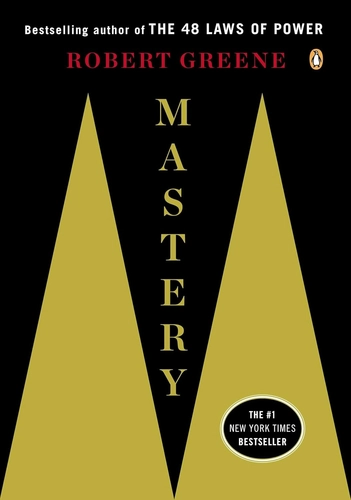
I read Mastery during a week when I hated my own work. I was hunched over a laptop in a cramped apartment, editing someone else’s words for a paycheck, and the gap between my ambition and my daily grind felt like a chasm. I picked up the book expecting another dose of motivational snake oil. What I got was a mirror.
The central question Greene forces on you is this: what if your current frustration is not a detour, but the actual road?
Greene dismantles the romantic idea of the lone genius. He shows us Leonardo da Vinci, who started as a studio apprentice grinding pigments. He shows us Mozart, whose early compositions were derivative, and who only produced lasting work after a decade of relentless practice. The pattern is almost boring in its consistency. Mastery is not a flash of divine inspiration. It is the slow, deliberate accumulation of deep knowledge, followed by the painful process of experimentation.
A Framework, Not a Formula
The book’s structure follows this arc: finding your calling, submitting to an apprenticeship, absorbing tacit knowledge from mentors, developing social intelligence, and finally, achieving a creative breakthrough. It’s a framework, but Greene’s real power is in the stories. He makes you feel the decades of struggle behind Einstein’s theory of relativity, the quiet obsession of a chemist like Marie Curie.
What struck me most was his insistence on the apprenticeship phase. Greene doesn’t romanticize it. He calls it “submit to reality,” and honestly, I felt my own ego bristle. The idea that I must consciously choose to be the naive one, to accept that I know nothing, is humbling. It’s the opposite of the instant-gratification culture I live in. The book’s core image, for me, is Franklin patiently borrowing books to teach himself writing, a slow, deliberate act of building a foundation. It made me question my own impatience. I wanted the final product, the recognition, without the years of invisible, unglamorous work.
The Dark Side of Greene’s Worldview
This is where the book gets uncomfortable. Greene is not gentle about the forces that keep us from mastery. He talks about the “fool” and the “shark” in the workplace, the conformist pressure that tells you to shut up and do your job. His advice can feel cold, almost Machiavellian. You are told to treat fools like furniture, to see social dynamics as a game to be played. It’s a worldview that prioritizes strategic detachment over connection, and it left me feeling a bit uneasy. The book’s strength is also its flaw. The certainty with which Greene analyzes human nature feels reductive at times. He sees patterns everywhere, and sometimes you wonder if he’s forcing square pegs into round holes just to make his thesis fit.
What the Book Actually Gives You
Anyone who feels stuck in a career they don’t love but can’t articulate why will find something here. Anyone who has a vague sense of a calling but is terrified of the sacrifices. Anyone who is tired of hacks and willing to hear that there are no shortcuts. If you want a quick fix or a ten-step program to success, this is not for you. This is a tome, a reference work that demands patience. If you prefer a more nuanced, less cynical view of human motivation, Greene might frustrate you. His world is one where social intelligence is a weapon, not a way to connect.
The Map, Not the Destination
What did I take away? The book didn’t magically make me love my job. But it shifted my perspective. It made me look at my current tasks not as a prison, but as raw material. It reminded me that the feeling of being lost is often the first step of the apprenticeship. I stopped looking for a new job and started looking for a new way to learn within the one I had. It didn’t solve my problem. It gave me a map, and a very long road to walk.
This book won’t hand you a shortcut. It will make you feel less alone in the long, patient marathon of becoming who you are meant to be.

