I looked at my own hands the other morning. They looked strange, like props. I have been thinking about this since I finished Sarah Moss’s new memoir, My Good Bright Wolf. It is a book that lands in your chest and sits there. It is not a recovery story, not really. It is something stranger. A document of a woman trying to figure out who has been living inside her body all these years. Moss, a novelist, turns her gaze on herself for the first time. She traces her decades-long battle with an eating disorder. But the book asks a more unsettling question: What if our bodies are not just places we inhabit but territories we have lost control of? What if someone else has been writing the rules?
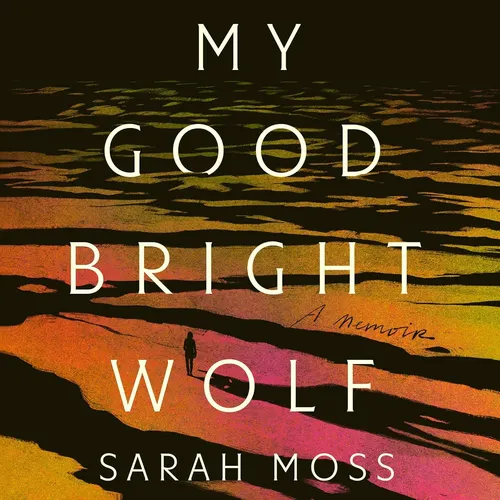
Moss writes about her teenage self with a kind of forensic tenderness. That girl counting calories in the school library. That woman collapsing in a supermarket aisle. We see the protagonist of this memoir not as a victim but as a brilliant strategist. She learns to shrink. She learns to disappear. The core conflict is not between her and food. It is between her and the voices. The wolf of the title. Those voices tell her she is too much. She is too loud. She needs to take up less space. Moss does not reveal how the war ends. She shows us how the war is fought. One meal at a time. One thought at a time. I found myself holding my breath in several passages. She makes you feel the cold logic of starvation. The strange comfort of control. But she also shows the cost. The friendships lost. The career nearly derailed. The self that never got to fully arrive. What I did not expect was the tenderness. Moss writes about her body not with hatred but with a weary, complicated love. It is not a love that saves her. It is a love that keeps her asking questions.
The core theme here is not willpower or illness. It is voice. Who gets to speak for your life? Moss shows how an eating disorder is not really about food. It is a language. A way of communicating pain when words fail. The key imagery in the book is the wolf. It follows her. It whispers. It is not a monster. It is a part of her. Moss does not try to kill the wolf. She learns to live with it. She learns to hear it without obeying. This is the craft that matters. Moss writes with such precise, unshowy prose. She does not dramatize her suffering. She simply describes it. A bowl of cereal becomes a battlefield. A dinner party becomes a test of survival. The deepest pattern I saw is this: We all have a wolf. Maybe not an eating disorder. But a voice. A voice that says you are not good enough. That you should be smaller. Quieter. Less. Moss is not giving us a survival guide. She is giving us a mirror. Look at this, she says. This is what it costs to silence yourself.
Cross-era resonance feels almost accidental. The book lands in a moment when we are all talking about bodies. About wellness. About control. But Moss goes deeper. She asks why we need to control our bodies in the first place. She does not give easy answers. That is the power of the book. It refuses to be a redemption arc. The ending does not tie up neatly. Moss is still living with the wolf. She is still negotiating. But she is writing. That is the core insight: The act of telling your own story is itself an act of reclamation. You cannot kill the wolf. But you can name it. You can write it down. You can say, this is my body. This is my voice. And that might be enough.
