I was sitting in a coffee shop recently, watching a mother struggle with a stroller and a toddler and a phone call all at once. She looked exhausted. She looked like she was holding the whole world together with tape and hope. And I thought, I wonder what her story is. I wonder what she carries that no one sees.
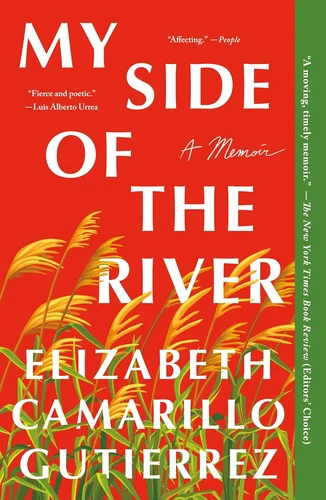
That is the question Elizabeth Camarillo Gutierrez puts at the center of her memoir, My Side of the River. What do you carry when you are told you do not belong, but you are also told to make something of yourself? What happens when the country you call home keeps reminding you that it does not see you as a full person?
A Girl Who Keeps Showing Up
Gutierrez grew up in Arizona. Her parents brought her to the United States when she was four years old. She had no papers. She had no safety net. What she had was a ferocious intelligence and a will to succeed that felt almost like hunger.
I say almost because the truth is, it was hunger. Not for food, exactly. More for proof. Proof that she mattered. Proof that her family’s sacrifice was not wasted. She watched her father work himself to exhaustion. She watched her mother navigate a system that seemed designed to break them. And she decided, very early, that she would become something. Someone.
The core conflict of the book is not about crossing a border. It is about crossing invisible lines. Lines of class, of language, of expectation. Gutierrez is brilliant in school. She wins scholarships. She gets into top universities. And yet, every time she takes a step forward, something pulls her back. A family crisis. A legal dead end. The quiet terror of being found out.
I will not tell you how it ends. That would be unfair. But I will say this: the suspense is not about whether she succeeds. It is about what success costs her. And that, I think, is the real story here.
The River That Divides and Connects
The central image of the book is the river. Not just the physical Rio Grande that separates Mexico from the United States. But the metaphorical river that runs through Gutierrez’s life. The river between being a good daughter and being an independent woman. Between loyalty to family and loyalty to self. Between the world she came from and the world she wants to enter.
I found myself thinking about that river long after I closed the book. Because we all have one, do we not? That boundary we are afraid to cross. That line that says, you are this, not that. For Gutierrez, the river is real and imagined. It is the border patrol checkpoint. It is the college admissions office. It is the moment when a teacher tells her she is not like the others. She is the exception.
But here is what Gutierrez understands, and what makes this memoir so powerful. Being the exception is not freedom. It is a cage of its own. You are always performing. Always proving. Always afraid that someone will realize you do not belong.
The book is full of these small, painful moments. A social security number that does not exist. A scholarship that requires a legal status she cannot provide. A family that needs her, even as she needs to leave. Gutierrez does not romanticize her struggle. She does not turn herself into a hero. She just shows you what it is like to live in the gap between two worlds.
What This Book Asks of Us
I will be honest. I picked up this book because I wanted to understand something I did not know. I wanted to see the immigrant story from the inside. What I found was not what I expected.
It was not a story about victimhood. It was not a story about triumph. It was a story about staying. About the people who stay. The ones who do not cross the river and forget the other side. The ones who keep their feet in two places, even when it hurts.
Gutierrez’s voice is quiet and steady. She does not shout. She does not blame. She just tells you what happened. And that is what makes the book so devastating. You see the system clearly. Not through statistics or political arguments. Through a girl who had to become a lawyer before she could become a person. Through a family that held together even when everything tried to pull them apart.
This book is for anyone who has ever felt like they did not belong. For anyone who has had to translate for their parents. For anyone who has carried a secret that felt too heavy to share. It is also for anyone who thinks they understand the immigration debate. Because the book will show you that you do not. Not really.
What you get from reading this memoir is not a policy argument. It is a human face. It is the knowledge that behind every statistic is a girl who just wants to be seen. A family that just wants to stay together. A person who is building a life from the ground up, with nothing but will and hope.
“I realized that the river was not just a border. It was a mirror. And on the other side, I saw myself.”
