I was at a coffee shop last week, and the woman next to me was crying into her phone. She kept saying, “But he didn’t do anything wrong.” I wanted to tell her about this book.
Haley Mlotek’s No Fault: A Memoir of Romance and Divorce asks a question we don’t usually ask: What happens when a relationship ends and there is no villain? No affair, no abuse, no dramatic betrayal. Just two people who slowly, quietly, stopped fitting together.
Can we really accept that?
I’ve been thinking about this since I read the book. Because honestly, we love a good villain. It makes the story simple. She left him because he was a monster. He walked away because she was impossible. But what if the story has no monster?
Mlotek doesn’t just answer this question. She lives inside it.
When the Villain Never Shows Up
Mlotek was a child of divorce. Her parents split when she was young, and she grew up watching them navigate their separate lives with surprising grace. Then, in her twenties, she got married. And then, in her thirties, she got divorced.
No big fight. No terrible secret. Just a slow realization that the marriage had become a quiet room where neither of them could breathe.
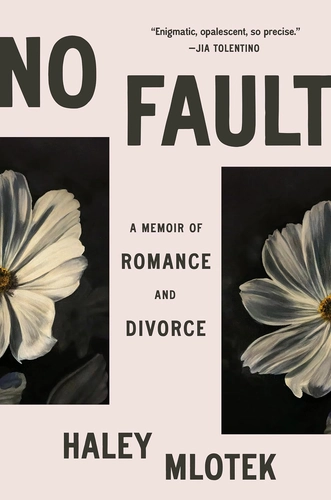
The book is structured like a detective story, but the mystery isn’t “what went wrong.” It’s “what does it mean that nothing went wrong?” Mlotek interviews her parents, her grandmother, her friends. She visits a divorce museum in Croatia. She reads old letters and listens to voice messages from her ex-husband. She is searching for an explanation that fits, a narrative that satisfies.
I found myself holding my breath during these sections. Not because I expected a twist, but because Mlotek’s honesty is so raw. She admits she wanted a villain. She wanted someone to blame, if only to make the pain make sense. But she never finds one.
What she finds is something stranger. A kind of love that doesn’t disappear, even when the marriage does.
This is the layer that surprised me. The book isn’t really about divorce. It’s about the stories we tell ourselves about love.
The Stories We Tell Ourselves
Mlotek’s central idea is simple: we are taught to believe that love stories have arcs. You meet, you fall in love, you face challenges, you overcome them, and you live happily ever after. But what if the arc is not a straight line? What if it’s a circle, or a spiral, or a broken line that stops abruptly?
She writes about the concept of “no fault” divorce laws, which allow couples to separate without proving wrongdoing. This legal framework is supposed to reduce conflict. But Mlotek argues that it also removes the narrative structure we crave. Without a fault, there is no clear story. There is just the quiet, aching fact of two people who no longer belong together.
I kept thinking about a line she writes about her grandmother, who stayed in a difficult marriage for decades. “She stayed not because she was happy,” Mlotek says, “but because she believed in the story of staying.” The book doesn’t judge either choice. It just asks us to see the cost of both.
The imagery in the book is subtle but powerful. She describes her marriage as a house with no doors. A room where you can’t leave because there is no exit, but also no air. It’s not a dramatic image, exactly. More like a quiet suffocation.
What I loved most is that Mlotek never claims to have found the answer. She admits, at one point, that she still doesn’t know why her marriage ended. She just knows it did. That honesty is rare, and it feels like a gift.
What Love Really Means
I finished the book a week ago, and I’m still sitting with it. The truth is, No Fault changed how I think about my own quiet endings. The friendships that faded without a fight. The relationships that just… stopped.
Mlotek’s book is not a self-help manual. It won’t give you a checklist for healing. But it will give you permission to sit in the ambiguity. To say, “I don’t know why this ended, and that is okay.”
The book has one limitation, I think. It’s very much a New York intellectual’s perspective. Mlotek is a writer for The New Yorker, and the book sometimes feels like a long, thoughtful essay rather than a memoir with a clear narrative arc. If you prefer plot-driven stories with a clear beginning, middle, and end, this might frustrate you.
But if you are someone who has ever wondered why a good thing ended, who has ever searched for a reason that never came, this book is for you. It’s for the woman crying in the coffee shop. It’s for anyone who has ever loved without a villain.
I’ll be honest: I still don’t know if I believe in “no fault” endings. Part of me wants to hold onto my grudges, my stories of who wronged me. But Mlotek made me wonder if maybe, just maybe, the truest love is the one that lets you go without needing a reason.
