I was talking to a friend recently. She works at a startup that is, by all accounts, failing. The founders keep sending optimistic emails. The team keeps nodding. She said to me: “The weirdest part is that we all know it’s over. But we keep showing up to the same Slack channel. Like it’s a ship we can’t leave.”
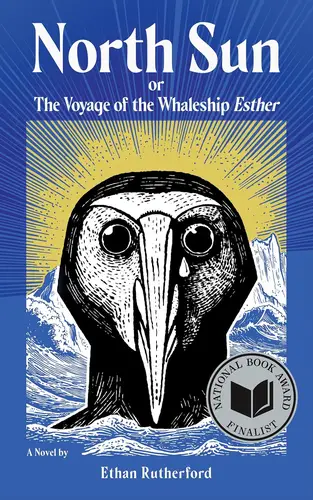
That image stayed with me. So when I picked up Ethan Rutherford’s North Sun, a novel about a 19th century whaling ship called the Esther that gets stuck in ice, I was already thinking about her. About that feeling. What happens when a group of people is trapped in a space that offers no exit, no progress, and no clear enemy? What breaks first: the food supply, or the agreements we made to stay sane?
Character and Plot: The Captain Who Carries the Rules in His Spine
The protagonist is Captain Elias Dean. He is not a monster. He is not a hero. He is a man who has spent his whole life believing that the sea rewards discipline. That if you follow the right rituals—the charts, the logs, the hierarchy of command—you will be safe.
I found this character unsettling because I recognized him. He is the boss who never raises his voice but makes you feel small anyway. He is the parent who says “because I said so.” He is the part of me that clings to routine when I am scared.
The Esther drifts north. The ice closes in. The whales do not appear. The crew grows restless. And Captain Dean doubles down. He does not panic. He does not change course. He insists that the rules still apply. That the charts still mean something. That if everyone just obeys, the ice will melt and they will be saved.
I will not tell you what happens. But I will say this: the tension is not about whether they find whales. It is about whether a system can survive when the reality it was designed for has already died. The crew mutters. The first mate questions. And the captain holds tighter.
Theme and Imagery: The Ice That Is Not Just Ice
The ice in North Sun is not a metaphor. It is also a metaphor. Rutherford writes with a kind of cold precision. The passages about the ship cracking against the ice are almost physically painful to read. But the real cold is inside the crew. The real cracking is in their minds.
The core theme, I think, is about the difference between order and control. Captain Dean believes they are the same thing. The novel asks: what happens when order stops serving life? When the rules that were supposed to protect us become the thing that traps us?
There is a moment early in the book. A young sailor, barely a teenager, asks the captain why they cannot turn back. Dean does not answer. He just stares at the compass. That image—the compass pointing north, the ship going nowhere—stayed with me for days. It is not that the captain is evil. It is that he cannot imagine a different direction.
Rutherford does something clever with the ship itself. The Esther becomes a character. A wooden body that groans and leaks and holds secrets. The men paint it, patch it, pray to it. But it is still just a thing. And things do not care about your rules.
Elevation: What This Book Says About the Groups We Stay In
I finished North Sun and immediately thought of my friend and her failing startup. Then I thought of families that stay together long after love has left. Of churches that cling to doctrines that hurt their own members. Of governments that enforce laws that make no sense anymore.
The novel is set in the 19th century. But it is about now. About the quiet, desperate way we cling to structures that are killing us. About the leader who cannot admit that the map is wrong. About the followers who keep following because the alternative—the open, terrifying, unmarked sea—is worse.
What is the cost of staying? What is the cost of leaving? The book does not answer those questions. It just holds them up, dripping with salt water, and asks you to look.
There is a scene near the end. I will not spoil it. But a character says something about the north sun. About how it never sets. About how that endless light, at first a relief, becomes a kind of blindness. You cannot tell day from night. You cannot tell wakefulness from dreaming. And that is the real horror of this book. Not the ice. Not the hunger. But the slow loss of the ability to tell the difference between what is real and what we have decided to believe.
I recommend North Sun to anyone who has ever been in a group that should have ended but did not. To anyone who has ever wondered why they stayed. To anyone who has ever looked at a leader and thought: they are taking us somewhere we do not want to go, but we are going anyway.
But I also recommend it with a warning. This book will sit on your chest. It will not leave. It will make you ask yourself: what ice am I stuck in? And what would it take to break free?
Maybe that is the question at the heart of every good novel. And maybe the answer is different for each reader. But the question itself—that is the gift.
