Lennie, George, and the Weight of a Shared Fantasy
I was nineteen, sitting in a dorm room with bad fluorescent lighting, when I first met George and Lennie. I had to finish the book for a class the next morning. I remember the way the pages felt thin, almost transparent. I remember thinking, This is just a story about two guys looking for work. I was wrong about that for a long time.
What is the American dream, honestly, if not the promise that if you just work hard enough, you get to own a little piece of the world? And what if that promise is a lie? What if the dream itself is what destroys you?
Lennie Small is a giant of a man with the mind of a child. He loves soft things: mice, puppies, a woman’s hair. He kills them all without meaning to. George Milton is small, sharp, and tired. He looks after Lennie, but the word “looks after” is too gentle. He carries Lennie like a wound that won’t heal.
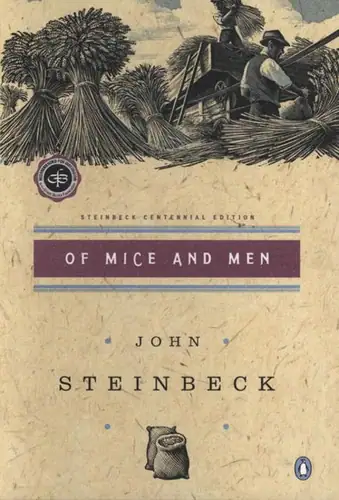
Their dream is laughably small: a little farm, a few acres, some rabbits. They want to live off the fat of the land. That’s it. No riches. No fame. Just a place where Lennie can tend the rabbits and no one can tell them what to do. The dream is the only thing that keeps them going. It’s also the thing that makes their reality unbearable.
The other men on the ranch are lonely in a way that’s almost physical. They drift from job to job, spending their wages on whiskey and women. Candy, the old swamper, loses his hand and his dog in the same week. Crooks, the black stable hand, lives alone in the barn because of the color of his skin. Curley’s wife, who doesn’t even have a name, is trapped in a marriage she hates. Every single one of them is starving for connection. And George and Lennie have something they don’t: each other. But that something is also a trap.
I’ll be honest. There’s a moment when you want George to just leave. You want him to walk away from the burden, from the responsibility, from the constant fear of Lennie’s strength. But you also know that leaving would be a different kind of death. The strongest cage was never iron bars. It was warm, golden affection.
The Loneliness of the Land and the Weight of a Gentle Hand
Steinbeck does something subtle with light. The novel opens on a riverbank in the Salinas Valley, golden afternoon light, the water warm and still. The world feels generous. But as the story moves into the bunkhouse, the light thins. It becomes harsh, dusty, artificial. The only soft light left is in Lennie’s imagination, in the dream of the farm he can see so clearly but will never touch.
The core theme here is not just loneliness. It’s the specific loneliness of someone who loves something they cannot protect. Lennie loves the mice, but his love crushes them. George loves Lennie, but his love keeps them both running. Curley’s wife reaches out to Lennie because she is desperate for someone to talk to, and that reaching is what kills her.
Steinbeck’s prose is so plain, almost brutal. He does not tell you how to feel. He just shows you the moment: Lennie’s hand in the woman’s hair, her struggle, his panic, the snapping sound. It is over in a paragraph. The violence is not dramatic. It is quiet and inevitable, like a mistake you saw coming from the first page.
This is where the book gets uncomfortable. It doesn’t give you a villain to hate. Curley is a bully, sure. But he’s a small, pathetic bully. The real villain is the structure of the world itself: a world where a man with a gentle heart and a giant body cannot exist safely. A world where the only mercy is a bullet in the back of the head, delivered by the person who loves you most.
Why This Book Hurts and Why You Should Read It Anyway
So what do you get from reading this book? Honestly, not comfort. Not hope. You get a cold, clear look at the price of caring for someone else.
The book is good because it refuses to lie. It shows you the dream and then shows you why the dream cannot survive. It is uncomfortable because it forces you to ask: What would I have done? Would I have pulled the trigger? Would I have had the courage to be that lonely?
It is not for someone who wants a happy ending. It is not for someone who wants to believe that love conquers all. But it is for anyone who has ever loved someone fragile, someone who requires more than you have to give. It is for anyone who has ever had to make a choice between holding on and letting go, and realized that both options break your heart.
The book’s final image is not Lennie dead on the riverbank. It’s George walking away with Slim, the other men heading for drinks, the world moving on like nothing happened. That is the loneliest part. The world does not pause for your private grief. The dream dies, and the sun keeps shining.
I guess the question Steinbeck leaves you with is not “Can we have the dream?” It’s a harder one: “What are we willing to destroy to keep it safe?”
