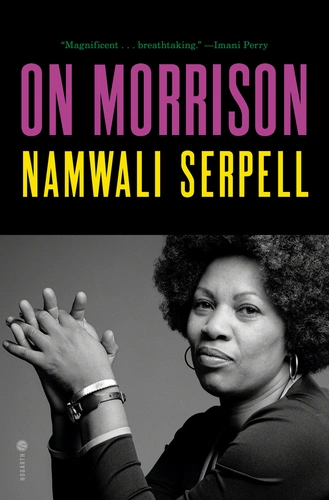
I was sitting on a train recently, staring out the window, when a thought hit me. I had just finished rereading Morrison’s “Beloved” for the third time. And I realized something strange. The book had changed since I first read it. Or maybe I had changed. Either way, the experience felt different, deeper, more unsettling. That is the kind of thing Namwali Serpell writes about in “On Morrison.” She asks a quiet but fierce question: How does a great work of literature actually change the way you see the world?
What Serpell Uncovers About Morrison’s Characters
Serpell does not summarize Morrison’s plots. She does not tell you what happens in “Song of Solomon” or “The Bluest Eye.” Instead, she watches Morrison’s characters like someone observing a friend across a crowded room. She notices the small gestures, the hesitations, the moments when a character does something that seems, at first, like a mistake. I loved her reading of Sethe in “Beloved.” Serpell argues that Sethe is not a victim or a hero. She is a woman who makes choices that are messy, painful, and completely human. The core conflict for many Morrison characters, Serpell suggests, is not between good and evil. It is between memory and survival. How do you hold onto what you have lost without being destroyed by it? Serpell never gives away the ending of any novel. She keeps the suspense alive, which made me want to go back and reread the books she talks about. Honestly, I felt like I was in a conversation with someone who loves Morrison as much as I do. But Serpell knows more. She sees patterns I missed. The bridge to the next layer is this: those patterns are not just literary tricks. They are a way of thinking about how we live.
The Craft That Makes Morrison’s World Feel Real
The core theme of “On Morrison,” as Serpell frames it, is the relationship between form and freedom. Morrison does not just tell stories about Black life in America. She builds a structure that reflects that life. Serpell points out how Morrison uses shifts in time, fragmented narration, and sudden changes in voice. These are not stylistic flourishes. They are the shape of a history that was broken, interrupted, and often silenced. One piece of imagery Serpell returns to is water. In Morrison’s novels, water is not just a setting. It is a force. It carries memory, it erases, it drowns, it births. I found myself thinking about the scene in “Sula” where the river appears. Serpell writes about it with such tenderness that I felt like I was standing on the bank myself. This character’s struggle, whether it is Sethe’s or Sula’s or Milkman’s, reveals a universal pattern. We all carry water inside us. We all have histories that we cannot fully control. But Serpell argues that Morrison shows us how to live with that weight, not by escaping it, but by learning its shape.
What This Book Gives You and What It Does Not
I will be honest. This book is not for everyone. If you have never read Morrison, you might feel lost. Serpell assumes you have the novels in your head. And if you are looking for a quick summary or a checklist of themes, you will not find it here. What you will find is something rarer. A critic who thinks alongside the author, not above her. Serpell does not claim to have the final word on Morrison. She offers her reading as one among many. That humility made me trust her more. The book is short, just over 200 pages, but it feels dense. I read it slowly, sometimes a few pages at a time, because each paragraph required me to stop and think. What I gained from it was a new way of reading not just Morrison, but any great writer. I learned to pay attention to the architecture of a sentence, the rhythm of a chapter, the way a single image can hold an entire world. Serpell also shows the limits of criticism. She admits that some of Morrison’s novels resist interpretation. They are meant to be felt, not explained. That honesty is refreshing.
I closed the book and sat quietly for a while. I thought about the train I was on, the fields passing by, the people in the seats around me. Each of them carries a story shaped by forces they cannot see. That is what Morrison taught me. And that is what Serpell helped me understand more clearly. Maybe that is the real gift of criticism. It does not give you answers. It gives you better questions.
Golden quote: “Morrison’s novels do not ask you to understand. They ask you to attend.”
