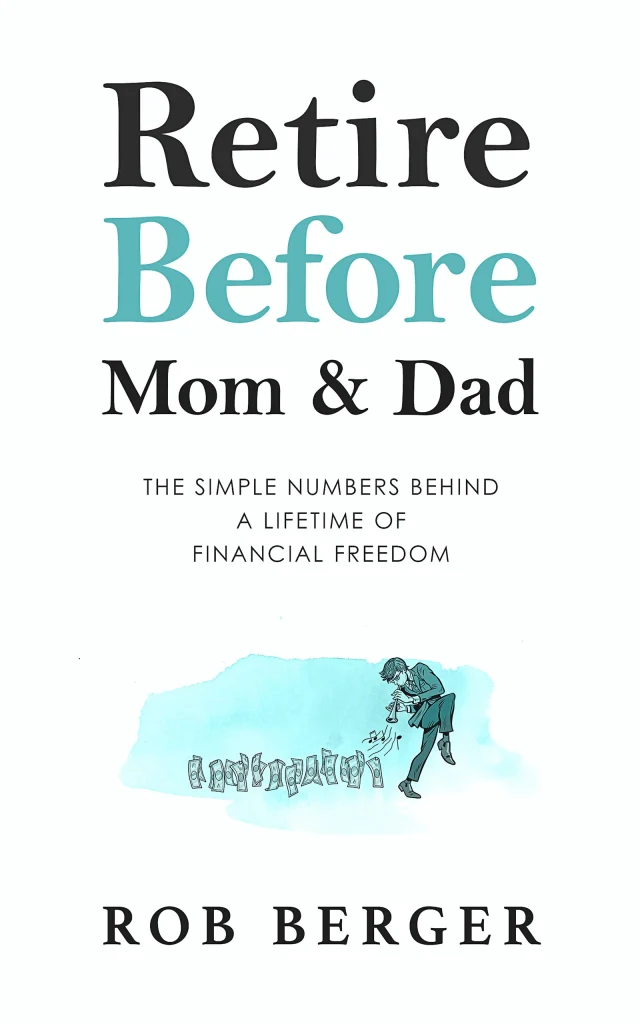
Rob Berger opens with a claim that sounds too simple to be useful: financial freedom is an expense problem, not an income problem. Your salary is not the lever. Your spending rate is. Control that, automate the rest, and almost any income can turn into independence.
That is the thesis, and Berger builds every chapter on it.
He does it through a narrator who is basically a former lawyer turned finance teacher, patient, a little dad-ish, allergic to hype. There’s no single protagonist here. The “character” is you, the reader, and the book keeps handing you small mirrors. A latte. A car loan. A house you can afford but maybe shouldn’t buy at that price.
The conflict is quiet and familiar. You want things. The math says wait. Berger sides with the math, but gently, and that gentleness is the book’s real method.
The Number That Cuts Years Off Your Life
His sharpest tool is the savings rate idea. He shows that going from saving ten percent to twenty five percent doesn’t just add a little time to your working life. It cuts years off it, sometimes a decade, because you’re saving more and needing less at the same time. That single reframe is worth the cover price.
The Rule of 857 is the hook everyone quotes. Save that much monthly, start early, let it compound, and pocket change becomes real money. It sounds like a gimmick. It mostly works.
Then the book changes shape. Part four, on investing, is where I started skimming, and I’ll be honest about that.
Berger favors passive index funds, low fees, autopilot contributions. He explains stocks, bonds, 401ks, IRAs, HSAs in plain language, and for a beginner this is genuinely clarifying. But the percentages pile up fast, and the examples get dense enough that my eyes slid off the page. I switched to reading those chapters sitting up, pen in hand, which is not how I want to spend a Sunday.
The Budget Assumption and the Missing Middle
Here is my real complaint, and it’s a structural one. The book assumes you already have a budget. Berger talks about your savings rate as if you know the number. If you don’t, you’re stuck. He never really walks you through building the monthly spending picture first, which is the actual starting line. I had my budget, so I was fine. A friend picking this up cold would not be.
The second gap is saving for specific things. A car. A down payment. Braces. Berger tells you to save instead of borrowing, which is right, then moves on before explaining how to run those sinking funds alongside retirement investing without drowning. For a household manager juggling five goals, that advice is implied. It should be spelled out.
The List Next to My Credit Card
The best moment in the book is the happiness list. Berger asks you to write down what actually makes you happy, then check purchases against that list before buying. I did it. Ten items. My list was boring, mostly people and a hiking trail. I taped it next to my credit card. Two weeks later I skipped a purchase I would have made on autopilot, and I felt the skip. That exercise is the heart of his argument, because it turns frugality into something you choose rather than something done to you.
That is the screw tightening. The strongest force in your financial life is not your boss or the market. It’s the gap between what you earn and what you decide you need.
Berger’s framework carries past 2019 because the mechanics of compounding don’t expire. Index funds still beat most stock pickers over decades. Fees still compound against you. Automation still works better than willpower. What dates the book is the optimism, the assumption that stable income and normal markets are the baseline. People who lived through a layoff know the plan needs a shock absorber the book doesn’t install.
So who should read it? Someone in their twenties or thirties with income and no plan. Someone late to investing who needs the jargon translated without being talked down to. Anyone who has read three finance books and still doesn’t know what to do Monday morning.
Who should skip it? If you already max your retirement accounts, hold low fee index funds, and keep a fat emergency fund, you’ll learn maybe two things. If you need help building a budget from scratch, start elsewhere, then come back.
What I took away was smaller than financial freedom and more useful. A number for my savings rate. A post-it note. And a sentence I keep repeating: freedom is about expenses, not income.
This book won’t fix your finances this month. But it will change which number you watch, and honestly, that’s the part that was broken.

