I bought this book after a meeting went badly. Not terribly. Just badly enough that I replayed it in the shower, in the car, and while making dinner. I had said the right thing in the wrong shape. My boss heard a complaint when I meant a suggestion. My coworker heard a demand when I meant a request.
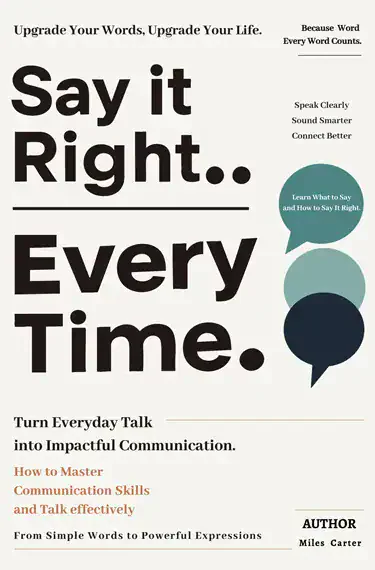
So I picked up Miles Carter’s Say It Right Every Time, mostly out of frustration. I didn’t expect much. I figured it would be another collection of tips about eye contact and active listening. Instead, it handed me a mirror and a script at the same time.
The Meeting I Kept Replaying in My Head
The book opens with a simple idea. Most communication problems are not about what you say. They are about how you say it. Carter calls this the gap between basic expression and mature expression. Basic expression is what you blurt out when you are nervous, tired, or trying to be polite. Mature expression is what you say when you respect yourself and the other person at the same time.
I read that and thought of my meeting. I had said something like, “I’m not sure this will work, but maybe we could try something different?” That sentence had three hedges in it. No wonder nobody listened. Carter offers an alternative: “I see a problem with this plan. Here is what I would suggest instead.” Same idea. Different weight. I tried it the next week. My suggestion actually got discussed.

The Chapter That Made Me Rethink the Word No
I have always struggled with saying no. I either say yes and resent it, or I say no too harshly and feel guilty for days. Carter dedicates a whole chapter to this. He doesn’t teach you to soften your no into mush. He teaches you to say it with a door left open.
One script stayed with me. “I can’t take this on right now, but here is what I can do.” That sentence changed how I handle requests. It protects my time without slamming the door. My friend asked me to help her move next weekend. Old me would have said yes and canceled other plans. New me said, “I can’t do Saturday, but I can help Sunday morning.” She said that worked even better.
The Part About Job Interviews Surprised Me
I didn’t expect a chapter on job interviews in a book about daily communication. But it fits. Carter shows how the same principles apply when you are nervous and being evaluated. He gives scripts for answering “Tell me about yourself” without rambling, and for asking about salary without sounding aggressive.
I used one of his phrases in a recent interview. “Based on my experience and what this role requires, I was hoping for a range around X.” The interviewer didn’t flinch. She wrote it down. I got a second interview. Maybe it was the phrase. Maybe it was the confidence the phrase gave me.
What This Book Does Not Do
It does not promise you will never have an awkward conversation again. It does not pretend that every conflict will dissolve if you just find the right words. And it does not replace the hard work of actually caring about other people.
What it does is give you tools for the moments that matter. The moment you need to disagree without starting a fight. The moment you need to ask for something without apologizing for existing. The moment you need to say no without losing the relationship.
The writing is plain and practical. Some scripts feel a little rehearsed, and you won’t memorize them all. But the pattern sticks. You start noticing your own hedges. You start catching yourself before you over-apologize. That awareness alone is worth the read.
The One Sentence I Keep Coming Back To
Near the end of the book, Carter writes something I have repeated to myself before every difficult conversation since. “Say what you mean, calmly, and the person across from you will hear more than your words. They will hear your respect.”
That’s the whole book in one line. Not about winning. Not about being clever. About respect. For yourself and for the person listening.
I still have awkward conversations. I still say the wrong thing sometimes. But I no longer spend hours replaying them, wishing I had said something different. I have a better script now. And more importantly, I have a better reason to use it.