I did something I regret once. A small thing, by most measures. I lied on a job application because I was desperate and hungry. It worked. I got the job. But for years I couldn’t shake the feeling that I had crossed a line I couldn’t uncross. What do we call people who do things like that every day, not once but as a way of life? What do we call people whose survival depends on breaking the law?
Jason De León spent nearly a decade with Honduran smugglers. The men and women who help migrants cross borders. The people we call coyotes, traffickers, criminals. But here is the thing. De León does not write about monsters. He writes about people. And that is much harder to stomach.
The smuggler who cried when a child died
Meet Chino. He is tall, quiet, and carries a pistol he hopes never to use. He grew up in a Honduran barrio where the choice was simple. Join a gang or starve. He chose a third path. He became a smuggler. He moves people through Mexico to the U.S. border. He charges what he can, which is rarely enough. He has lost friends to cartels, to border patrol, to the desert itself.
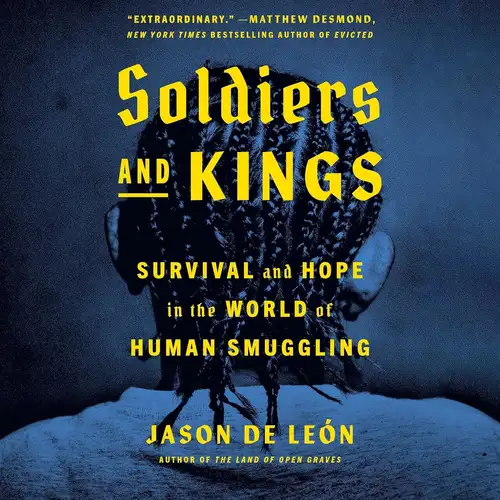
De León does something unusual here. He lets Chino speak. Really speak. Not as a villain explaining himself, but as a man trying to survive. Chino does not pretend what he does is noble. He knows it is illegal. He knows people die on his watch. But when a child drowns in the Rio Grande on one of his runs, he weeps. Not for show. He weeps because he has a daughter the same age.
The book is full of these moments. A smuggler who pays for a migrant’s funeral. A woman who traffics people because her own children need medicine. A young man who was once a migrant himself and now guides others through the same nightmare. They are not good people, exactly. More like people who have run out of good options.
The craft of seeing clearly
De León is an anthropologist by training, but he writes like a novelist. His prose is lean. He does not lecture. He shows. One chapter follows a group of migrants through the Sonoran Desert at night. The smuggler, a man named El Güero, carries a child on his back for six hours. The child’s mother cannot walk anymore. Her feet are blistered raw. El Güero does not ask for extra payment. He just carries the boy.
The central question of the book is not whether smuggling is wrong. It is. The question is what happens when the only way out of poverty is through crime. De León calls this “structural violence.” A fancy term for a simple truth. The system is broken so badly that the only people who can fix it, in small ways, are the ones breaking the rules.
The imagery in the book is brutal. Dead bodies in the desert. Teenage girls sold to cartels. Men who disappear into detention centers and are never heard from again. But De León also shows the small kindnesses. A smuggler who shares his last bottle of water. A guide who turns back to find a lost migrant. These moments do not excuse the cruelty. But they complicate it.
What we gain by looking closer
I finished this book feeling something I did not expect. Not anger at the smugglers. Not pity for them either. Something closer to sadness. A deep, quiet sadness about the world we have built.
De León shows us that human smuggling is not a problem that exists in isolation. It is a symptom. Of poverty, of violence, of borders that make no sense, of a global economy that treats some lives as valuable and others as disposable. The smugglers are not the cause. They are the result.
The book has one weakness, I think. It focuses almost entirely on the smugglers’ perspective. The migrants themselves are sometimes background characters. I wanted to hear more from them. But maybe that is the point. We already know the migrants’ story. We have heard it a thousand times. The smugglers are the ones we refuse to see.
Who is this book for? Anyone who has ever judged someone for doing something they themselves might do if pushed far enough. Anyone who believes in the complexity of human choice. Anyone who wants to understand, not just condemn.
The core insight is this. We call them criminals because it is easier than admitting that under the same circumstances, we might do the same. Not because we are bad people. Because survival has a way of rewriting morality.
Maybe that is what De León wants us to sit with. Not forgiveness. Not absolution. Just the uncomfortable recognition that the line between good and evil is thinner than we think. And that most of us are standing on the wrong side of it, waiting for the right push.
