I was watching my nephew pack for summer camp last week. He stuffed a flashlight, three pairs of socks, and a stuffed elephant into a bag too small for his body. I thought of Javier Zamora then. He was nine when he left El Salvador. He did not pack for camp. He packed for a journey that might kill him.
What does it take for a child to walk into the unknown alone? Zamora’s memoir, Solito, does not answer that question easily. It refuses to make him a hero. Instead, it shows us something harder to look at. A boy who is brave because he is terrified, not despite it.
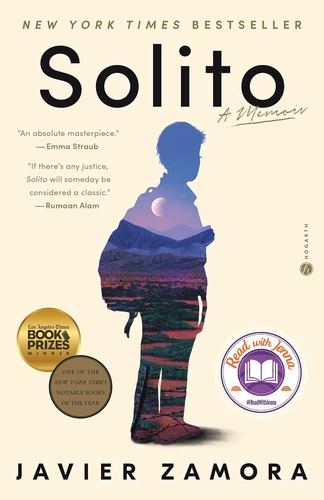
The Boy Who Was Not a Hero
Javier is not special in any obvious way. He misses his parents. He cries at night. He wets his bed from fear. These are not the details you find in typical migration stories. We are used to tales of resilience, of young warriors overcoming odds. Zamora gives us something messier.
He travels with a group of strangers who become his family. There is Mario, the coyote who jokes but carries a gun. There is Patricia, a mother figure who holds Javier’s hand when he shakes. And there is Chino, a teenage boy who bullies him one day and protects him the next.
The journey is not dramatic in the way I expected. It is slow. Boring. Days of waiting in safe houses. Nights of walking through desert heat. Hunger that makes his stomach ache. The suspense comes not from action but from waiting. Waiting for danger to arrive. Waiting to see if anyone will betray them. Waiting to know if he will ever see his mother’s face again.
I will not tell you if he makes it. That is not the point. The point is that Zamora lets us feel every moment of that waiting. He does not turn his younger self into a symbol. He lets him be a child who loves cartoons, who misses his grandmother’s cooking, who is terrified of dying in a place he has never heard of.
The Craft of Unmaking a Myth
Here is what surprised me most. Zamora wrote this book as an adult, but he writes like a child. The sentences are short. The observations are raw. He does not explain the politics of immigration. He does not lecture about borders or policy. He simply shows us what it felt like to be nine and alone.
This is the book’s deepest theme. Not migration, but the gap between how adults remember trauma and how children experience it. Adults want to find meaning. Children just want to survive the night. Zamora chooses the child’s perspective. It is a radical act of storytelling.
The imagery is sparse but precise. A pair of sneakers that are too tight. The smell of beans cooking in a stranger’s kitchen. The sound of a helicopter that might mean la migra is coming. These details do not explain anything. They make you feel everything.
I found myself holding my breath during certain passages. Not because of violence, but because of tenderness. A stranger giving Javier her last tortilla. A coyote telling him a joke to distract him from fear. These small acts of kindness are the book’s true heart. They do not erase the danger. They make it bearable.
What We Carry When We Cross
I finished Solito on a Saturday morning. I sat in my kitchen, looking at my coffee mug, thinking about the 3,000 miles Javier walked. I thought about how my own worst childhood memory is getting lost in a grocery store for ten minutes. This book made me feel shame and gratitude at once.
The book’s limitation is also its strength. It stays so close to the child’s experience that you never get the adult’s reflection. Zamora does not tell you what he learned. He does not offer easy wisdom. Some readers might want more analysis, more distance. I wanted that too, at first. Then I realized that was the point. Sometimes the truest story is the one that refuses to make sense.
This is not a book about politics. It is a book about a boy who loved his parents so much he walked across a continent to find them. That love was not pure or simple. It was desperate and messy and sometimes foolish. But it was real.
Core insight: Courage is not the absence of fear. It is the willingness to keep walking when every bone in your body wants to stop. Javier Zamora did not become a hero by being strong. He became one by being soft, by letting himself be held, by crying when he needed to cry. That is the kind of bravery I want to remember.
