I have a question that has been sitting with me since I closed this book. What does it mean to be a witness when the violence never stops? Patricia Evangelista’s Some People Need Killing: A Memoir of Murder in My Country is not an easy answer. It is a slow, careful excavation of what happens when a nation decides that some lives are disposable. I read it in the evenings, and I found myself staring at walls, unable to speak.
The Witness Who Could Not Look Away
Evangelista is a journalist. She went to the crime scenes. She stood beside the bodies on Manila streets. She spoke to mothers who lost sons, to policemen who pulled triggers, to a president who called it a war on drugs. The book opens with a quiet suburban scene, but it quickly breaks. She describes a man being shot in broad daylight. The language is precise, almost clinical. It made me uncomfortable. I wanted her to look away. But she never did.
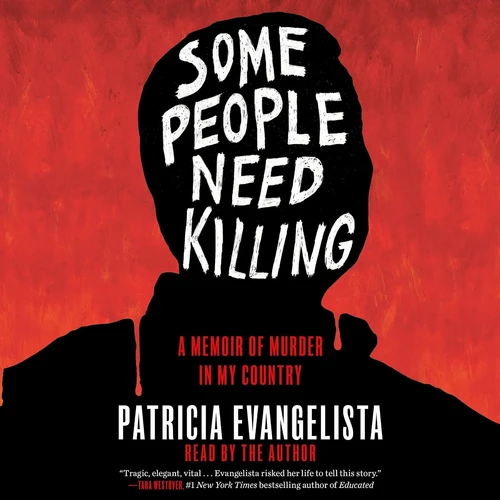
Her core conflict is not with the killers. It is with herself. She asks: Am I complicit by recording this? She does not pretend to have an answer. She just keeps going. The suspense is not about whether she will survive. It is about whether she can hold the weight of what she sees. I will not tell you how her story ends. But I will say this: the ending surprised me with its quietness.
The Patterns of Violence and the Things We Cannot Unsee
The central theme here is not death. It is the slow normalization of death. Evangelista shows how the word “drug” became an excuse. How a phone call could mean a death sentence. How neighbors learned to look the other way. She uses a recurring image: the tokhang list. Imagine a piece of paper with names on it. That is all it took. A name written down, and someone came for you.
The imagery is stark. She describes blood on concrete. The smell of a body left in the sun. But she also writes about light. About the small moments of grace: a grandmother who still prays, a child who still plays. It is this careful balance that makes the book so powerful. She does not let you drown in horror. She lets you breathe, just enough, before the next wave comes.
What We Carry When We Finish Reading
This book is not just about the Philippines. It is about any place where violence becomes routine. I thought of other countries. Other wars. The argument Evangelista makes is this: We cannot afford to look away. If we do, we become part of the machinery. She does not say this loudly. She says it quietly, as if she is telling you a secret.
The book has its flaws. It can be dense. The chronology jumps sometimes. I wanted more of her personal life, her own fear. But maybe that is the point. Maybe she had to hold some things back to survive. I recommend this book to anyone who has ever wondered what it costs to bear witness. It is not a comfortable read. It will sit with you for days. But that is exactly why you should read it. Because the people who were killed deserve to be remembered.
