I opened this book on a Tuesday night, after a long day, expecting comfort food. I’ve read every single In Death book. Some are great. Some are fine. Some I barely remember a week later. So I settled in, ready for the familiar rhythm: a murder, a vault, Roarke’s past causing trouble. Standard stuff.
Then, around page 300, I actually put the book down and stared at the wall.
The Setup That Nearly Fooled Me
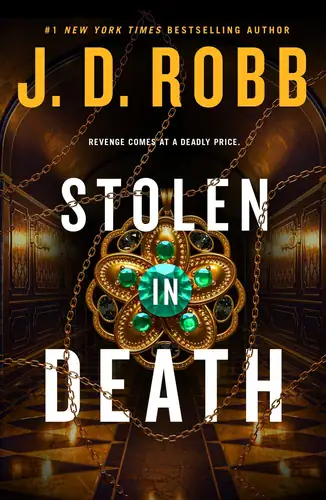
Nathan Barrister is dead. Bludgeoned with a chunk of amethyst. His late father’s secret vault is open, stuffed with stolen art and jewels. The family claims they just discovered it and were planning to return everything. One piece is missing: the Royal Suite, a set of emeralds and diamonds worth a quarter billion.
Roarke, my beloved reformed thief of a husband to Eve Dallas, recognizes the pieces. He stole them himself, decades ago, as a young man in Ireland. So now Eve has a murder, a theft, Interpol circling, and a husband whose past suddenly feels very present.
I thought I had it figured out. I was wrong.
The Payoff That Surprised Me
The twist comes late, and that matters. It is not a cheap trick. It is a character from book 24, someone I had almost forgotten. Magdalena. She orchestrated everything. Not just the theft, but the murder, the framing, the whole elaborate mess. She wanted to destroy Roarke, to prove she could still touch him.
Here is what I loved: the twist did not feel like a betrayal of the story. It felt like a payoff. Twenty-four books of world-building, of past characters drifting in and out, and suddenly a minor villain from years ago becomes the mastermind. It made the series feel alive, like every book actually matters.
The case itself is solid. Eve’s police work is sharp. The interviews are tense. The family drama is messy and real. But the twist is the heart.
The Unease Beneath the Satisfaction
I’ll be honest about something. This book leans hard on Roarke’s past as a thief. The series has always romanticized his criminal youth. He stole because he was poor, because he was good at it, because it was a game. The narrative treats his past as sexy and cool.
In this book, Interpol agent Abernathy keeps pushing. Roarke could be implicated. Eve has to protect him. And I found myself uncomfortable. Not because I wanted Roarke punished, but because the book never really questions the logic. Roarke gets a pass because he is rich now, because he buys the cops pizza, because he loves Eve. The moral framework is convenient.
I’m not saying I wanted Roarke to go to jail. I’m saying the book could have breathed in that tension a little longer, instead of resolving it with a wink.
The Moment That Caught Me Off Guard
There is a scene where Eve and Roarke are in his office, late at night, going over the case. Roarke is worried. Not about the police. About Magdalena, about what she might do to Eve.
And Eve says something like, “She does not know me.”
It hit me harder than I expected. Because that is the thing about this series, after sixty-two books. Eve Dallas has become someone who cannot be touched. Not because she is invincible. Because she has built a life, a team, a marriage, a family of choice. Magdalena thought she understood Roarke’s weakness. She did not understand that his weakness is now his strength.
If you are a long-time fan, read it. The payoff is real. If you have never read the series, do not start here. You will miss the weight of the twist. Start with book one, Naked in Death. If you are tired of series that recycle the same formula, give this one a chance. It surprised me. That is rare.
This book will not change your life. It will not make you rethink crime fiction. But it will make you feel, for a few hours, like you are part of a world that has been running for thirty-one years and still has the energy to shock you.
I finished it at 2 AM. I sat in the dark for a while.
The question I am left with is not about the plot. It is about longevity. How does a series stay alive for sixty-two books? The answer, I think, is that it keeps letting the past matter. Old characters return. Old sins resurface. Old loves and old hates collide.
We do not outgrow our history. We just keep adding to it.
