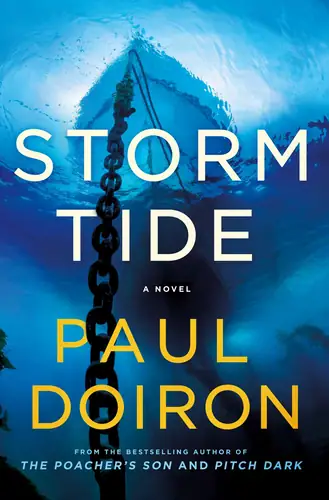
I came to Storm Tide by Paul Doiron with a problem. I had never read a Mike Bowditch novel. I know, I know. Sixteen books in, and I was the guy showing up at the party after everyone else had already gone home. I was worried I’d be lost, that the history would feel like homework.
The truth is, I picked it up on a Tuesday night when I couldn’t sleep. I was tired of scrolling. I needed something that would pull me in without making me work too hard. And honestly? The opening scene did that. A house on fire. A man burning alive. A baby saved by a stranger. It felt like a punch.
But as I read deeper, I realized this book wasn’t just a thriller. It was asking a question I didn’t want to answer: what do you do when the system fails, and you have the power to fix it?
The Weight of a Badge and a Baby
Mike Bowditch is a man caught between two worlds. On one side, he’s a game warden who has been demoted, suspended, and is facing a disciplinary hearing that could end his career. On the other side, he’s about to become a father. His wife Stacey is weeks from giving birth. She’s being followed by a stranger in a white van.
Here’s what I loved about Doiron’s writing: he doesn’t let Mike be a hero. Not at first. Mike is frustrated, scared, and frankly, a little bit of a mess. He makes bad decisions. He pushes people away. He doesn’t trust the state police because they don’t trust him.
The plot centers on a series of brutal killings. A man who was suspected of murdering his infant son dies in a fire. Another man, accused of rape, is found cut in half by a train. Mike gets cryptic texts that hint at a vigilante who is executing criminals who escaped justice.
What makes this work is the moral ambiguity. Mike doesn’t disagree with the vigilante’s targets. He disagrees with the method. But the book makes you ask: is that enough? If the law fails, is it really wrong to take matters into your own hands?
I won’t spoil the ending. I’ll just say that the final stretch is relentless. I read the last hundred pages in one sitting and felt physically drained afterward.
The Frozen Coast and the Fires Within
The core theme here is justice versus law. Doiron sets this up beautifully using Maine itself. The frozen harbors, the remote islands, the trackless forests. It’s a landscape that is beautiful and unforgiving. It mirrors Mike’s internal state.
The key imagery is fire and ice. The opening is a burning house. The final confrontation happens in a frozen, isolated place. The vigilante’s actions are cold and calculated, like the winter weather. Mike’s own anger is a fire he can barely control.
What struck me most was how Doiron uses the setting to isolate Mike. He’s out in the woods, alone, with no backup. The state police think he’s a conspiracy nut. His own boss wants him fired. The only people who trust him are his wife and his friend Billy Cronk, a former criminal.
This isolation forces Mike to confront a simple truth: the law is not always just. And sometimes, the people who break it are the ones who care the most.
I’ll be honest: there were moments when I agreed with the vigilante. That made me uncomfortable. Doiron makes you sit with that discomfort.
The Vigilante Who Makes You Agree
Storm Tide won’t give you easy answers. It won’t tell you that the system always works. It won’t let Mike Bowditch walk away clean.
But it will make you feel slightly less alone in your own frustration with the world. It will remind you that the people who enforce the rules are human, too. They make mistakes. They get scared. They have families they’re trying to protect.
This book is for you if you like C.J. Box’s Joe Pickett series. It’s for you if you want a thriller that makes you think about what justice really means, rather than just who pulled the trigger.
It’s not for you if you want a simple good-versus-evil story. The villain here has a point. And that’s what makes the book so unsettling.
The core insight is this: the strongest cage is never iron bars. It’s the belief that you’re doing the right thing, even when you know you’re not. He does not break the law. He bends it until it snaps. And he makes you wonder if that’s the same thing.
