What do you owe someone you loved, once the whole world has decided who they were?
Charles Spencer’s Swan Song isn’t really a royal book. It’s a book about the people left in the room after the cameras leave. And Spencer, for all his titles and estates, writes like a man still trying to make sense of a wound that never quite closed.
The Boy and the Girl at Park House
The Diana in these pages is not the saint of tabloid hagiography, and she’s not the fragile victim either. She’s a kid who called her brother Duch and let him call her Carlos, who roamed the Norfolk estate with him while their parents’ marriage came apart, and who, by Spencer’s account, carried scars from that divorce long before she ever met a prince.
What struck me most was the boarding school material. Spencer describes the two of them enduring it together, and there’s a line about how he didn’t know what it was like not to grow up with her that genuinely got to me. I expected a stiff, aristocratic memoir. What I found was a man who remembers small cruelties with startling precision.
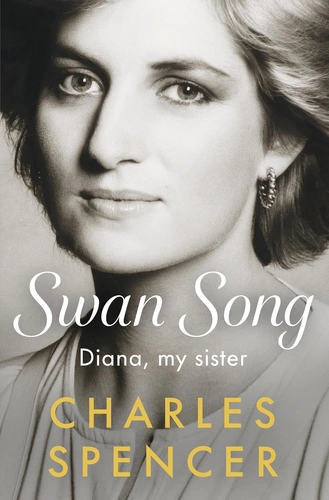
The book is structured around the week of her death, September 1997, with the funeral as its spine. Spencer keeps cutting away from that week into childhood, then back again. Some readers find the structure loose. I found it honest. Grief doesn’t move in straight lines.
The tension that runs through the whole thing is whether Spencer can actually protect his sister’s memory, or whether he’s just performing protection thirty years too late.
The Eulogy He Rehearsed in Secret
Spencer uses his own funeral eulogy as a kind of skeleton, breaking it apart and explaining what each piece meant. The rehearsal scene, where he pretends to have forgotten his speech so the palace aides can’t vet it, is the one moment I’d call genuinely thrilling. It tells you everything about the relationship between the Spencers and the institution.
An icon is a public convenience. A person is a private debt.
The imagery that carries this is the moat. Diana is buried on an island at Althorp, surrounded by water, deliberately unreachable. Spencer explains the choice plainly, and it lands hard. The woman the world chased is now behind water nobody can cross. I don’t think he intended it as a symbol. That’s what makes it work.
Where the book strains is in its grievances. The anger at the press is justified and well documented, but it goes on. The passages about royal coldness, about being told the marriage was a mistake the night before the wedding, about the family learning of a stepmother through the newspapers, these are painful and useful. They also tilt the book toward score-settling in places.
Still, the strongest cage in this story was never iron bars. It was the warm, golden affection the public poured on a woman who was, by her brother’s account, quietly falling apart behind it.
What Thirty Years of Silence Can and Cannot Fix
Nearly thirty years on, the reason Swan Song matters is that it models something rare. A sibling speaking for someone who can no longer correct the record, knowing every word will be doubted. Spencer is a trained historian, and you can feel him wrestling with the difference between memory and evidence. He admits uncertainty in places. That honesty is worth more than any tidy conclusion.
It also makes the book uncomfortable. If you want Diana preserved as a flawless martyr, this will bother you. If you want the monarchy indicted without nuance, it will bother you too, because Spencer clearly still loves parts of that world even while resenting it.
Anyone who has lost a sibling, especially the ones people call the forgotten mourners, should read this. Anyone curious about how a public death actually feels from inside a family. Anyone who has ever had to write something true while powerful people watched.
Readers wanting pure royal gossip should skip it, and readers who cannot separate the author’s privilege from his grief. The privilege is real.
What I took away is smaller than a lesson. It’s the sense that the people who knew us first are the ones who owe us the least flattering, most necessary version of our story.
So here’s my question for you. If someone you loved became a symbol, would you spend thirty years trying to turn them back into a person, even knowing the world prefers the symbol?

