I found myself scrolling through my phone at 2 AM, exhausted, anxious, and somehow still checking work emails. My bank account was fine. My life, by most measures, was fine. So why did I feel so empty?
That night, I picked up Sahil Bloom’s book, not expecting much. Another self-help guru telling me to “hustle smarter.” But the question at the heart of this book stopped me cold: What if the wealth you’re chasing isn’t the wealth you actually need?
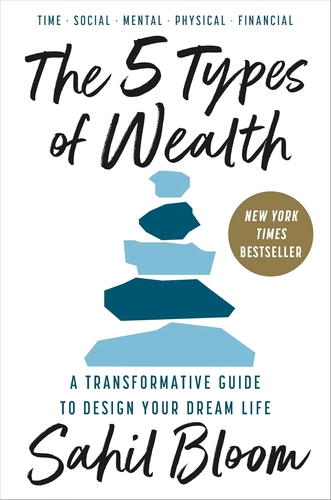
Bloom doesn’t ask you to give up money. He asks you to look at your life through five lenses. Time wealth is the freedom to choose how you spend your hours. Social wealth is the quality of your relationships. Mental wealth is your growth and curiosity. Physical wealth is your health and energy. And yes, financial wealth is there too. But it’s just one of five.
The protagonist of this book is you. Or more precisely, the version of you that has optimized for one thing at the expense of everything else. Bloom tells stories from his own life, like the time he worked 90-hour weeks in finance, earning a bonus that bought him nothing but guilt. He describes the moment he realized his father, a man with modest savings, was richer than any billionaire he knew. His father had time. He had deep friendships. He had a body that could still hike a mountain.
There is no dramatic climax where Bloom quits everything. He doesn’t sell his house and move to a monastery. The real tension is quieter, more uncomfortable. It is the slow dawning that you have been playing a game you didn’t design, chasing a scoreboard that only shows one column. Bloom’s core conflict is with the cultural story we all swallowed: that money equals success, and success equals happiness. He doesn’t tell you to reject that story. He shows you that it’s incomplete.
The core theme is balance, but not in the tired, buzzwordy way. Bloom uses the image of a wheel with five spokes. If one spoke is too long, the wheel wobbles. If one is too short, the wheel grinds. The image stuck with me because it felt true. I have seen friends who are financially rich but socially bankrupt. They have houses but no one to share dinner with. I have seen others who are physically strong but mentally starved, their bodies fit but their minds dull.
Bloom’s key imagery is the “wealth portfolio.” He treats each type of wealth like an investment. You have to diversify. You have to rebalance. You cannot put all your capital into one asset and expect a stable life. This is not a metaphor. It is a practical framework. He offers exercises to audit your own five types. He asks hard questions. What did you do this week that filled you with energy? Who did you spend time with? Did you move your body? Did you learn something new?
The book has flaws. It can feel repetitive. Some chapters read like expanded blog posts. The advice is sometimes simple to the point of being obvious. But that is also its strength. The obvious things are often the most forgotten.
I think about my own wheel now. My financial spoke is solid. My physical spoke is rusted. I haven’t run in months. My mental spoke is thin. I read but I don’t pause to think. My social spoke is frayed. I have friends but I don’t call them. My time spoke is a disaster. I am busy but not free.
Maybe that is the real insight of this book. Not that you need to quit your job or become a monk. But that you need to look at the full picture. You need to ask yourself, honestly, what kind of rich you want to be. Because if you only chase one kind of wealth, you will end up poor in every other way that matters.
