I first picked up The Artist’s Way during a week when I couldn’t write a single sentence. I was sitting on my bathroom floor at midnight, the tile cold against my legs, and I had this desperate hope that maybe this famous book would finally fix me. That’s embarrassing to admit, but there it is.
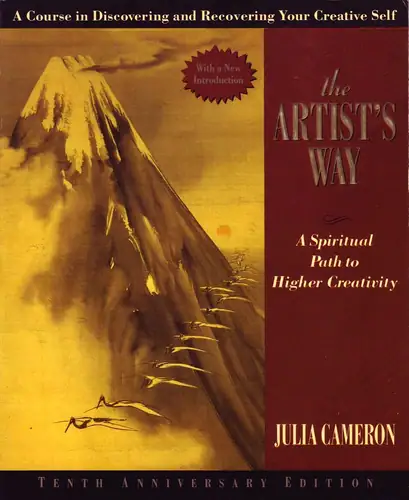
Julia Cameron calls her book a spiritual path to higher creativity. She asks you to commit to twelve weeks of morning pages—three pages of longhand stream-of-consciousness writing every single day. Plus weekly artist dates, solo adventures to feed your inner child. Plus a whole list of exercises at the end of each chapter.
I failed. I failed beautifully.
Here’s the question that haunted me through the whole process: what if the book’s real gift isn’t the program itself, but the permission to stop pretending you have it all figured out?
The Morning Pages That Cracked Me Open
The morning pages are the core practice. You wake up, you write three pages about whatever comes to mind. Garbage thoughts, resentments, grocery lists, deep fears. It doesn’t matter. The goal isn’t good writing. It’s showing up.
Cameron also wants you to take yourself on a weekly artist date. Two hours alone, doing something that feels playful. I went to a craft store and bought gold star stickers. I felt ridiculous. I also felt something else, something I hadn’t felt since childhood: the simple pleasure of doing something for no reason.
The book’s main character isn’t a person. It’s your blocked creativity, that thing inside you that learned to hide. Cameron argues that we weren’t born blocked. We were taught to be blocked, by criticism, by practicality, by the voice that says grown-ups don’t make art.
I remember the week she asked readers to stop reading entirely. No books, no newspapers, no distractions. I nearly quit then. It felt like punishment. But she wasn’t punishing me. She was showing me how addicted I was to other people’s words, how little silence I could tolerate.
The conflict in this book isn’t between you and the author. It’s between you and the version of yourself that gave up.
The Work Beneath the Surface
The deep theme here is recovery. Cameron explicitly acknowledges her debt to twelve-step programs. This isn’t a craft book about better brushstrokes or plot structures. It’s about unlearning the beliefs that keep you small.
She reframes anger and jealousy as maps, not enemies. When you feel jealous of another artist’s success, that jealousy is pointing toward something you want but haven’t allowed yourself to pursue. That reframe hit me hard. I had spent years calling myself supportive while secretly resenting friends who finished their projects.
The imagery that stuck with me most is the idea of the “crazy maker.” These are people in your life who subtly sabotage your creative work. Not through obvious attacks, but through constant crises that demand your attention. Cameron helped me see that I was letting certain people drain my energy because it was easier than facing my own fear of the blank page.
Her writing style is warm but direct. She doesn’t sugarcoat. She tells you that creative recovery hurts, that you’ll want to quit around week six, that your inner critic will get louder before it gets quieter. I appreciated the honesty. It made me trust her.
What Cracked Open, and What Stayed Stuck
I finished the twelve weeks. Sort of. I skipped some exercises. I did morning pages for about sixty of the eighty-four days. My artist dates were inconsistent. But something shifted anyway.
I started writing again. Not perfectly, not every day, but I stopped waiting for permission. I pitched a project I had been sitting on for two years. I started taking an acting class, something I had wanted to do since I was sixteen but always dismissed as impractical.
The book’s weakness is that Cameron pushes a fairly specific spiritual framework. She talks about God a lot, and if that language doesn’t work for you, parts of the book can feel alienating. I had to translate “God” into “the universe” or “my deeper self” or sometimes just “the part of me that knows better.” That translation work is possible, but it takes effort.
Another problem: some of the exercises feel dated or cringey. Buying penny candy for your inner child? Writing a letter to your five-year-old self? I rolled my eyes more than once. But I did them anyway, and that’s the catch. The cringey exercises were often the ones that cracked something open.
If you feel creatively stuck but not yet cynical beyond repair, this book might help. It’s for people willing to try something silly in the hope that seriousness hasn’t been working anyway. If you want a quick fix, hate journaling, or can’t tolerate any spiritual language at all, this isn’t for you.
The lasting insight, for me, was simple: creativity isn’t a talent you either have or don’t. It’s a practice you either show up for or you don’t. And showing up imperfectly, inconsistently, with resentment and doubt, still counts. Still changes things.
I can’t say I’m a different person after reading this book. But I am a person who writes again. And that feels like enough.
