I found myself in a small patch of urban park recently, sitting on a damp bench. I had no phone, no book, no podcast. Just the sound of leaves and the occasional scolding of a squirrel. I was waiting for a friend, but I arrived early. And for fifteen minutes, I did nothing.
It felt almost wrong. Like I was wasting time.
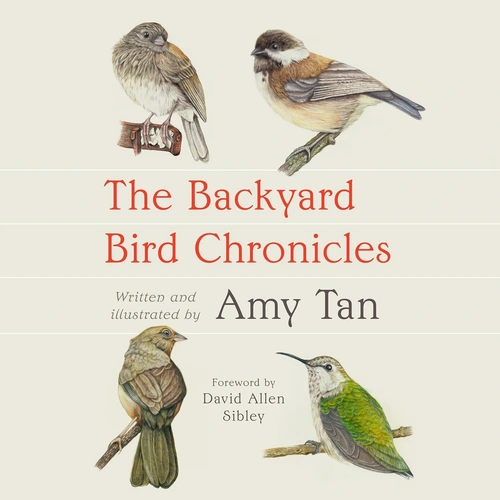
That feeling of guilt, that constant need to do something productive, is exactly what Amy Tan’s new book, The Backyard Bird Chronicles, quietly dismantles. Tan, famous for The Joy Luck Club, spent years in her California backyard, just watching birds. She drew them. She wrote down their squabbles, their routines, their sudden, inexplicable flights. The book is a collection of those sketches and notes. But it’s not really about birds, is it? It’s about the thing we have forgotten how to do: pay attention. The question Tan seems to be asking is this: What if the most important thing you can do today is absolutely nothing at all?
A Woman Who Learned to Wait
The protagonist here isn’t a character she invented. It’s Amy Tan herself. And I’ll be honest, I was skeptical at first. The book opens with a woman who is, by her own admission, a bit of a mess. She is anxious. She is distracted. She is looking for something to anchor her. She builds a bird feeder. She buys a pair of binoculars. She fumbles with her sketchbook.
That is the core conflict. Not a thriller plot, but a quiet war between her restless mind and the slow, patient world of the birds. She wants to identify every species. She wants to get the drawing right. She wants to master the backyard. But the birds don’t cooperate. They come and go on their own schedule. They fight over seeds. They ignore her completely. And slowly, painfully, Tan learns to stop wanting. She learns to just watch.
I loved the small, honest moments. She admits she gets bored. She admits she gets jealous of other birders who see rarer species. She is not a saint of nature. She is a person, trying to be still. The tension is simple: Will her attention span break? Or will the birds teach her something she didn’t know she needed?
What the Light Reveals
The core theme here is attention as a form of surrender. Tan is not controlling the narrative. The birds are. She writes about a single jay that returns every morning, and how she starts to recognize its moods. She notices the way light changes the color of a finch’s breast in the afternoon. She observes the subtle, almost invisible hierarchy at the feeder.
There is a subtle light in her writing, a gentleness that creeps in as the book goes on. Early sketches are frantic, messy, full of cross-hatching and erasures. Later ones are calmer. The lines are lighter. The details are sharper. She has stopped fighting the paper. She has started listening to the bird. That shift is the whole point of the book.
What Tan reveals is a universal pattern. We chase, we grasp, we try to pin things down. But the real seeing happens when we open our hands. She does not give us a system or a method. She gives us a diary of failure and small, quiet victories. It is not a self-help book. It is a record of someone learning to be present. And that is a hard, strange, beautiful thing to read.
The Gift of Not Knowing
I think this book matters right now because we are all drowning in noise. We have algorithms telling us what to think, what to buy, what to feel. Tan offers no solution. She offers a practice. She sits. She watches. She fails. She sits again.
For a reader, the book is not a guide. It’s a companion. You read it and you want to sit in your own backyard, or on your balcony, or by a window. You want to watch a sparrow scratch at the dirt. You want to notice the way the wind moves through the leaves. That is the gift of this book. It doesn’t tell you to slow down. It shows you what happens when you do.
There is a moment near the end where Tan writes about a hummingbird that hovered right in front of her face. She didn’t move. She didn’t try to draw it. She just looked. And she realized she had never seen a hummingbird’s throat move when it breathes. That is the kind of detail this book is made of. Small. Precise. Almost holy.
I’ll leave you with a line that stayed with me long after I closed the book. Tan writes: “I thought I was watching the birds. But maybe the birds were watching me learn to wait.” That’s it. That’s the whole thing. Go sit somewhere quiet. See what happens.
