My friend told me the narrator of this story is Death. I thought to myself, what a brilliant setup. An observer who collects souls, looking coldly at the wars and massacres of humanity. That perspective comes with a built-in tragic filter.
But by page thirty, I realized I had guessed completely wrong. This Death is overworked. Every day he carries thousands of souls across the European continent. He is exhausted. He is also confused. He is horrified by human cruelty, but also moved by human tenderness. He says he wants to tell humans one thing: the story of a girl named Liesel. About the books she stole. About the nights she spent in the basement. About the life and death of every person on her street. He tells it slowly, because every short while, new souls arrive and he has to go pick them up.
In the firelight of burning books, she stole a reason to keep living.
Liesel stole her first book at her brother’s funeral. A nine-year-old girl, standing in the snow, saw a book lying there. She picked it up and tucked it into her clothes. She barely knew how to read back then. She didn’t even know the title. She just felt like she had grabbed hold of something. Something that wouldn’t suddenly disappear the way her brother had.
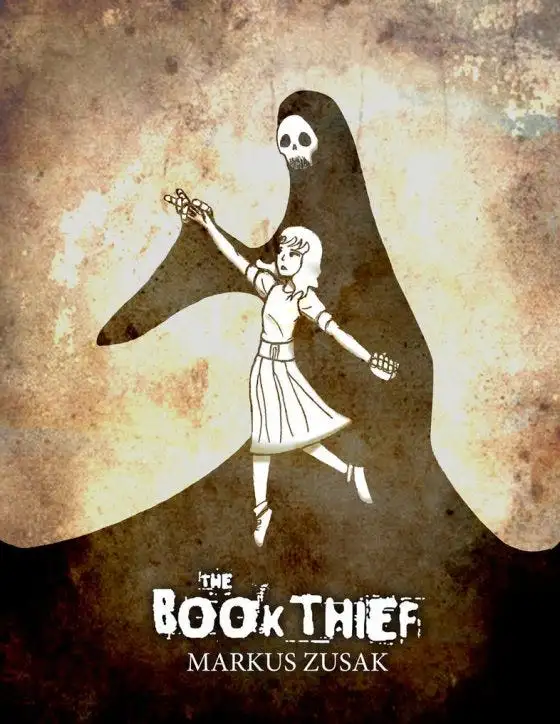
That book was called The Grave Digger’s Handbook. It didn’t sound like something a nine-year-old girl should be reading. But she slept with it. Moved houses with it. In the deep hours after nightmares, she traced the words with her fingers, one by one. Later, she stole more books. From the pile of Nazi book burnings. Through the study window of the mayor’s wife. From the rubble of bombed buildings. Each stolen book became a brick in the wallshe built against a screaming world. A wall between herself and the screaming outside. Liesel didn’t know how long the wall would hold. But she knew that as long as she had books, she could last one more day.
Bombers flew overhead. Everyone was surviving in their own way.
Hans Hubermann, her foster father. An old soldier always waiting to be called back to service. The way he played the accordion was like playing an old friend. He used money from painting a Jew’s house to buy bread, then watched that Jew get marched away. He turned his back on the Nazi party because he couldn’t bring himself to raise his arm in that salute.
Rudy Steiner. The boy who painted himself black with mud to pretend he was Jesse Owens. He chased Liesel for the entire book. Every confession was rejected. His last words weren’t
“I love you.” They were “You finally kissed me, Liesel.”
Max Vandenburg. The Jewish boxer who hid in Hans’s basement. He took the book Mein Kampf, painted over it with white paint, and wrote his own story inside. He drew a little book for Liesel as a gift. On one page, two people stood in front of a wall. Barbed wire and lightning above them. Their eyes were so large, it looked like they were trying to fit the whole sky inside.
She lived. She read. She remembered everything for the ones who fell.
At the end of this book, Death spoils everyone’s death. He says how much longer Rudy will live. How much longer Hans will live. Which day each person on that street will die. Then he adds one more sentence. He says humans always ask him the same question. About war. About slaughter. About why there has to be so much death. He says he doesn’t know the answer either.
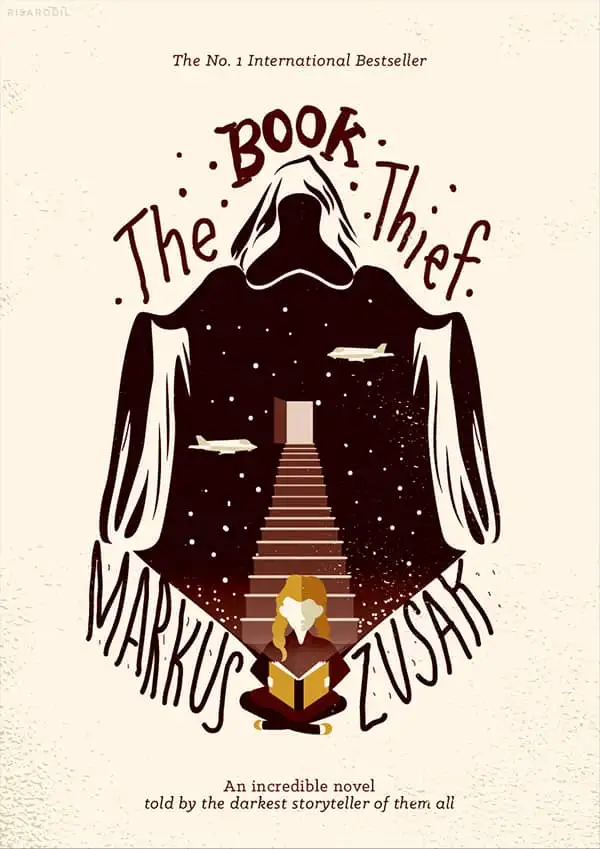
I sat in the corner for a long time. The world outside right now has no war. No bombers. No basement for stealing books. But I thought about the moment when Liesel picked up that book at her brother’s funeral. A nine-year-old girl, on the edge of losing everything, reached out her hand and grabbed words.
I think that’s the thing Death wanted to tell humans. In the darkest place, a person will still reach for a little light. None of the books Liesel stole stopped a single bomb. But when she read them, the lamp inside her was lit. That lamp couldn’t banish the darkness outside. But it could illuminate her own face.