I was sprawled on my couch at 11 PM, exhausted, thinking I’d read one chapter before bed. Four hours later, the sun was rising, my tea had gone cold, and I was crying. Not pretty tears. The kind where your nose runs and you have to pause the audiobook because you can’t see the words anymore.
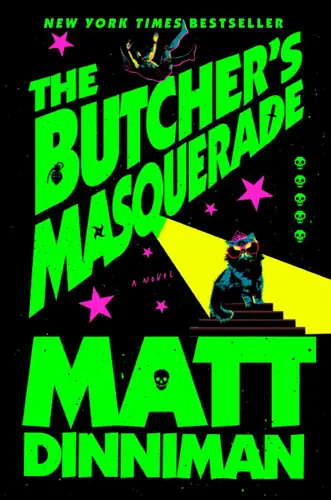
The book is The Butcher’s Masquerade by Matt Dinniman, book five in the Dungeon Crawler Carl series. I picked it up expecting laughs about a man in his underwear and his ex-girlfriend’s talking cat. I got that. But I also got something I wasn’t ready for: a story about what happens when the explosions are inside you, not around you.
How does a book about dinosaurs, bombs, and a decapitated sex doll head make you feel your own grief more sharply?
The Weight They Carry
Carl is a guy who kicks bombs with his bare feet. Donut is a Persian cat who used to be a child actor, now a princess who can’t sing but tries anyway. They’re trapped in a dungeon where aliens watch humans kill each other for entertainment. On floor six, the Hunting Grounds, outside tourists are allowed to hunt them down like animals.
The core conflict isn’t about survival, though. It’s about what survival costs.
Carl keeps saying, “You will not break me.” But the book shows us something more honest: you can’t stop the breaking. You can only decide what to do with the pieces. Donut has a panic attack near the end, sitting on top of an injured Carl, realizing she feels too little about friends who just died. She thinks she’s a terrible cat. Carl tells her she’s wearing a mask to protect herself, and that’s okay. He says, “One day you’ll find yourself someplace safe and it’ll just fall right off. And it will hurt.”
I had to stop reading. Not because it was sad, but because it was true.
The Mask You Don’t Know How to Remove
The core theme here is trauma. Not as a plot device, but as the actual engine of the story. Dinniman writes, “Trauma does that. It’s an explosion with your heart at the center. It changes everything all at once.”
The key imagery is the mask. Carl tells Donut she’s wearing one she doesn’t know how to remove. It’s not a lie. It’s not fake. It’s protection. The book understands something most stories don’t: sometimes the mask is the only thing holding you together, and taking it off too soon just leaves you bleeding.
There’s a moment where Bea, Donut’s original owner, appears on screen. Donut confronts the woman who planned to replace her with a younger cat. She says, “I thought since I loved you, that meant you loved me.” That line wrecked me. It’s not about a cat. It’s about every person who has ever loved someone who didn’t love them back.
The book’s problem, if I’m honest, is that it’s too good at this. The humor and horror are so balanced that you don’t see the emotional punch coming. You’re laughing at the AI’s foot fetish one minute, and the next you’re sobbing over a goat named Prepotente who just wants to be loved. It feels manipulative, but it’s not. It’s accurate.
What the Book Leaves You With
This book is for people who have lost someone and haven’t figured out how to talk about it yet. It’s for people who laugh to keep from crying, who wear masks and know they’re wearing them. It’s for anyone who has ever loved a character so much they felt embarrassed about it.
It’s not for people who want tidy endings or easy lessons. The book doesn’t resolve anything. It just keeps going, like trauma does. Like grief does.
What I got from it was permission. Permission to feel ridiculous for caring about a cat and a man in boxers. Permission to sit with my own brokenness without having to fix it right away. The book taught me that you don’t need to remove the mask. You just need to know it’s there.
And honestly, that’s more than most self-help books give you.
So I’ll leave you with this: what mask are you wearing right now, and are you ready to take it off yet?
