I found myself staring at a cockroach the other night. It was on my kitchen counter, antennae twitching, and I felt something strange. Not disgust. Not the urge to kill it. I felt curiosity. That is not my normal reaction. I blame Rob Dunn.
Dunn’s new book, The Call of the Honeyguide, landed on my desk a few weeks ago. I almost didn’t read it. Another book about saving the planet? I was tired of being told I was a bad person for owning a car. But this book is different. It does not preach. It asks a quieter, more interesting question.
What does it actually mean to live well with the rest of life?
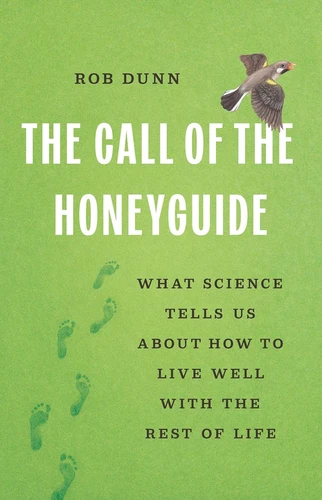
The book opens with a story about a bird. The honeyguide, a small African bird, leads humans to beehives. The bird wants the wax. The humans want the honey. They work together. It is not a metaphor. It is a real, biological partnership that has existed for thousands of years. Dunn uses this small, strange relationship as a lens. He wants to know: Can we build more relationships like this? Or are we doomed to fight everything that is not us?
Here is the thing about Dunn. He is a scientist, but he writes like a storyteller. He takes you into a forest in Panama and shows you the ants that live in a single tree. There are forty-three species of ants in that one tree. Forty-three. They do not kill each other. They share the tree. They have figured out how to live together without war. Dunn looks at this and asks: What would it take for humans to learn that?
The book has a quiet, almost subversive argument. We have been told for decades that nature is fragile. That we must protect it from ourselves. Dunn does not disagree. But he pushes further. He argues that the real problem is not that we use nature. The problem is that we use it badly. We bulldoze a forest and plant one crop. We kill every pest with poison. We make the world simple. And simple worlds collapse.
The core theme here is reciprocity. Not charity. Not guilt. But real, mutual exchange. The honeyguide gives the human a signal. The human gives the honeyguide a meal. Neither is the boss. Neither is the victim. Dunn suggests that our relationship with the rest of life should look more like that. It sounds idealistic. But he has the data to back it up.
The imagery that stuck with me most was the idea of the “edge.” Dunn writes about the places where human worlds meet wild worlds. Your backyard. The crack in your sidewalk. The space under your porch. These edges are not dead zones. They are the most alive places on the planet. A single vacant lot in a city can host more species than a national park in some countries. That is not a consolation prize. That is a revelation.
I will admit, the book has a weakness. It gets a little dense in the middle chapters. There is a section about soil microbiology that I had to read twice. Dunn loves his details. Sometimes he loves them too much. The pace slows down. You might want to skip a paragraph here and there. That is okay.
But the payoff is worth it. Because Dunn ends with something I did not expect. He does not tell you to quit your job and move to a forest. He tells you to change your lawn. To plant native flowers. To leave a dead tree standing in your yard. He asks you to stop thinking of your home as a fortress and start thinking of it as a neighborhood. A neighborhood full of other species.
I thought about the cockroach again. I did not kill it. I caught it in a cup and put it outside. That is not a grand gesture. It is not activism. It is just a small choice. But Dunn makes you believe that small choices matter. That they add up. That the future of life on this planet might depend on how we treat the things we used to call pests.
There is a line near the end of the book that I keep coming back to. Dunn writes: “The honeyguide does not ask the human to be perfect. It only asks the human to pay attention.”
I think that is the whole argument. We do not need to save the world. We need to notice it first. And then, maybe, we can learn to live with it.
